Vinyl Fencing Terms Explained: A Plain-English Glossary
If you're reading vinyl fence quotes in Ocala and hitting words like "routed rail" or "picket," this vinyl fencing glossary is for you. It gives homeowners and business owners plain definitions of the terms that show up in estimates, product sheets, and HOA rules. Use it to read a quote line by line, ask a fence company sharper questions, and spot problems before they cost you money.
- Vinyl (PVC) Fence: plastic fencing that never needs paint
- Picket: the vertical boards in the fence
- Rail: the horizontal pieces holding pickets
- Post: the vertical anchor set in the ground
- Panel: one pre-built fence section
- Privacy Fence: solid fence that blocks the view
- Semi-Privacy Fence: fence with small gaps between pickets
- Post Cap: the cover on top of each post
- Routed Post: a post with factory-cut rail holes
- Tongue and Groove: pickets that lock together edge to edge
- Post Setting: how posts are anchored in the ground
- Gate Hardware: hinges and latches on a fence gate
- Fence Line: the planned path of the fence
- Property Line: the legal boundary of your lot
- Setback: required distance from the property line
- HOA Approval: your neighborhood's sign-off on fence plans
- Permit: the city's or county's official okay to build
- Linear Foot: how fence length is measured and priced
Vinyl Fencing Glossary for Fence Parts and Materials
Most of the jargon in a vinyl fence quote describes parts. Here is what each one means and why it shows up on your estimate.
Vinyl (PVC) Fence
A vinyl fence is a fence made from PVC plastic, a rigid material that resists rot, insects, and moisture. That matters in Ocala, where heavy rain and humidity break down wood faster than most new homeowners expect. Vinyl never needs paint or stain, which is the main reason people choose it over a wood fence. If you are still deciding between the two, this comparison of vinyl vs. wood fencing in Ocala walks through the trade-offs.
Picket
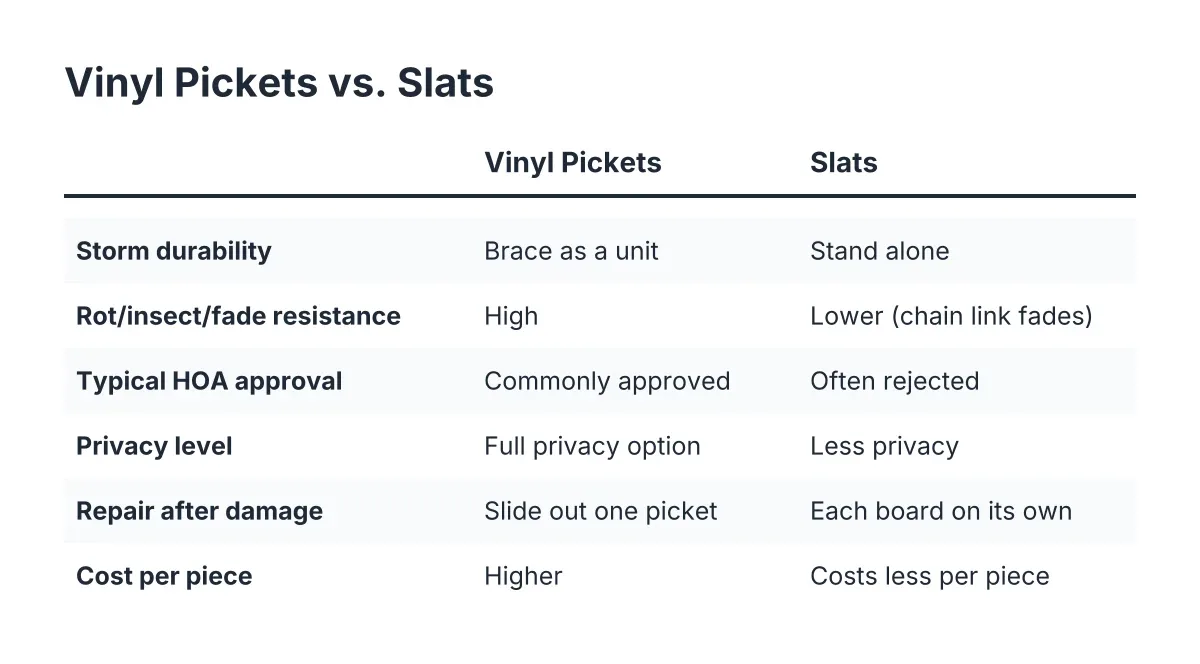
A picket is one of the vertical boards that fill the space between fence posts. Pickets set the look of the fence: wide pickets with no gaps give you privacy, while narrow spaced pickets give a traditional yard-fence look. If a picket cracks, you can often replace just that piece instead of a whole section. We cover the details in vinyl fence pickets vs. slats.
Rail
A rail is a horizontal piece that runs between posts and holds the pickets in place. Most vinyl fencing uses a top rail and a bottom rail, and taller privacy styles add a middle rail for stiffness. If a quote mentions "reinforced" rails, it means the rail has a metal insert inside to resist sagging, which matters on long gate sections and in hot sun.
Post
A post is the vertical support that anchors the fence to the ground. Posts carry the whole load, so how they are set matters more than any other part of the install. In Ocala's sandy soil, a poorly set post leans within a few seasons, and the whole fence line leans with it.
Panel
A panel is one complete pre-built fence section, usually rails and pickets assembled as a unit that spans from post to post. Quotes often price the job by panel or by linear foot. Knowing your panel count helps you check the math on an estimate.
Privacy Fence
A privacy fence is a solid fence, usually six feet tall, with no gaps between pickets. It blocks the view from the street and neighboring yards. Solid panels catch wind like a sail, so a privacy fence needs deeper, better-set posts than an open style. Expect that to show up in the labor portion of your estimate.
Semi-Privacy Fence
A semi-privacy fence is a fence with small gaps between pickets that lets air and some light through while still screening the view. It handles wind better than a fully solid fence. Many HOAs in newer Ocala developments prefer this style, so check your HOA rules before you pick panels.
Post Cap
A post cap is the fitted cover on top of each fence post. It keeps rain out of the hollow post, which prevents water from pooling inside and stressing the post. Caps come in flat, pyramid, and decorative styles, and a quote that itemizes "solar caps" means caps with small built-in lights.
Routed Post
A routed post is a post with holes cut at the factory so rails slide directly into it. Routed systems lock together without visible brackets, which gives a cleaner look and fewer parts to loosen over time. If your quote says "routed," the installer is using this slide-in system rather than screwed-on brackets.
Tongue and Groove
Tongue and groove means pickets shaped so the edge of one locks into the edge of the next, leaving no gap. It is the standard build for solid privacy panels. The interlock keeps pickets from rattling in wind and stops gaps from opening as the material expands and contracts in Florida heat.
Understanding Installation and Repair Terms in Your Vinyl Fencing Glossary
These terms describe how the work gets done. They matter most when you compare two estimates for the same fence.
Post Setting
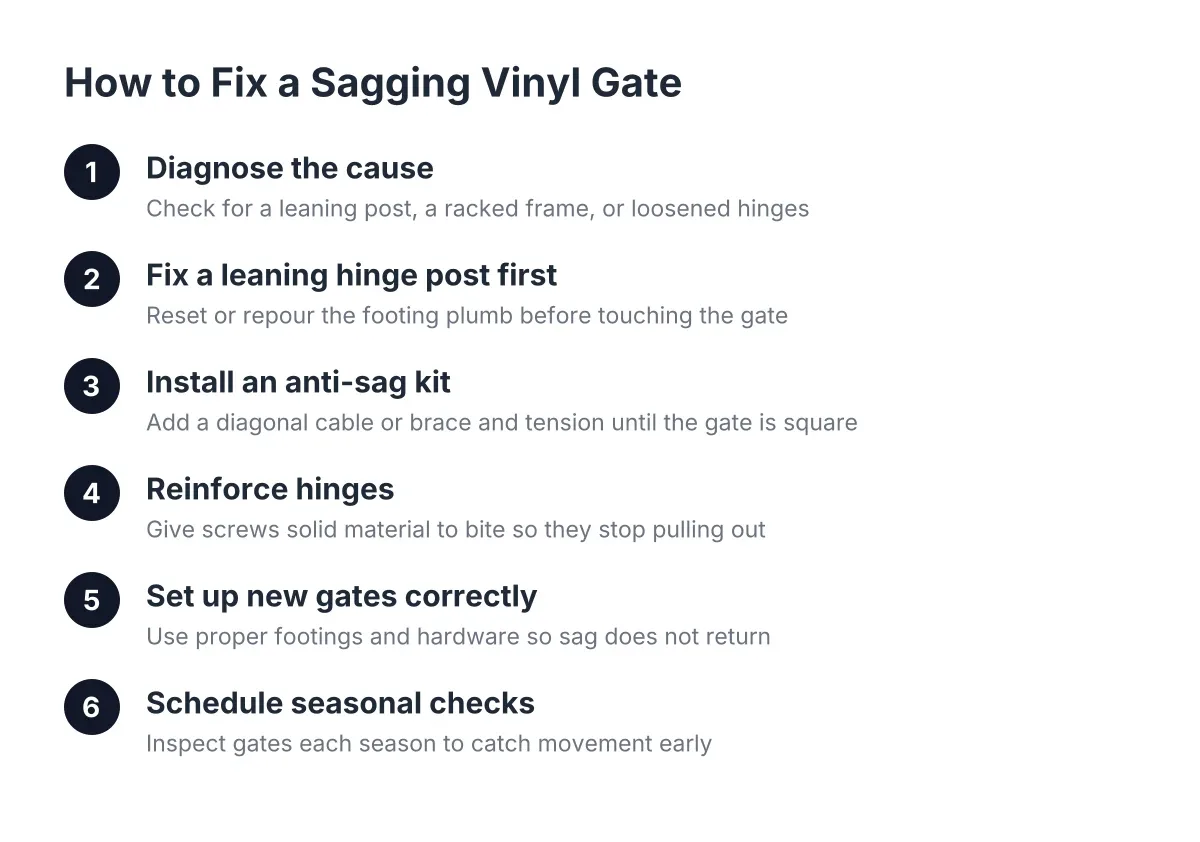
Post setting is the method used to anchor fence posts in the ground, usually by digging a hole and surrounding the post with concrete. Depth and concrete amount drive how long the fence stays straight. Ocala's sandy, shifting soil makes this the step where cheap installs fail first. If a fence already leans, this guide on why vinyl fencing sags in Ocala's sandy soil explains the usual causes.
Gate Hardware
Gate hardware means the hinges, latch, and any drop rod that let a fence gate open, close, and lock. Gates are the first part of a fence to sag because they carry moving weight on one post. Self-closing hinges and lockable latches matter most on a pool fence, where the gate is a safety device, not just a door.
Fence Line
A fence line is the planned path the fence will follow across your property. The installer marks it before digging, working around trees, slopes, and buried utilities. Walking the fence line with your installer before work starts is the easiest way to catch surprises, like a corner that sits past your property line.
Pricing and Paperwork
Property Line
A property line is the legal boundary between your lot and your neighbor's. A fence built even slightly over it can trigger disputes or forced removal. If you are not sure where yours sits, your plat map or a survey shows it; guessing from an old fence or a hedge is how neighbors end up in arguments.
Setback
A setback is the minimum distance a fence must sit back from the property line, the street, or an easement. Local rules and HOA covenants set these distances, and they vary by lot. Ask your fence company to confirm setbacks before posts go in, because moving a fence after the fact means digging out concrete.
HOA Approval
HOA approval is written permission from your homeowners association to build a fence of a specific height, style, and color. Many Ocala developments require it before any work starts. Skipping this step can mean fines or tearing out a finished fence, so get the approval letter before you schedule installation.
Permit
A permit is official permission from the city or county to build your fence. Whether you need one depends on fence height, location, and local rules, so check with your local building department or ask your fence company who pulls it. A quote should say whether permit handling is included.
Linear Foot
A linear foot is a straight-line measurement of fence length, and it is how most fence installation quotes are priced. Measure your fence line and you can compare estimates fairly. Cost per linear foot shifts with fence height, style, gate count, and ground conditions. For a fuller picture of what drives price, see this vinyl fencing cost guide.
Using These Vinyl Fencing Glossary Terms
With this vinyl fencing glossary, you can read an estimate line by line and know what every item means, from routed posts to linear feet. You can also ask better questions: how deep do the posts go, who handles the permit, and does the gate get reinforced rails. When an installer hears those questions, the conversation gets specific fast, and that is good for you.
Prefer to talk it through? Call (352) 670-3374 — a quick call is usually the fastest way to get a straight answer for your situation.