Vinyl Fence Pickets vs. Slats: Durability, Looks, and Replacement in Ocala
If you are planning a vinyl fence for a new build or submitting an architectural review request to your HOA, the parts matter as much as the panels. Vinyl fence pickets and slats look similar in a catalog, but they behave differently once installed, and they do not cost the same to replace when one gets damaged. This guide walks through how to compare the two, step by step, so you can pick a style your HOA approves on the first try and understand what repair or replacement looks like down the road in Ocala.
One quick clarification before the steps. Pickets are the individual vertical boards that make up a vinyl fence section; they sit in a bottom rail and lock under a top rail. Slats usually refer to thinner infill pieces, either the boards in a semi-private vinyl fence with gaps between them, or the strips woven into a chain link fence for privacy. Both do the same basic job, filling the space between posts, but they differ in strength, appearance, and what it takes to swap one out.
Step 1: Learn How Vinyl Fence Pickets Are Built
Start by understanding the construction, because it explains everything else. A vinyl picket is a hollow PVC extrusion with a tongue on one edge and a groove on the other. Pickets interlock side by side, slide into a routed bottom rail, and lock under the top rail. Side strips on the posts hold the grooved pickets in place after the rails are set.
This interlocking design is why a full-privacy vinyl fence has no gaps and why a single damaged picket can often be replaced without tearing out the section. The posts do the heavy lifting; they are the foundation of the system, and heavy-duty end posts are made thicker than standard line posts to add strength at corners and gate openings.
Slats are simpler. In a semi-private vinyl fence, slats are narrower boards set with spacing between them. In a chain link fence, privacy slats are strips slid through the mesh. They cost less per piece, but they also offer less privacy and, in the chain link case, less of the finished look most HOAs want.
Step 2: Compare Durability Before You Compare Price
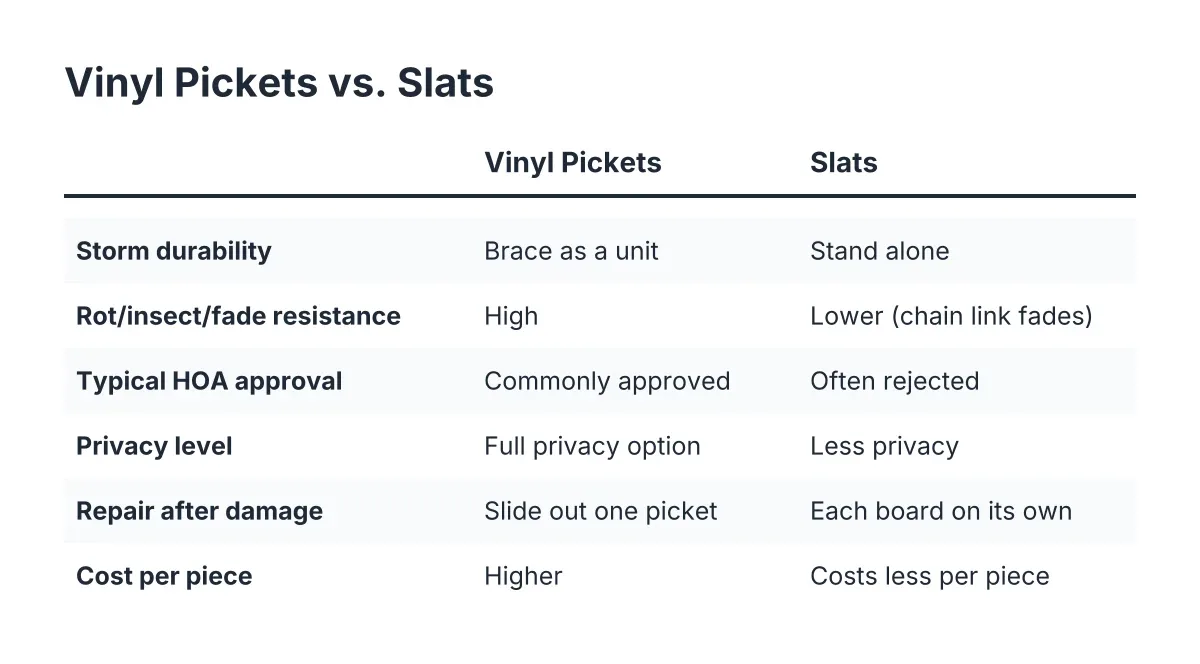
Durability is where the two options separate. Interlocked vinyl fence pickets brace each other across the panel, so the section flexes as a unit in wind. Spaced slats stand alone, which means each board takes impact on its own. For a perimeter fence on a quarter-acre to two-acre lot, that difference shows up after a few storm seasons.
Vinyl itself resists rot, insects, and fading far better than wood, which matters in Ocala's humidity and heavy summer rain. A wood fence here needs sealing and board replacement on a schedule; a vinyl picket fence mostly needs a rinse. The honest trade-off: vinyl is still PVC. It can crack under a hard direct hit, like a mower throwing a rock, and it will burn in extreme conditions. No fence material is maintenance-free forever.
Chain link slats sit at the bottom of the durability-appearance ladder for residential fencing. They fade and loosen over time, and most deed-restricted communities will not approve them for a front-facing or perimeter fence anyway.
Step 3: Match the Picket Style to Your HOA Rules
Pick the style only after you have read your community's architectural guidelines, not before. According to Forbes, fencing is a factor in 23% of HOA violation notices, tied with design changes as the second most common issue behind landscaping. Submitting the wrong style is the expensive way to learn your neighborhood's rules.
Most HOA guidelines in planned Ocala communities specify three things: material, height, and sometimes color. White vinyl is the most commonly approved finish, though tan and gray show up in newer developments. The common vinyl picket styles break down like this:
- Full privacy: tongue-and-groove pickets with no gaps; the standard for backyard perimeter fencing.
- Semi-private: spaced slats or pickets that let air and light through; often required where boards restrict solid fences.
- Decorative picket: shorter, spaced pickets with pointed or dog-ear caps; the classic vinyl picket fence look for front yards.
- Privacy with lattice or spindle top: solid below, open on top; a frequent compromise when the HOA caps solid-fence height.
For example, suppose a homeowner in a gated community near Ocala wants a six-foot solid privacy fence, but the guidelines cap solid sections at four feet with an open top. A privacy panel with a lattice top usually satisfies that rule while still screening the patio. Bring the exact panel drawing, height, and color to your architectural review submission; boards approve specifics, not descriptions.
Step 4: Understand What Replacement Actually Involves
Plan for repair before you need it. The replacement story favors pickets, and it is a bigger deal than most buyers realize at purchase time.
When one picket in a vinyl privacy panel cracks, a repair usually means removing the top rail or post side strip, sliding the damaged picket out, and locking a new one in. The rest of the section stays put. Searches for vinyl fence pickets replacement spike after storm season for exactly this reason; it is a contained fix, not a rebuild.
However, matching matters. Vinyl fence parts vary between manufacturers in picket width, wall thickness, and the rail routing pattern. A generic big-box picket may not seat in your existing rails, and a bright white replacement next to ten-year-old panels can read as a mismatch from the street. Before buying loose vinyl fence pickets for sale online, measure the picket width and thickness, and check the tongue-and-groove profile against what you have. A local fence company can often source matching profiles faster than a homeowner can.
Slat replacement in a chain link fence is cheap and easy by comparison, but the appearance problem compounds; new slats against faded ones stand out. Replacing a spaced slat in a semi-private vinyl fence falls in between, since each board is fastened or set individually.
Step 5: Account for Ocala's Soil and Slope
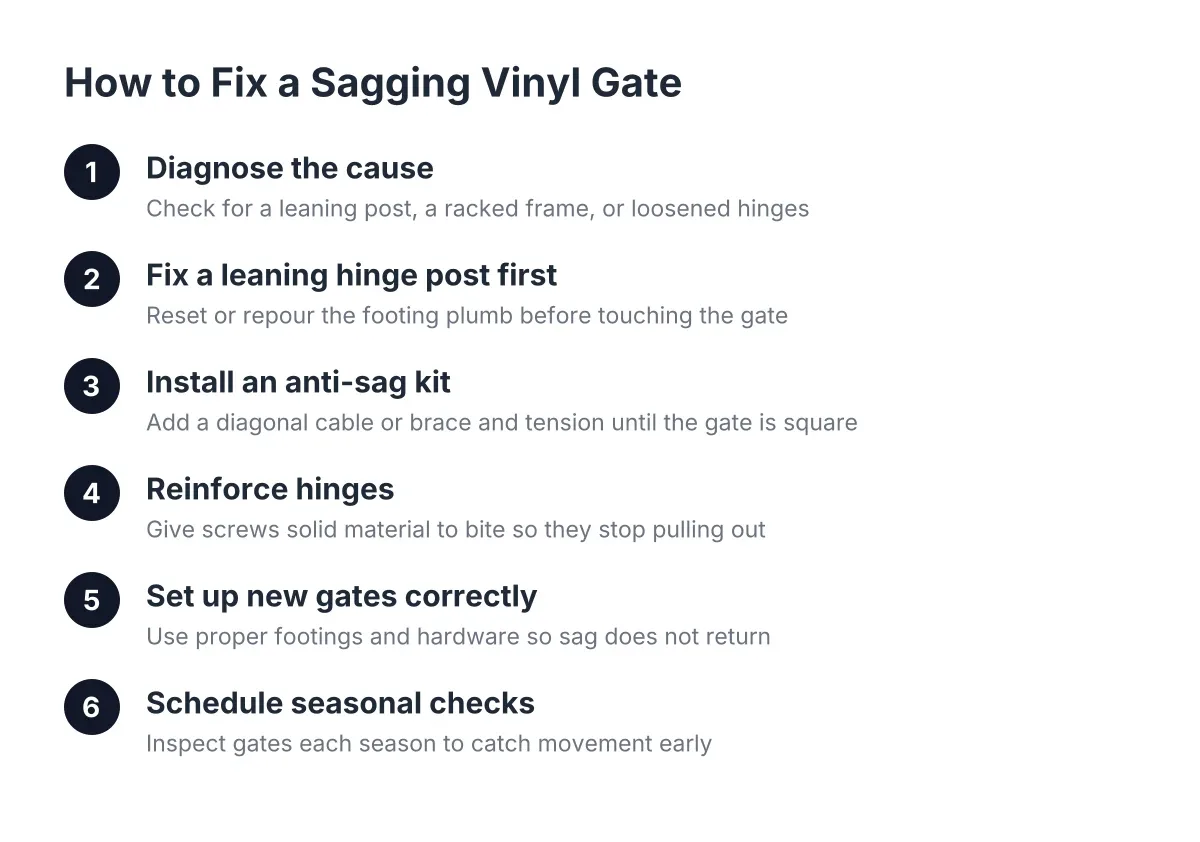
Factor in local conditions, because they decide how well any picket or slat system holds up. Ocala's sandy, shifting soil is the main one. Posts set too shallow or without enough concrete will lean over time, and when posts move, pickets rack, gates sag, and panels pull out of their rails. The fence fails at the posts long before the pickets wear out.
Slope is the other local wrinkle, even on lots that look flat. On graded sections, pickets can hit the inside wall of an angled rail channel and refuse to seat fully; the fix is trimming the picket or notching the rail for clearance. Experienced installers also reverse the assembly direction on slopes so pickets do not slide downhill as they go in. These are small details, but they separate a clean install from a fence with uneven picket tops that an HOA inspector will notice.
In addition, confirm your property line before anything goes in the ground. New-build lots often have irrigation lines, utility easements, and survey pins that shape where posts can go. Marion County permit requirements and your HOA's setback rules both apply; a good installer will tell you which approvals come first.
Step 6: Decide What to Hire Out and What to Handle Yourself
Swapping a single cracked picket or a slat is a reasonable homeowner job if you have a matching part. Setting posts in sandy soil, building panels on a slope, hanging a vinyl fence gate that will not sag, and pulling the right permit are jobs for a fence installation crew. Call a pro now if posts are leaning, panels are popping out of rails, or your HOA has sent a violation notice with a deadline.
A full vinyl fence installation typically covers layout from your survey, post setting in concrete, panel assembly, gates with reinforced hardware, and cleanup. Tear-out of an old fence, grading, and custom gate widths are usually extra, so confirm them in writing. Cost factors to expect on an estimate: total linear footage, number of gates, panel style, and site conditions like slope or old fence removal. Custom styles that use more picket material per foot cost more in both material and labor than a standard flat-face privacy run.
When you compare fence companies in Ocala, ask three questions. Does the quote name the exact panel style, height, and color so you can attach it to your HOA submission? Who pulls the permit? And can they source matching pickets later if a section gets damaged? A fair estimate answers all three without you chasing it.
Get the Picket Details Right Before You Submit
The difference between vinyl fence pickets and slats comes down to this: pickets give you an interlocked, HOA-friendly panel with contained repairs, while slats trade appearance and strength for lower upfront cost. For a new-build perimeter in a deed-restricted community, a vinyl picket system is the option boards approve most often and the one that is easiest to live with after a Florida storm.
If you are fencing a new home or responding to an HOA notice in Ocala, Ocala Fence Builders can walk your lot, confirm the property line and permit requirements, and put together an estimate with the exact style, height, and color details your architectural review board will want to see. Reach out to schedule a site visit before you submit your paperwork.
If you need vinyl fencing, Ocala Fence Builders can help.
Related guide: vinyl fencing — Complete Guide
Prefer to talk it through? Call (352) 670-3374 — a quick call is usually the fastest way to get a straight answer for your situation.