Vinyl vs. Wood Fencing in Ocala: 8 Ways to Compare Before You Buy
If you are weighing vinyl and wood fencing in Ocala, the decision usually comes down to three things: how long each material lasts here, how much upkeep you are willing to do, and what your HOA will approve. When comparing vinyl vs wood fencing, both materials can work on a flat lot in a deed-restricted neighborhood or on a 20-acre horse property outside town. However, Ocala's humidity, heavy summer rain, and sandy soil treat the two materials differently. This list walks through eight practical comparisons so you can pick the right fence the first time, get it past your architectural review board, and avoid paying twice.
1. Lifespan: Vinyl Outlasts Wood in Ocala's Humidity
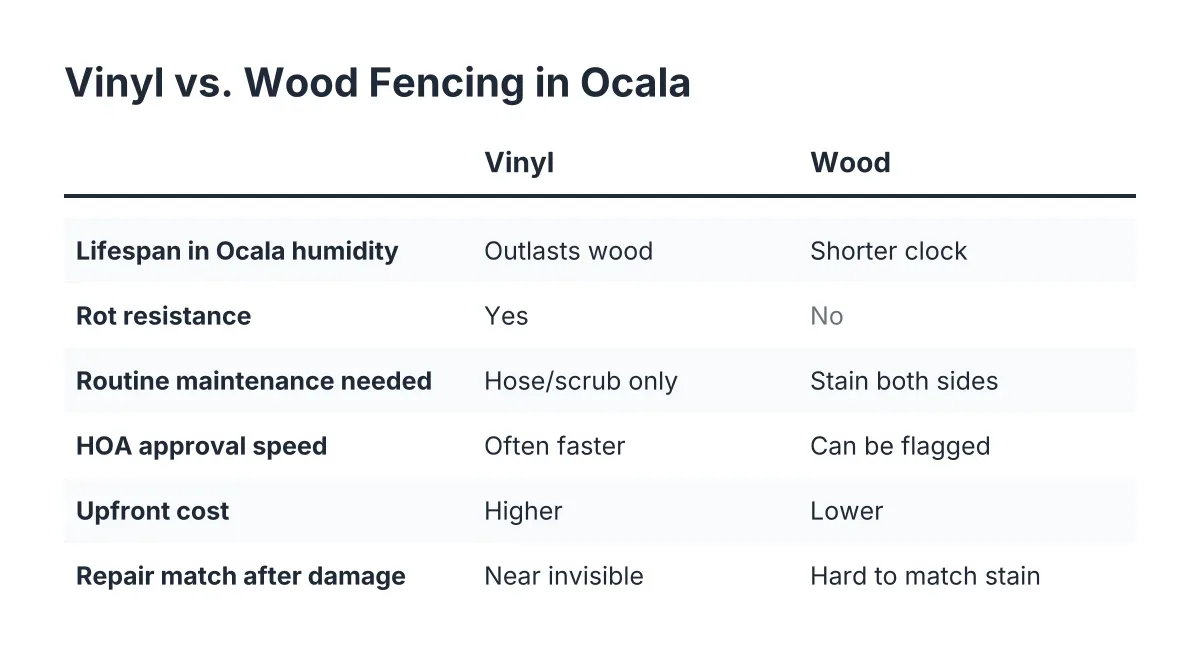
Vinyl resists rot and fading, which matters in a climate with long, wet summers. Wood fences in Ocala absorb moisture, and the posts are usually the first point of failure. A wood fence can look fine from the street while the posts are rotting at the soil line. Vinyl does not rot, so the question shifts from "when will it fail" to "was it installed well."
Wood is not a bad choice; it just has a shorter clock. Posts commonly fail from rot even when the homeowner has kept the panels painted or stained for years. If you want the longest service life with the least intervention, vinyl wins this category in Ocala.
2. Maintenance: Staining a Wood Fence vs. Washing a Vinyl One
Here is the honest trade-off. A wood fence needs regular staining or sealing to survive Florida weather. Staining both sides, not just the street-facing side, extends the fence's life and protects the investment. Water-based stains dry faster, have lower odor, and clean up more easily than oil-based products, which makes the job more manageable for a homeowner.
A vinyl fence needs none of that. Maintenance is mostly a garden hose and an occasional scrub to remove mildew, which does grow on any surface in Ocala's humidity. If you travel, run a farm, or simply do not want a recurring weekend project, that difference adds up over ten years.
3. HOA Approval: Why Vinyl Often Clears Review Faster
For readers in deed-restricted communities, this may be the deciding factor. Fencing is a factor in 23% of HOA violation notices, tied with design changes as the second most common issue behind landscaping, according to Forbes. That number is worth taking seriously before you submit an architectural review request.
Many Ocala HOAs favor white or tan vinyl in specific heights and styles because it keeps a uniform look across the neighborhood and never needs repainting. Wood can be approved too, but boards sometimes flag it later when stain fades unevenly or boards warp. Before you order anything, pull your HOA's architectural guidelines and confirm three things: allowed materials, maximum height, and required setback from the property line. A fence company that works in Ocala neighborhoods regularly can help you match a style to what your board has approved before, which is the fastest path to a first-submission yes.
4. How Ocala's Sandy Soil Affects Vinyl and Wood Fence Posts
Posts are the foundation of either fence system; they carry the structural load that keeps panels straight for the long term. Ocala's sandy, shifting soil makes post-setting the part of the job where installers earn their money. A post set too shallow or with a weak footing will lean, and the panels will follow.
Vinyl systems handle this with heavier components where the stress concentrates. End and corner posts are made thicker than standard line posts for added strength. In tricky spots, such as butting against an existing fence or working around a tree, an installer can sleeve the vinyl post over a metal pipe for reinforcement. Wood posts face the same soil movement plus rot risk at the ground line, which is why they tend to fail first.
5. Gates: Where Both Materials Get Tested
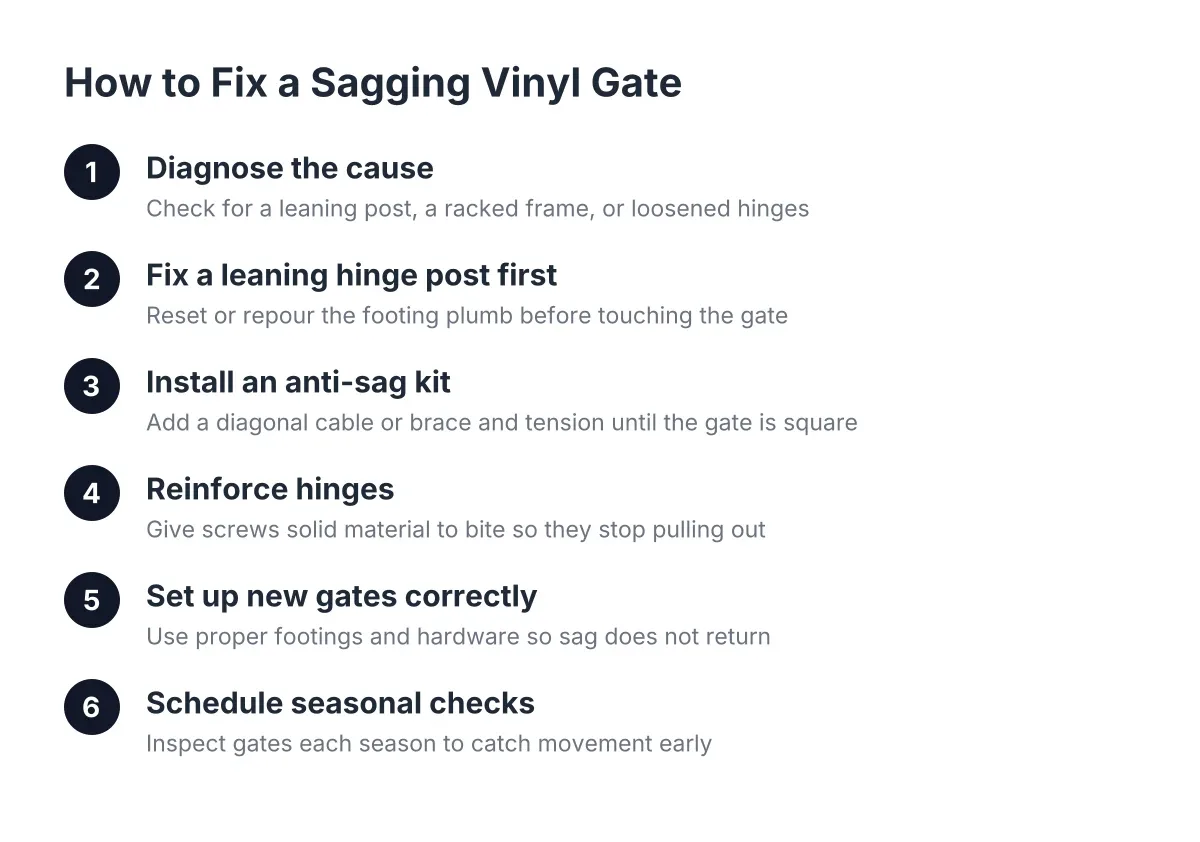
The fence gate is the moving part, so it fails before the panels do. In sandy soil, gate posts shift, and a gate that closed cleanly in March can drag by August. A vinyl fence gate holds its shape and color without repainting, but it still depends on properly set, often reinforced, posts to avoid sag. Wood gates add weight, and weight plus soft soil equals sag sooner.
Whichever material you choose, ask your installer how they set gate posts differently from line posts. For acreage owners running equipment through wide openings, this question matters even more; a sagging 12-foot gate is a daily headache, not a cosmetic issue.
6. Parts and Repairs: What Happens After a Storm
Repairs look different for each material. Vinyl fence parts are modular: pickets, rails, caps, and panels can often be swapped individually. Rails cut to length fit snugly between posts and secure with specialized screws, so a damaged section does not mean replacing a whole run. Pickets slide into the rails, and on sloped ground an installer can reverse the assembly direction so pickets do not slide downhill during the build.
Wood repairs are simpler in one sense, since boards are easy to source, but matching weathered stain is hard. A two-year-old wood fence with three new bright boards after a storm looks patched. A vinyl fence repair with matching parts is close to invisible, which HOA boards appreciate.
7. Cost Factors: What Actually Drives the Price of Each
Vinyl costs more upfront than wood for the same footage; that is the trade most homeowners already expect. The fuller picture is what drives the number on your estimate for either material:
- Linear footage and fence height, since taller panels need stronger posts
- Number of gates, and whether any need reinforced posts for width or weight
- Soil conditions and slope, which affect post-setting labor
- Style, such as privacy panels versus a vinyl picket fence with decorative tops
- Tear-out and haul-away of an old fence
- Permit requirements and any HOA-driven style constraints
Over the life of the fence, wood adds recurring stain and repair costs that vinyl does not carry. For a budget comparison, ask for estimates on both materials at the same height and footage, then factor in roughly a decade of upkeep for the wood option.
8. Which Properties Suit Vinyl, and Which Still Call for Wood
Vinyl fits flat residential lots best: privacy fencing in newer developments, decorative picket styles in front yards, and HOA neighborhoods where a uniform look is required. Wood still earns its place on larger properties. On a horse farm or multi-acre parcel, long runs of board fencing remain a practical, repairable choice, and many equestrian owners prefer its look and its behavior around livestock.
Suppose a homeowner in a gated Ocala community needs a backyard privacy fence the board will approve, while her brother outside Citra is fencing a 15-acre paddock after a new horse purchase. In that scenario, she likely lands on white vinyl privacy panels, and he likely lands on wood board fencing with heavy posts. Same county, different right answers. One honest limitation: vinyl is still PVC, so in extreme heat exposure or a fire it will not hold up the way it does against rain and rot.
When to Call a Pro for Vinyl or Wood Fencing in Ocala
A handy homeowner can replace a wood board, re-stain panels, or swap a cracked vinyl picket. The line is at the posts. Setting posts plumb in sandy soil, handling slope, reinforcing gate posts, and keeping the fence on your side of the property line are where fence installation goes wrong for do-it-yourselfers. Call a professional if posts are leaning, a gate drags, panels have detached after a storm, or you are unsure where your property line sits.
Timelines depend on HOA approval more than the build itself. The physical install for a typical residential lot is usually measured in days, but architectural review can take weeks depending on your board's meeting schedule, so submit early. If your lot has unusual grade changes or a disputed boundary, bring in a surveyor before any fence contractor digs.
Questions to Ask Before You Hire a Fence Company
Comparing vinyl and wood fencing in Ocala only pays off if the installer handles local conditions well. Ask these three questions:
- How do you set posts in sandy soil, and do you reinforce gate and corner posts?
- Will you help me match a style and height to my HOA's guidelines before I submit?
- Does the estimate include tear-out, haul-away, gates, and permits, or are those extra?
A fair estimate itemizes footage, height, gates, and site prep rather than quoting one lump number. It should also state who confirms the property line.
If you are deciding between vinyl and wood for a yard in Ocala or a larger property nearby, Ocala Fence Builders can walk the line with you, explain what each material will do on your specific lot, and put together an estimate for both options so you can compare real numbers side by side.
If you need vinyl fencing, Ocala Fence Builders can help.
Related guide: vinyl fencing — Complete Guide
Prefer to talk it through? Call (352) 670-3374 — a quick call is usually the fastest way to get a straight answer for your situation.