Pool Safety Fence Terms Explained: A Plain-English Glossary
If you are getting quotes for a pool fence in Ocala, the paperwork comes loaded with jargon. This pool safety fence glossary breaks down the terms you will see in estimates, product sheets, and permit talk into plain English. Use it to read a quote line by line, ask better questions, and spot a thin bid before you sign anything. Each entry stands on its own, so skim to the word that confused you.
- Pool barrier: the safety wall around your pool
- Mesh pool fence: see-through fabric panels on poles
- Removable pool fence: panels that lift out of ground sleeves
- Self-closing gate: a gate that shuts itself every time
- Self-latching gate: a latch that catches without your help
- Magnetic latch: a magnet-driven catch mounted up high
- Latch height: how far off the ground the latch sits
- Deck sleeve: the hole-and-cap socket that holds each pole
- Core drilling: drilling clean holes into your pool deck
- Fence section: one panel of fence between poles
- Tension: how tight the mesh is pulled
- Climb resistance: how hard the fence is to scale
- Barrier code: the safety rules a pool fence must meet
- Permit: the city's written OK for the job
- Final inspection: the official check before sign-off
- Gate hardware: hinges, latches, and locks as a package
- Linear foot: how fence length gets measured and priced
- Site prep: what gets done before any fence goes in
The Fence Itself
These are the parts and products that show up on a materials list. Knowing them helps you compare two quotes that look different on paper but describe the same fence.
Pool Barrier and Safety Fence Glossary Terms
A pool barrier is any wall, fence, or structure that blocks a child from reaching the pool without an adult. It can be a mesh pool fence, an aluminum fence, or even a house wall that forms one side of the enclosure. Inspectors and insurance companies use this word, so it shows up in paperwork more than in conversation. When a contractor says "barrier," they mean the whole protective loop around the water, gates included.
Mesh Pool Fence
A mesh pool fence is a see-through fence made of tightly woven fabric stretched between poles set into the deck. It is the most common style of pool safety fence for homes because kids cannot climb it and parents can still see the water through it. The mesh resists tearing, and the poles sit in sleeves drilled into the deck. If your quote says "mesh," this is what you are getting.
Removable Pool Fence
A removable pool fence is a fence built in sections that lift out of ground sockets so you can take it down for a party and put it back after. Each pole drops into a capped sleeve in the deck. Removal takes minutes, but the fence only protects anyone while it is standing. If you want this option, say so up front, because it changes the hardware and the install method.
Fence Section
A fence section is one panel of fence running between two poles, and quotes often price the job by the section or by the foot. Section count tells you how many poles get set and how many holes get drilled. More corners and curves around your pool mean more sections. That is one reason two pools of the same size can get different estimates.
Tension
Tension means how tight the mesh is pulled between poles on a mesh fence. Good tension keeps the fence rigid so a child cannot push it down or squeeze under it. Loose, saggy mesh is the most common sign of a rushed fence installation. Press on the mesh during the walkthrough; it should feel firm, not like a hammock.
Climb Resistance
Climb resistance is a fence's ability to stop a child from scaling it, based on height, smooth surfaces, and no footholds. Mesh fences resist climbing because there is nothing to grip. Aluminum fences need pickets spaced close enough that small feet cannot wedge in. If a quote mentions climb resistance, the installer is thinking about safety codes, which is a good sign.
Gates and Hardware
The gate is where most pool fence failures happen, so this is the section to read twice. It is also where a pool safety fence glossary earns its keep, because gate terms sound alike but mean different things.
Self-Closing Gate
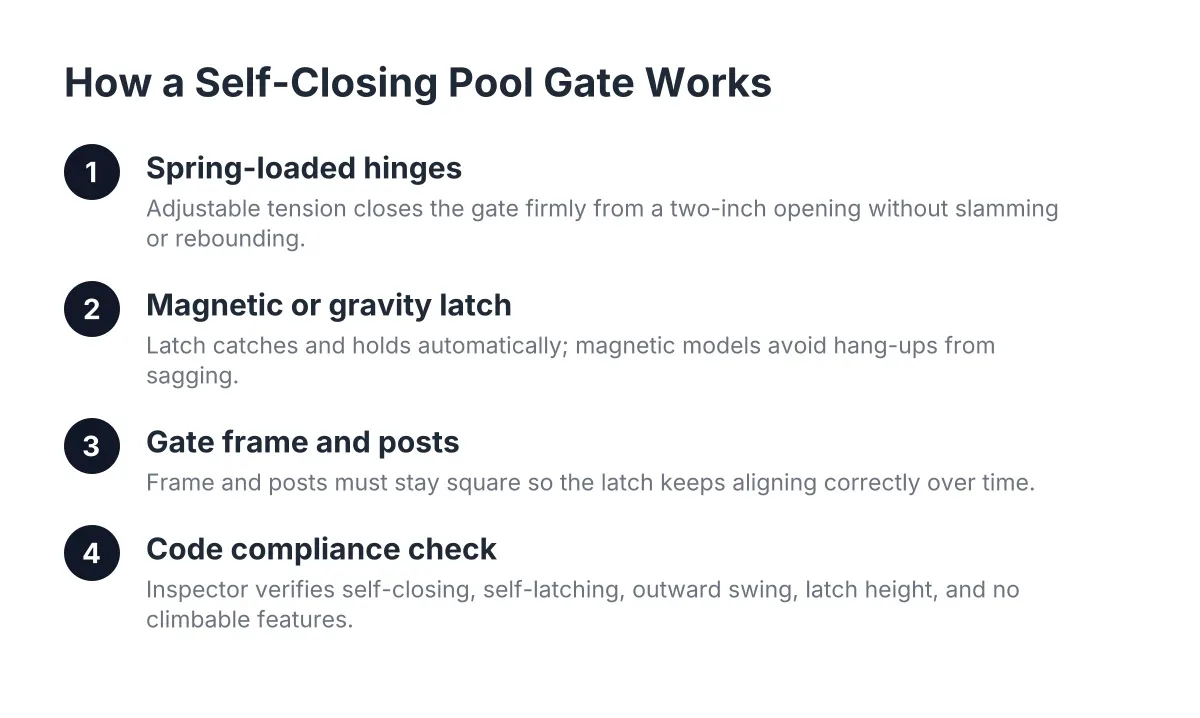
A self-closing gate is a gate with a spring or hinge system that swings it shut on its own every time it opens. You should never have to remember to close it; the gate does that job. Safety rules for pool fencing expect this feature, so a quote without it is a red flag. In Ocala's sandy soil, gates can sag over time, so ask how the installer sets and supports the gate posts.
Self-Latching Gate
A self-latching gate is a gate whose latch catches and locks automatically when the gate swings closed. Self-closing gets the gate shut; self-latching keeps it shut. The two features work as a pair, and a pool gate needs both. Test it at the final walkthrough by letting the gate swing closed from a few different angles.
Magnetic Latch
A magnetic latch is a gate catch that uses a magnet to pull the latch closed, mounted high so small children cannot reach it. It has fewer moving parts than a spring latch, so sand and humidity bother it less. Most quality pool gates use one. If your estimate lists a brandless "latch," ask whether it is magnetic and where it mounts.
Latch Height
Latch height is the distance from the ground to the gate latch, and pool safety rules set a minimum so young children cannot open the gate. The installer measures this at the final check, and an inspector will too. If a gate fails inspection, latch height is a frequent reason. It costs little to get right the first time and more to fix after.
Gate Hardware
Gate hardware means the full set of hinges, latches, springs, and locks that make a fence gate work. On a quote, "hardware" can hide big quality differences, so ask what is included. Cheap hinges rust fast in Florida humidity and heavy seasonal rain. Stainless or coated hardware costs more up front and lasts longer, which matters more here than in a dry climate.
Installation and Site Work
These terms describe what happens on install day. They explain the labor side of your estimate.
Deck Sleeve
A deck sleeve is a plastic or metal socket set into a drilled hole in your pool deck that holds a fence pole. Sleeves let poles sit firm while still being removable, and a flush cap covers the hole when a pole is out. Sleeve placement decides how straight and tight the finished fence looks. Sloppy spacing shows forever, so this is skilled work, not just drilling.
Core Drilling
Core drilling is cutting a clean, round hole into concrete or pavers with a hollow drill bit, usually to set deck sleeves. It is the main labor step in a mesh pool fence install. Deck material drives the effort: pavers, old concrete, and decorative coatings each drill differently. That is one of the cost factors behind your estimate, so expect the installer to ask what your deck is made of.
Site Prep
Site prep means everything done before the fence goes in, like marking the layout, checking for buried lines, and planning around deck joints or drains. On flat Ocala lots the layout is often simple, but sandy and shifting soil still affects how any in-ground posts get set. Good site prep is why a fence stays straight after the first rainy season. Ask what prep is included in your pool safety fence installation estimate.
Linear Foot
A linear foot is a straight-line foot of fence length, and it is the standard unit a fence company uses to measure and price a job. Measure the path the fence will follow around the pool, not the pool itself. Gates usually price separately because of the hardware. When you compare estimates, check that both bids cover the same footage and the same gate count.
Paperwork and Approval
Pool fencing comes with rules. These terms cover the approval side of the job.
Barrier Code
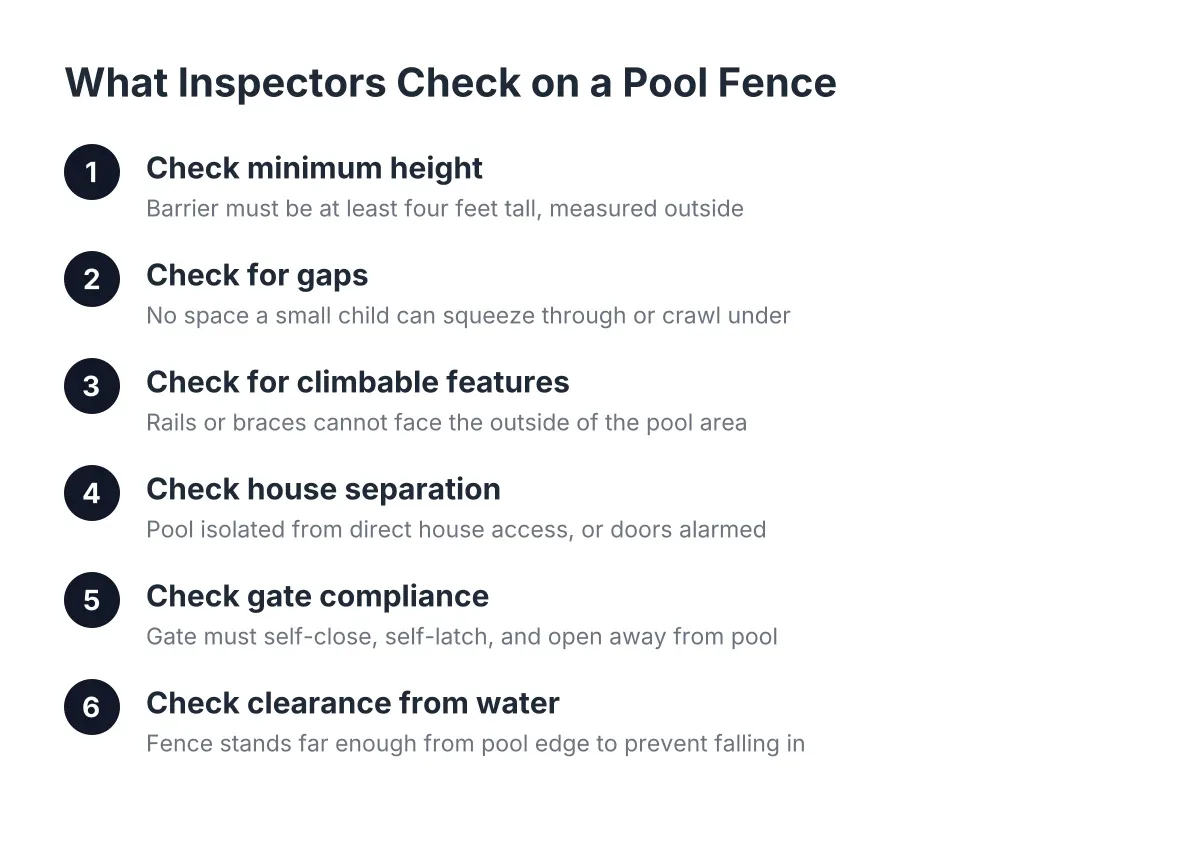
A barrier code is the set of safety rules a pool fence must meet, covering things like fence height, gaps, gate function, and latch placement. Florida has rules for residential pool barriers, and your installer should know them cold. You do not need to memorize the code; you need an installer who builds to it. Ask directly: "Will this fence meet the barrier code?" and listen for a confident, specific answer.
Permit
A permit is the local government's written approval to do the work, pulled before the job starts. Whether your pool fence needs one depends on your city and the type of work, so check with your local building department. An HOA may have its own approval step on top of that, especially in newer Ocala developments. A contractor who handles permit questions without dodging is showing you how they run the whole job.
Final Inspection
A final inspection is the official check, by a city inspector or the installer, that the finished fence meets safety requirements before the job closes out. The inspector tests gate closing, latch height, mesh tension, and gaps under the fence. Treat it as your checklist too: walk the fence, push on panels, and let the gate swing shut on its own. Do not make the last payment until everything passes.
Using These Terms
This pool safety fence glossary gives you the vocabulary to read a quote line by line instead of skimming to the total. You can now ask whether the gate is self-closing and self-latching, what the deck sleeves are made of, and who handles the permit question. If you want these terms applied to your own yard, Ocala Fence Builders can walk your pool deck and give you a straight answer.
If you need pool safety fence installation, Ocala Fence Builders can help.
Prefer to talk it through? Call (352) 670-3374 — a quick call is usually the fastest way to get a straight answer for your situation.