DIY Temporary Pool Safety Fence vs. Hiring a Pro in Ocala, FL: How to Decide
If you have a new pool in the ground and an inspection coming up, you have two paths: a DIY pool fence you set up yourself, or a permanent pool fence installed by a fence company. Both can protect a child. Only one of them reliably passes a Florida pool barrier inspection on the first try. This guide walks through both options step by step so you can decide which one fits your pool, your timeline, and your budget in Ocala, FL.
The stakes here are not abstract. From 2018 to 2020, Florida pool drownings made up 18.7% of all U.S. pool drowning fatalities, the highest share of any state, according to WFLA. That is why Florida's barrier code is strict, and why inspectors in Marion County check pool fences closely.
Step 1: Figure Out What Your Pool Actually Requires
Start by separating two different jobs: passing your pool permit inspection, and keeping a toddler out of the water on a random Tuesday. A fence can do one without doing the other.
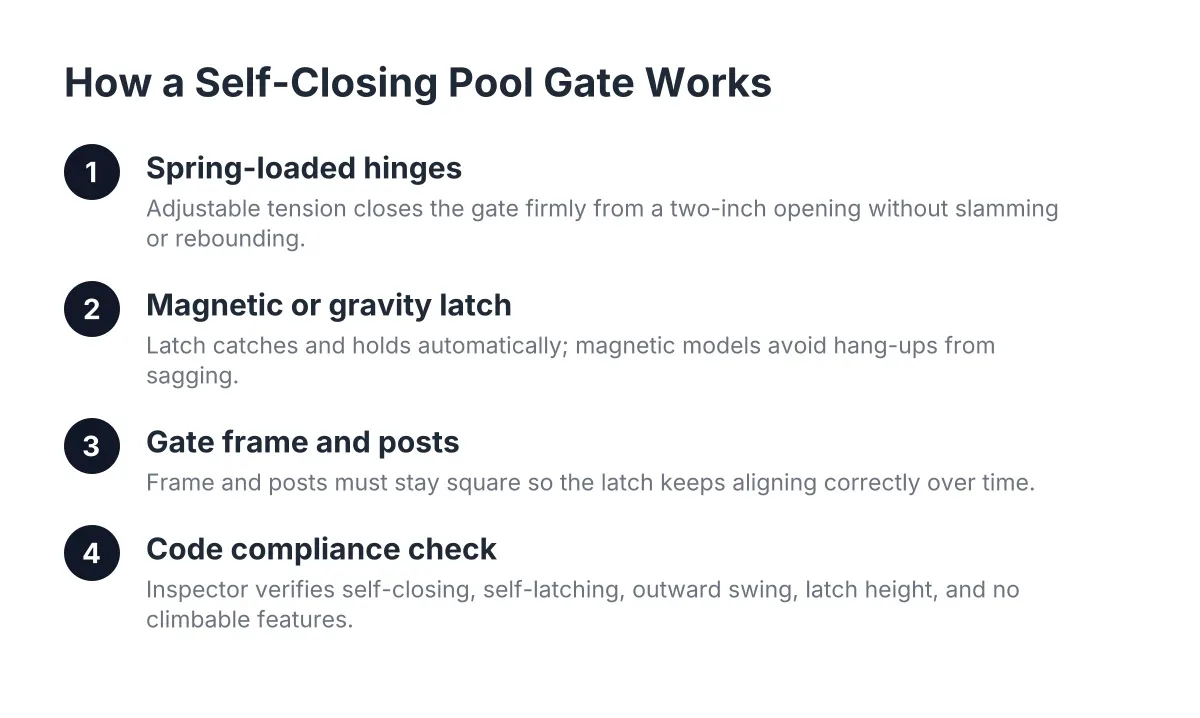
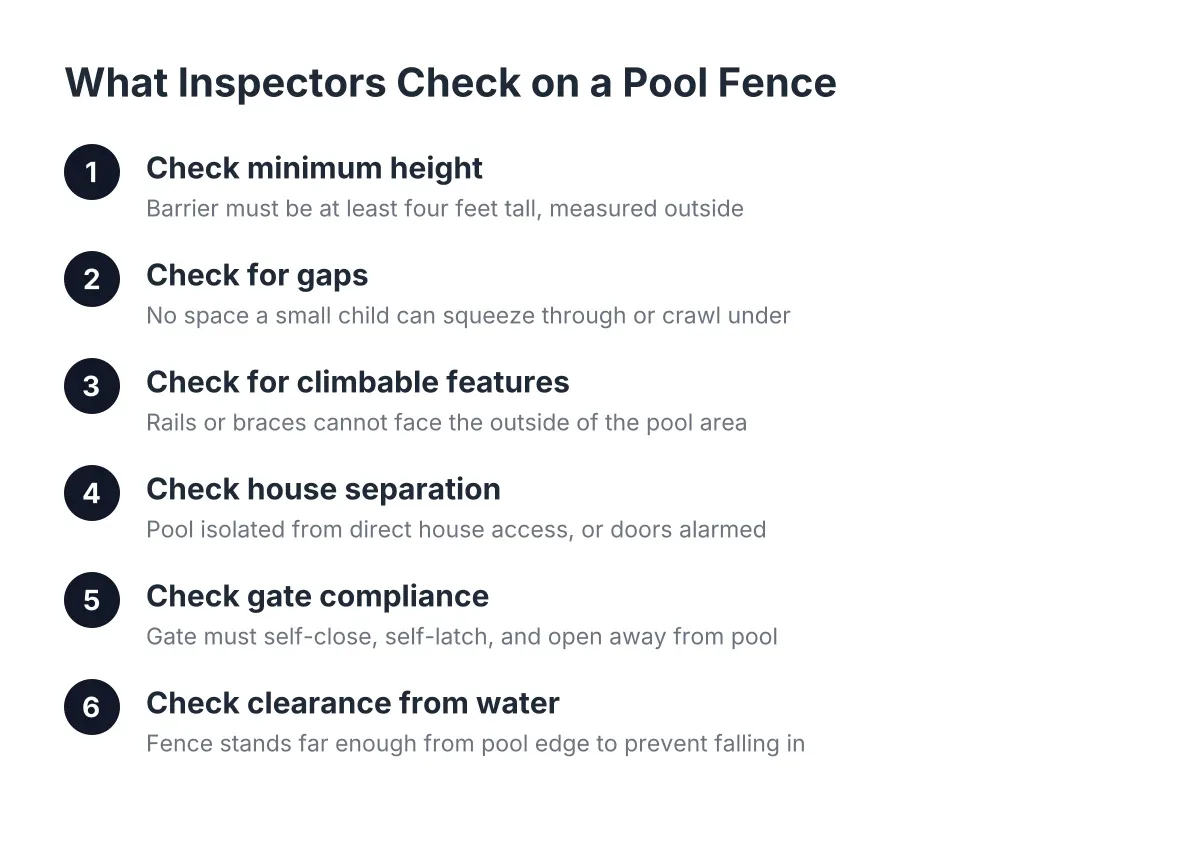
Florida's residential pool barrier rules require a barrier of a minimum height, with no gaps a small child can squeeze through, and gates that open outward away from the pool, self-close, and self-latch. The latch has to sit high enough that a small child cannot reach it. If your fence or gate misses any one of those points, the inspector fails it, even if everything else is right.
Here is the part that trips up a lot of homeowners. A DIY temporary pool fence, the mesh-and-pole kind sold online, can be a legitimate safety layer. However, most temporary setups will not satisfy a permit inspection in Ocala, FL, because they lack a compliant self-latching gate, anchor loosely in sandy soil, or leave gaps at the ends. Know which job you are solving before you spend money.
Step 2: Is DIY Pool Fencing Right for Your Situation?
Ask yourself one question: is this fence the legal barrier of record, or a second layer behind a compliant one? Your answer decides the whole project.
DIY temporary pool safety makes sense in a few specific cases:
- You already have a code-compliant perimeter fence and gate, and you want an extra isolation layer between the house and the water.
- You are between fences, say the old wood fence came down and the new vinyl fence goes in next month, and you need something in the gap.
- You rent, or you plan to sell soon, and drilling permanent posts does not make sense.
- Grandparents with a pool who host young kids a few weekends a year.
A permanent pool fence is the right call when the fence is what gets your pool permitted, when a county inspector has already flagged your existing barrier, or when you just closed on a new build and need the full perimeter fenced before move-in anyway. In that case, folding pool barrier compliance into the perimeter fence installation is usually cheaper than doing two separate projects.
One more point in favor of a real isolation layout either way. A four-sided isolation fence that separates the pool from the house and yard cuts a child's drowning risk by 83% compared to three-sided property-line fencing, according to the Centers for Disease Control and Prevention. Fencing the yard is not the same as fencing the pool.
Step 3: How to Price Out Your DIY Pool Fence Option
Before you order a mesh kit, add up the full picture, not just the sticker price. A DIY pool fence kit looks cheap per section, but the total climbs once you count every section needed to fully enclose the pool, a self-closing gate panel if the kit even offers one, a masonry drill bit set for deck sleeves, and your own weekend labor.
Then factor in Ocala conditions. Mesh panels that anchor into a concrete deck hold tension fine. Panels that anchor into grass or sand do not. Ocala's sandy, shifting soil loosens pole sleeves over a season, and a mesh fence with slack in it becomes climbable. On top of that, our heavy summer rain softens the ground further, so a removable DIY pool fence set in turf needs regular re-tensioning to stay useful.
Also be honest about what a determined kid can do. In a study on pool fence effectiveness cited by the National Institutes of Health, four-year-olds took a median of just 17 seconds to climb a five-foot fence. Height alone does not stop climbing. The fence surface matters: taut mesh and smooth vertical pickets resist climbing, while anything with a foothold invites it.
Step 4: Price Out the Professional Pool Fence the Same Way
A professional pool fence installation costs more upfront. What you are paying for is specific, so compare it line by line instead of just reacting to the estimate.
Here is what drives the cost on a professional job in Ocala:
- Linear footage and layout. A tight four-sided isolation fence around just the pool costs less than re-fencing the whole backyard, but a full perimeter fence may serve both jobs at once.
- Material. Aluminum is the most common choice around pools because it handles humidity without rotting or rusting through. Vinyl fence and chain link fence can also pass code when built to barrier specs. Wood fence works too, with one catch covered in Step 5.
- Gate hardware. Self-closing hinges and a self-latching, lockable latch mounted at code height. This is the single most common inspection failure point, and it is where DIY kits cut corners.
- Post setting in sandy soil. Posts in Ocala need to be set deep and properly footed, or gates sag within a year and stop self-latching. That is a code failure, not just an annoyance.
- Permit and HOA coordination. In a planned community, the HOA may restrict materials and heights, and the fence still has to meet pool barrier code. A local fence company deals with both at once.
For a sense of scale, suppose a family in a new build off Maricamp Road just had a pool finished and needs the yard fenced before their final pool inspection in 2026. In that scenario, combining the perimeter vinyl fence with a code-compliant self-latching pool gate in one project typically lands in the mid four figures to low five figures, depending on footage and material. That is an illustrative estimate, not a quote; your lot and layout drive the real number.
One caution on shopping by price alone. The cheapest bid often means shallower posts, lighter hardware, and a fence that needs rebuilding years sooner, which costs more over time than the better install did upfront.
Step 5: Check the Details That Fail Inspections Either Way
Whether you go temporary or permanent, these are the points an inspector, or a climbing toddler, will find. Walk your plan against this list before you buy anything.
First, rail orientation. If you use a wood fence as the pool barrier, the horizontal rails must face into the yard, toward the pool side. Many homeowners want the smooth picket side facing their own yard, but exposed rails on the outside give a child a ladder into the pool area. That preference fails code.
Next, the gate. It must swing outward, away from the pool, close on its own from any open position, and latch on its own at a height a small child cannot reach. Test it ten times, not once. A gate that latches nine times out of ten is a gate that fails.
Then, gaps. Check the space under the fence, between pickets or mesh poles, and at every end point where the fence meets the house or screen enclosure. Sandy soil erodes under fence lines here, so a gap that passed in spring can open up by fall.
Finally, climbable objects. A compliant pool safety fence stops mattering if a patio chair, cooler, or planter sits next to it. Keep a clear zone on the outside face of the barrier.
Step 6: Make the Call and Sequence the Work
Now put it together. If the fence must pass a pool permit inspection, hire a professional installer who knows Florida barrier code, and have them handle the gate hardware, post depth, and layout. The cost of failing an inspection, re-doing hardware, and re-scheduling the inspector usually erases whatever the DIY route saved. If you need protection during the gap before installation, a temporary mesh kit on the concrete deck is a reasonable bridge, used with full supervision.
If you already have a compliant barrier and want a second layer, a DIY pool fence inside the yard is a solid, affordable addition. Anchor it in concrete where possible, keep the mesh taut, and inspect the anchors after heavy rain.
The payoff for getting this right is real. A 2025 study estimates that proper pool isolation fencing and consistent life jacket use could together prevent 348 U.S. drowning deaths and $4.5 billion in economic costs annually, according to a peer-reviewed study on PubMed. The fence you choose this month is the version of that protection your family actually lives with.
One honest limit: this article covers general Florida barrier principles, but Marion County inspectors apply the code to your specific lot, pool, and house openings. Before you order materials for either route, confirm the current requirements with the county or with a local fence company that installs pool fencing in Ocala. Getting that answer first is how you avoid paying for the same fence twice.
If you need fence installation in Ocala, FL, Ocala Fence Builders can help.
Prefer to talk it through? Call (352) 670-3374 — a quick call is usually the fastest way to get a straight answer for your situation.