Wrought Iron Fence Gate Repair: 8 Hinge and Latch Fixes That Work in Ocala
A wrought iron fence gate that drags, won't latch, or hangs crooked is usually a hardware problem, not a whole-fence problem. That matters if a storm just knocked your gate off its swing, or if a pool inspection is coming and the gate has to self-close and self-latch to pass. This list walks through eight repairs, from hinge replacement to latch adjustment, so you can tell what you can fix yourself, what a fence company should handle, and what a fair iron gate hinge repair scope looks like in Ocala's sandy soil.
Most of these fixes apply whether you have true wrought iron, welded steel, or an ornamental aluminum gate that looks the part. The diagnosis steps are the same. Start at the top of the list and work down; the first three items solve the majority of gate complaints.
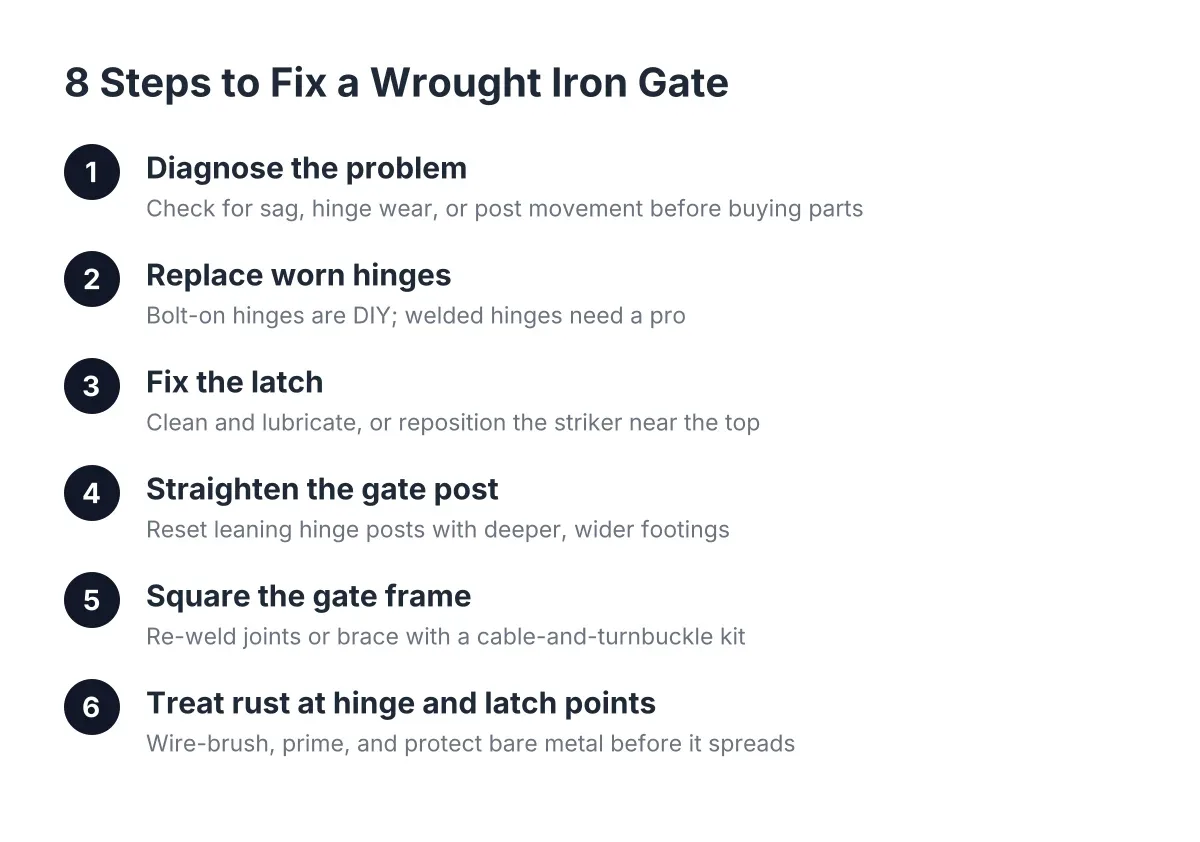
1. Diagnose Before You Buy Parts: Sag, Hinge Wear, or Post Movement
Before you order any wrought iron fence gate hardware, figure out which of three problems you have. Open the gate halfway and let go. If it swings on its own, a post is leaning. If it stays put but the latch misses the striker, measure the gap at the top and bottom of the latch side.
A wider gap at the top means the gate frame has sagged or a hinge has worn. A gap that is even top to bottom but off from the striker means the post has shifted. In Ocala, post movement is the most common cause because sandy soil lets footings tilt over time, especially after heavy summer rain saturates the ground.
This five-minute check decides everything else. Replacing hinges on a gate whose real problem is a leaning post wastes money, and it is the mistake homeowners make most often after a storm.
2. Iron Gate Hinge Repair: When to Replace Worn Hinges
Worn hinges show up as a gate that drops when you lift the latch, grinds when it swings, or wobbles side to side on its pins. For a bolt-on hinge, replacement is a homeowner-level job: support the gate on blocks, remove the old hinge, and bolt the new one through the same holes.
Welded hinges are a different story. Many iron gates have hinges welded directly to the post and frame, and swapping those means cutting the old weld and welding the new hinge in place. That is work for a pro with the right equipment, not a weekend project.
When you shop for wrought iron fence gate hinges, match three things: the pin diameter, the offset between post and frame, and the weight rating. A heavy iron gate on hinges rated for a light aluminum panel will sag again within a season. Grease the pins once a year; Ocala humidity rusts dry pins fast.
3. Fix a Latch That Misses, Sticks, or Won't Hold
A wrought iron fence gate latch usually fails in one of two ways. Either the moving parts rust and stick, or the gate shifts and the latch arm no longer meets the striker. For a stuck latch, a wire brush and a penetrating lubricant often restore movement. If the mechanism is rusted through, replace it rather than fight it.
For a misaligned latch, move the striker before you move anything else. Here is a detail that matters on Ocala lots: mount the striker near the top of the latch's catch range, not the middle. Sandy soil settles, posts drop slightly over the years, and a striker set high gives the gate room to drift down and still latch. Set it in the middle and you will be back out there with a drill in two summers.
In addition, if this is a pool fence gate, latch choice is not just convenience. Florida pool barrier rules require self-closing, self-latching gates with the release mechanism positioned out of a small child's reach. A standard gravity latch in the wrong spot can fail an inspection even if it works.
4. Straighten or Reset a Leaning Gate Post
A leaning post is the repair that most often gets misdiagnosed as a bad gate. In sandy, shifting soil, a concrete footing can tilt as a unit, taking the post and the gate's geometry with it. Heavy rain speeds this up, and a storm that pushed the fence line sideways can tilt a footing in one afternoon.
Minor leans can sometimes be corrected by excavating one side of the footing, pulling the post plumb, and repacking with compacted fill or additional concrete. However, a hinge-side post that has tilted more than slightly usually needs a full reset: dig out the old footing, replace or re-set the post, and pour new concrete deep enough for the gate's weight.
Hinge posts carry constant leverage from the swinging gate, so they need deeper and wider footings than line posts. If a fence company resets your gate post the same way it sets an ordinary line post, the lean will return.
5. Square a Sagged Gate Frame with Bracing or Welding
If the posts are plumb and the hinges are sound but the gate is still out of square, the frame itself has racked. On an iron gate, the fix depends on how it was built. A welded frame that has sagged at a joint needs the joint re-welded, which is shop or mobile-welder work.
A lighter frame can often be pulled back into square with a diagonal brace or a cable-and-turnbuckle kit running from the top hinge corner down to the bottom latch corner. Tighten the turnbuckle gradually and check the latch alignment as you go.
One trade-off to be honest about: bracing a badly racked frame is a holding action, not a cure. If the gate was bent by a falling limb in a storm, the metal may have a permanent set, and a new gate section will outlast repeated straightening attempts.
6. Treat Rust at the Hinge and Latch Points Before It Spreads
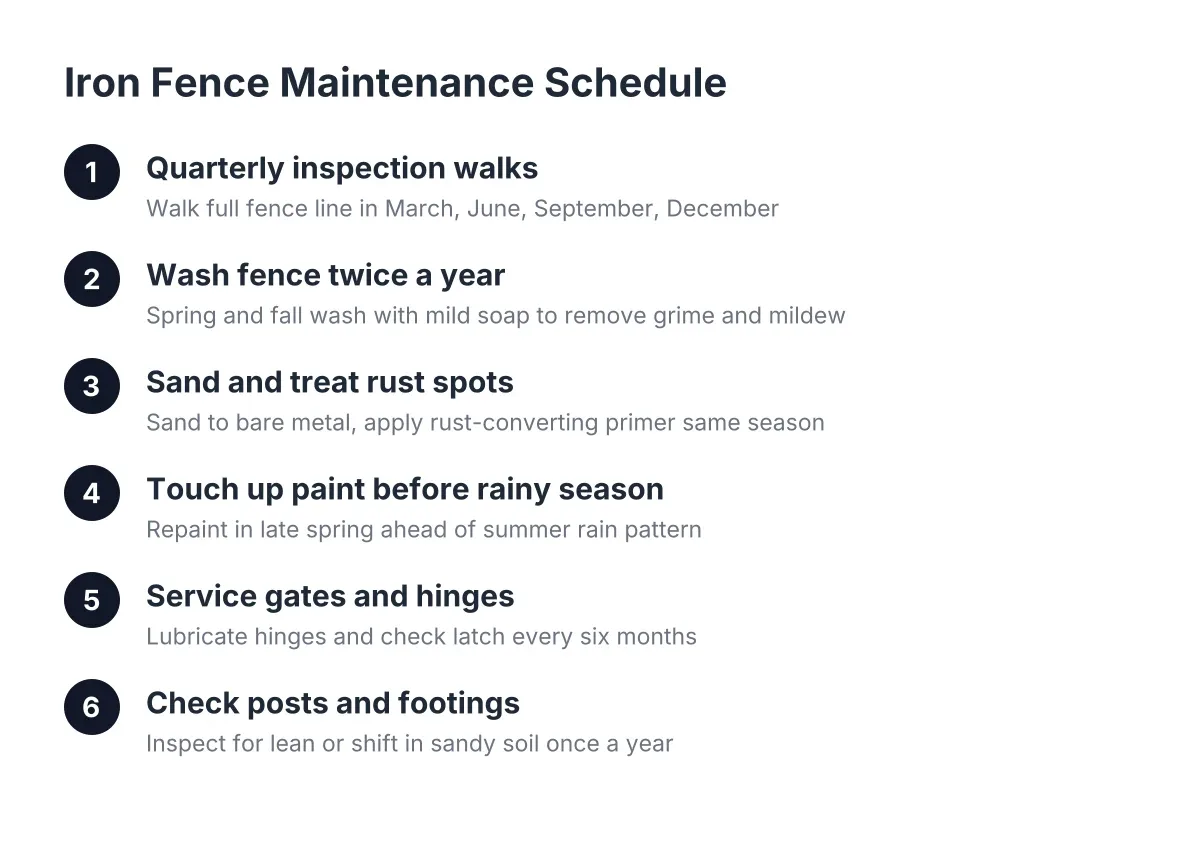
Rust concentrates where hardware meets the frame, because those joints trap water and the moving parts wear through paint. In Ocala's humidity, bare metal at a hinge pin or latch pivot starts corroding within weeks. Catching it early is the difference between a wire-brush touch-up and cutting out a rotted section.
The basic sequence works for any iron gate:
- Wire-brush or sand the rusted spot down to sound metal.
- Apply a rust-converting primer made for ferrous metal.
- Top-coat with exterior metal paint, working it into the joint edges.
- Lubricate pins and pivots after the paint cures.
Therefore, make hardware points part of an annual walk-around, ideally before hurricane season. A gate with healthy hinges and a clean latch handles storm stress far better than one already half-seized with rust.
7. When Repair Beats Replacement: Know Your Iron Gate Hinge and Frame Condition
After a storm, the repair-or-replace question comes down to what failed. Hardware, one bent picket, or a single leaning post favor repair. A frame bent out of plane, rust-through at structural joints, or multiple shifted posts favor replacement of the gate or that fence section.
For example, suppose a summer storm drops a limb across a homeowner's gate in southeast Ocala. The gate frame is bent, but the posts and footings held. In that scenario, replacing just the gate while reusing the existing posts keeps the job small, and nothing about the repair is wasted if the fence is replaced later. Sound footings and posts carry forward.
Cost factors for gate repair include whether hinges are bolted or welded, whether a post must be reset in concrete, gate size and weight, and whether matching ornamental pickets or wrought iron fence panels are needed to blend the repair with the existing fence. A written estimate should name which of those apply to your gate. Be cautious of any quote that jumps straight to full replacement without explaining why repair fails.
8. Hold a Pool Gate to a Higher Standard Than a Yard Gate
A gate in a pool fence is a safety device first. It must swing outward away from the pool, close on its own, and latch on its own, every time, with the release out of a child's reach. A yard gate that latches most of the time is an annoyance; a pool gate that latches most of the time is a hazard and a code problem.
The stakes are documented. According to the Centers for Disease Control and Prevention, a four-sided isolation fence separating the pool from the house and yard cuts a child's drowning risk by 83% compared to fencing only the property line. That protection depends entirely on the gate working. Research published by the National Institutes of Health found four-year-olds climbed a five-foot fence in a median of 17 seconds, so a gate left ajar by a weak latch defeats the whole barrier.
As a result, if your pool gate is the one that sags or sticks, move it to the top of your list. Homes facing an insurance inspection or a closing deadline should have the gate tested and repaired before the inspector arrives, not after a failed report.
When to Call a Fence Company for Gate Repair
Call a pro for welded hinge replacement, post resets in concrete, frame welding, and any pool gate that must pass inspection. Those jobs need equipment, footing know-how for sandy soil, and familiarity with Florida pool barrier requirements. A homeowner can handle bolt-on hinge swaps, latch adjustments, striker relocation, lubrication, and spot rust treatment.
Call sooner rather than later if the gate is the only thing keeping a dog in the yard or kids out of a pool, if a hinge-side post moves when you push it, or if storm damage left the gate unable to close at all. A gate that cannot secure the yard is a today problem, not a someday project.
When you compare installers, ask three questions. How will you set or reset the hinge post, and how deep? Is the repair compatible with the existing fence, or will hardware and panels mismatch? What exactly does the estimate cover, hardware, labor, concrete, and haul-away? Clear answers to those three tell you more than any sales pitch. Also check whether your HOA has rules on gate style or height before approving work; according to Forbes, fencing shows up in 23% of HOA violation notices, so a quick email to the board can prevent an expensive redo.
If your gate is dragging, your latch will not catch, or a storm left the whole section leaning, Ocala Fence Builders repairs and installs gates and fencing across Ocala and the surrounding area. Reach out for an estimate, describe what the gate is doing, and get a straight answer on whether a repair or a replacement is the smarter spend.
If you need fence repair, Ocala Fence Builders can help.
Prefer to talk it through? Call (352) 670-3374 — a quick call is usually the fastest way to get a straight answer for your situation.