Wrought Iron Fence Maintenance Schedule for Florida Weather: Step by Step
Florida is hard on iron. Humidity, summer rain, and salt in the air all push rust along faster than in dry climates. A wrought iron fence maintenance schedule built for Ocala's weather keeps a decorative perimeter fence solid for decades instead of a rust problem in five years. This guide walks through the full routine, step by step, timed to Florida's seasons.
The work is not complicated. Most of it is washing, inspecting, and touching up paint before small spots become big ones. If you live in a deed-restricted community, the same schedule also keeps the fence looking the way your HOA expects. That matters more than most people think. According to Forbes, fencing is a factor in 23% of HOA violation notices, tied with design changes as the second most common issue behind landscaping.
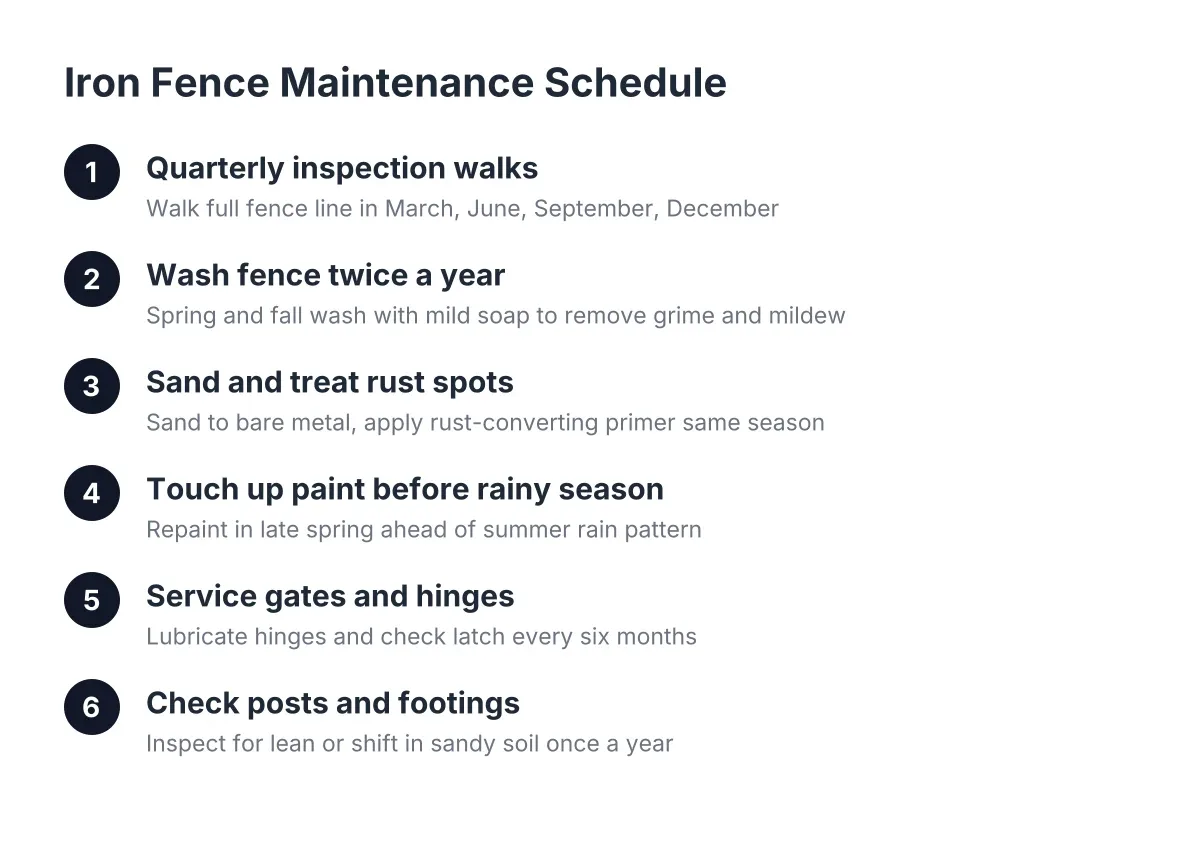
Here is the schedule, broken into steps you can put on a calendar.
Step 1: Quarterly Walks for Iron Fence Inspection and Maintenance Schedule
Start with a slow walk along the full fence line four times a year. In Ocala, good checkpoints are March, June, September, and December. The June check catches damage before the heaviest rain, and the September check catches what the storm season did.
Look for these specific problems:
- Orange or brown staining anywhere on pickets, rails, or posts
- Bubbling or flaking paint, which means rust is already working underneath
- Posts that lean or wobble when you push them, a common result of sandy, shifting soil
- Gaps where rails meet posts, since water collects in open joints
- Sprinkler overspray patterns, visible as rust streaks on the lower third of the fence
On acreage, this walk takes longer, so split it into sections. Suppose you own a 10-acre property near Marion Oaks with an iron perimeter section along the road frontage. In that scenario, a quarterly walk of just that visible run takes 20 minutes and catches problems a year before they show from the driveway.
Write down what you find and where. A short list with locations makes the later steps faster, and it gives you a record if your HOA ever questions the fence's condition.
Step 2: Wash the Fence Twice a Year
Wash the iron in spring and again in fall. Florida's humidity lets grime, pollen, and mildew sit on the metal and hold moisture against the finish. That trapped moisture is what starts rust, even on painted iron.
Use a bucket of warm water with a few drops of dish soap and a soft brush or sponge. Scrub pickets, rails, and the tops of posts, then rinse with a garden hose. Avoid pressure washers on high settings; they can blast paint off and open the metal to the weather you are trying to block.
Pay extra attention to the bottom rail and the lower few inches of each picket. Grass clippings, mulch, and irrigation water all concentrate there. If your sprinklers hit the fence, adjust the heads now. Constant overspray is the single most common cause of early rust on residential fencing in this area, and it is also the cheapest problem to fix.
Let the fence dry fully before moving to any touch-up work. In summer humidity, give it a full sunny day.
Step 3: Sand and Treat Rust Spots the Same Season You Find Them
Do not let a rust spot wait until next year. Rust spreads under paint, so a spot the size of a dime in June can undercut a whole picket's finish by December. Treat every spot you logged in Step 1 during the same season.
The process for each spot:
- Sand the rusted area with medium-grit sandpaper or a wire brush until you reach clean metal.
- Wipe the area with a damp cloth and let it dry.
- Apply a rust-converting primer made for metal. This chemically neutralizes any rust you could not remove.
- Let the primer cure per the product label before painting.
For pitted areas where rust has eaten into the surface, an auto-body filler rated for metal can smooth the profile before primer. If a picket has rusted through, or a weld has cracked, that is a repair job rather than maintenance. A fence company can replace individual pickets or sections; cutting and welding iron is not a safe weekend project for most homeowners.
Step 4: Touch Up Paint Before the Rainy Season
Schedule paint touch-ups for late spring, after the Step 3 primer work and before the summer rain pattern sets in. Paint is the fence's only real barrier against Florida moisture, so timing the touch-up ahead of the wettest months gets the most protection per hour of work.
Use an exterior paint formulated for metal, in a finish that matches the existing fence. Brush application works better than spray for spot work because it builds a thicker film on the repaired area. Feather the edges into the surrounding paint so the patch does not show.
For HOA communities, color matters as much as condition. However, before you repaint a full fence in a new color or sheen, check your architectural review rules. Many Ocala-area HOAs treat a color change on a wrought iron fence the same as a new fence installation and require approval first. A touch-up in the existing color almost never needs paperwork; a visible color shift might. Getting that answer in writing before you open a paint can is how you avoid a violation letter.
Step 5: Service Gates and Hinges Every Six Months
A fence gate takes more abuse than any other part of the fence, and gate problems are what neighbors and HOA boards notice first. Twice a year, in the same months you wash the fence, run through this routine:
- Open and close the gate and listen for grinding or squealing
- Apply a silicone or lithium lubricant to hinges and the latch mechanism
- Check that the latch catches cleanly without lifting or forcing the gate
- Look at the gate posts for lean, since sandy soil lets gate posts shift under the repeated load
Gate sag is common here because of the soil, not because of bad hardware. Therefore, if the gate drags or the latch stopped lining up, check the post before replacing hinges. A leaning post needs to be reset, which usually means fence repair work on the footing rather than a hardware swap.
If the iron gate encloses a pool area, the latch is a safety device, not just a convenience. The Centers for Disease Control and Prevention reports that a four-sided isolation fence separating the pool from the house and yard reduces a child's drowning risk by 83% compared to three-sided fencing. A self-closing, self-latching pool fence gate only delivers that protection if the latch actually works, so test it every time you service it.
Step 6: Check Posts and Footings Once a Year
Once a year, ideally in winter when growth is down and you can see the ground line, inspect where each post meets the soil or concrete. This is where iron fences fail structurally, and the damage hides below eye level.
Look for rust at the ground line, cracked concrete around footings, and soil washed away from post bases after heavy rain. Ocala's sandy soil drains fast, but it also shifts, and a footing that has lost surrounding soil will let the post rock. Push each post firmly. Any movement means the footing needs attention before the next storm season loads the fence with wind.
Clear vegetation away from the fence line during this check. Vines and tall grass hold moisture against the metal and hide rust until it is advanced. On larger acreage runs, a cleared strip along the fence also makes every future quarterly walk faster.
A Year of Wrought Iron Fence Maintenance at a Glance
Put the whole routine on a calendar once and the fence stops being something you worry about. Here is the full year for an Ocala property:
- March: Quarterly walk, spring wash, gate and hinge service
- April to May: Sand and prime rust spots, touch up paint before summer rain
- June: Quarterly walk, adjust sprinklers hitting the fence
- September: Quarterly walk after peak storm season, fall wash, gate service
- December: Quarterly walk, annual post and footing inspection, clear vegetation
Most homeowners spend a few hours per season on this. The payoff is a fence that holds its finish, passes any HOA inspection without a letter, and avoids the kind of structural rust that forces section replacement.
When Maintenance Ends and Repair Begins
Routine wrought iron fence maintenance handles surface rust, paint, and hardware. It does not handle rusted-through pickets, cracked welds, leaning posts, or storm damage. Those call for a fence repair visit, and waiting on them makes the eventual fix larger.
There is one honest trade-off to name. Iron asks for more upkeep than aluminum, which is why metal fencing overall, including steel and aluminum, held a 47.2% share of the fencing market in 2025, according to Mordor Intelligence. Iron rewards the extra work with weight and a look aluminum cannot match, but if this schedule sounds like more than you want to take on, an aluminum fence installation is the lower-maintenance path to a similar style. Either way, the cost factors for repair versus replacement depend on the extent of rust, the number of affected sections, and access along the fence line, so get an estimate before assuming a damaged section means a full replacement.
If you need fence installation, Ocala Fence Builders can help.
Prefer to talk it through? Call (352) 670-3374 — a quick call is usually the fastest way to get a straight answer for your situation.