Custom Wrought Iron Fence Designs in Ocala, FL: Scrollwork, Pickets, and Privacy Options
A custom wrought iron fence gives you more design control than almost any other fence type: picket spacing, scrollwork, finial styles, and even partial privacy panels can all be shaped to match your property or your HOA's architectural rules. This FAQ answers the questions Ocala, FL homeowners and commercial property managers ask most when they are ready to choose a design and hire an installer, with a focus on what drives cost, what the process looks like, and how to get HOA approval on the first try. Whether you're exploring custom iron fence design options or comparing costs, this guide covers what you need to decide.
What design options does a custom wrought iron fence include?
A custom wrought iron fence can be built with flat-top, spear-top, or looped pickets, decorative scrollwork between rails, cast finials on posts, and ring or circle accents along the top rail. You also choose picket spacing, rail count, overall height, and the finish color. Gates can match the fence or carry a more ornate design as a focal point.
For most Ocala neighborhoods, three broad styles cover the field:
- Plain picket. Straight vertical pickets, two or three horizontal rails, no ornament. This is the style most HOAs approve fastest because it reads as clean and traditional.
- Decorative scrollwork. Scrolls, rings, or cast accents added between rails or at the gate. This suits older ranch-style homes and historic-look properties.
- Puppy picket or double picket. Tighter spacing on the lower section to keep small pets in and critters out, common on larger lots.
Custom wrought iron fence panels are fabricated to your measurements, which matters on sloped sections or odd lot lines where off-the-shelf panels leave gaps.
Can a wrought iron fence provide privacy?
A wrought iron fence is open by design, but privacy options exist. Fabricators can add flat metal privacy inserts behind the pickets, tighten picket spacing so sight lines close at an angle, or pair the iron with plantings like viburnum or podocarpus hedges. Many homeowners run iron along the street-facing side for looks and use a vinyl fence or wood fence on side property lines for full privacy.
That mixed approach is common in deed-restricted communities. The HOA often requires an open, decorative fence facing the street but allows solid residential fencing in the backyard. Ask your fence company to draw both runs on one site plan so the architectural review board sees the whole picture at once.
Will my HOA approve a custom iron fence design?
Most HOAs approve decorative metal fencing readily because it preserves sight lines and matches the look boards want. According to Forbes, fencing is a factor in 23% of HOA violation notices, so getting written approval before installation is worth the paperwork. Submit the exact design drawing, height, color, and placement relative to the property line.
A first-submission approval usually comes down to four details:
- Height. Many communities cap front-yard fencing lower than backyard fencing. Confirm the number in your covenants before you pick a panel height.
- Color. Black is the default approval; bronze and dark green sometimes pass. Bright or unpainted finishes rarely do.
- Picket style. Spear-top pickets get rejected in some family-focused communities. Flat-top or looped pickets are the safer submission.
- Setback from the property line. A survey showing fence placement prevents the most common rejection reason.
Suppose a homeowner in a gated Ocala community had a wood fence proposal rejected last spring. In that scenario, resubmitting with a black flat-top iron design, a copy of the lot survey, and a manufacturer-style drawing of the panel is the fastest path to a yes, because the board can see exactly what will go in the ground.
What drives the cost of a custom wrought iron fence?
The cost of a custom wrought iron fence depends on linear footage, fence height, the amount of decorative work, gate count and width, and site conditions like slope and soil. Ornament is the biggest swing factor; scrollwork, cast finials, and privacy inserts add fabrication hours, not just material. A plain picket run costs meaningfully less per foot than the same length with scrolls and rings.
Custom styles look more expensive because they genuinely are; they take more steel and more labor than a standard panel, the same way board-on-board wood costs more than a flat privacy fence. Other cost factors to expect on an estimate:
- Number and size of gates, since a wide driveway gate with matching scrollwork is often the single priciest line item
- Corner and end sections that need cut-to-fit panels rather than full stock lengths
- Post footing depth, which matters in Ocala's sandy soil
- Removal and haul-away of an existing fence
- Finish type, since powder coating outlasts field painting in Florida humidity
Avoid any quote that gives one flat per-foot price without walking the line first. A fair estimate itemizes panels, posts, gates, concrete, and demolition separately.
How long does design and installation take?
Plan for two phases: fabrication and installation. Stock iron panels can go in within days of approval, while fully custom scrollwork panels and gates need fabrication lead time that can run several weeks depending on the design. HOA review adds its own clock; many boards meet monthly, so submit your design packet before you schedule anything.
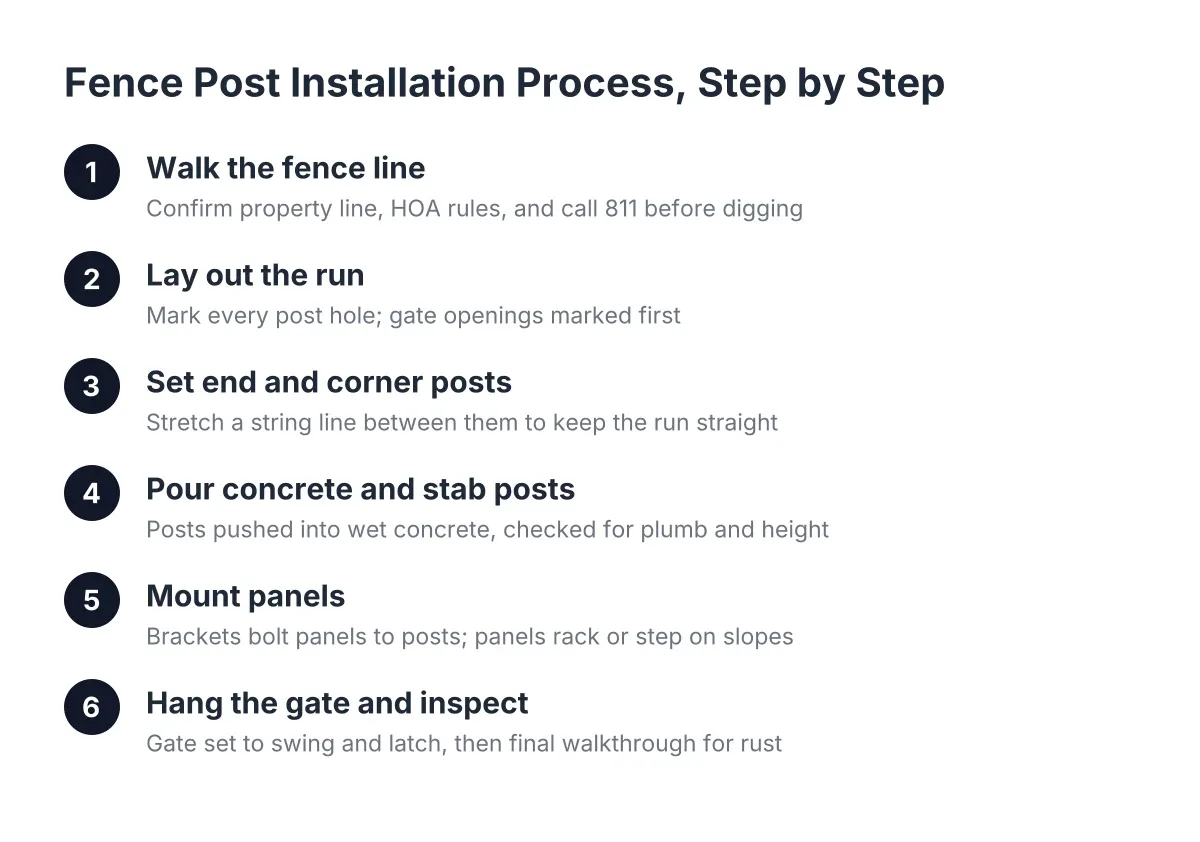
Installation itself moves fast once materials arrive. A typical crew sets posts in concrete first, lets footings cure, then hangs panels and gates. A standard residential perimeter usually wraps in a few working days, weather permitting.
Does Ocala's climate affect an iron fence?
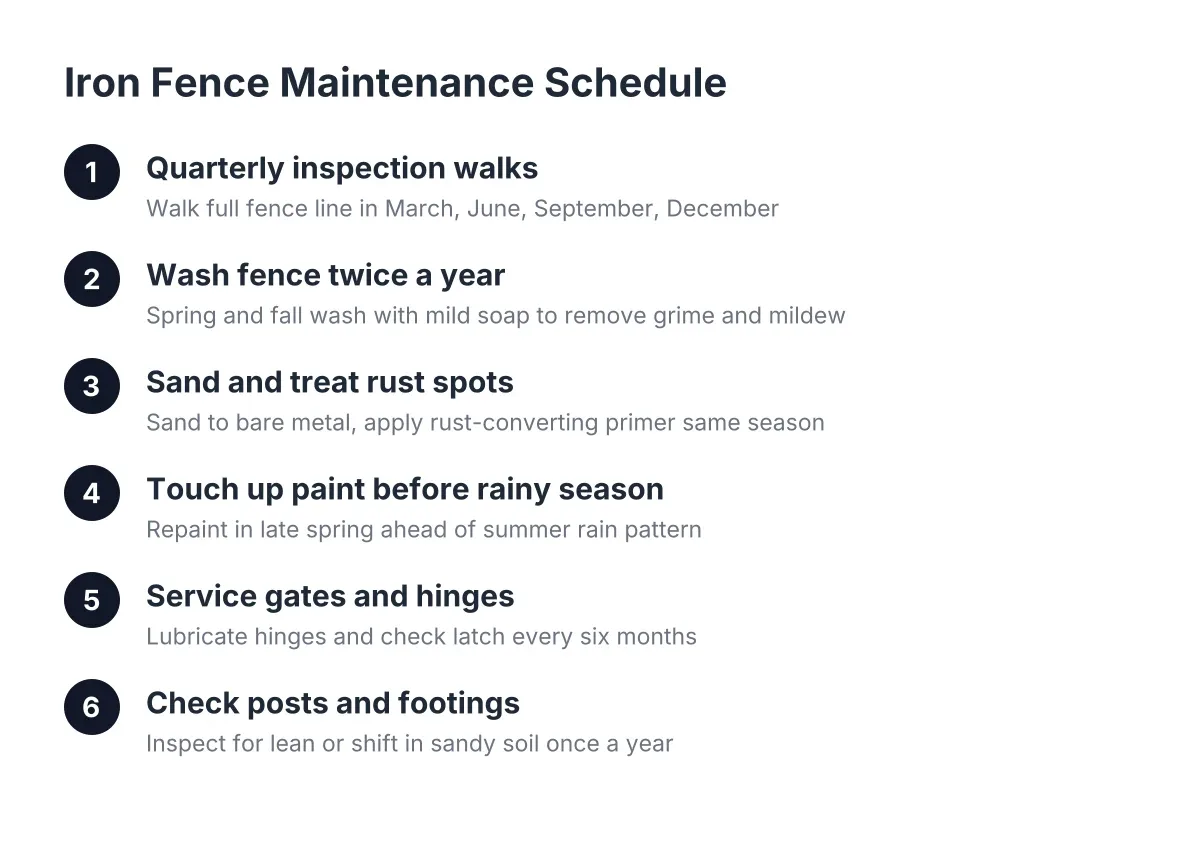
Ocala's humidity and heavy summer rain make rust protection the deciding factor in how long an iron fence lasts. Insist on a galvanized or powder-coated finish rather than bare steel with field paint, and plan to touch up scratches before corrosion starts. Sandy, shifting soil also means post footings need adequate depth and concrete, or gates sag within a few seasons.
For commercial sites, metal remains the standard for a reason. According to Mordor Intelligence, metal products held a 47.2% share of the fencing market in 2025, largely because they stay the default for high-security and industrial perimeters. A self-storage operator or auto lot in Ocala often pairs decorative iron at the customer-facing entrance with security-grade chain link fence along the rear perimeter, keeping curb appeal where it counts and cost down where it does not.
Can an iron fence work as a pool fence?
Iron and aluminum picket fencing can serve as pool fencing when built to code with self-closing, self-latching gates and compliant picket spacing. Layout matters as much as material. According to the Centers for Disease Control and Prevention, a four-sided isolation fence separating the pool from the house cuts a child's drowning risk by 83% compared to three-sided property-line fencing.
Height alone is not enough either. A National Institutes of Health study found children as young as four climbed a five-foot fence in a median of 17 seconds, so avoid horizontal rails positioned where they act as footholds. Pool barrier codes are specific, so have a professional confirm your design meets Florida requirements before fabrication.
Should I install a wrought iron fence yourself or hire a pro?
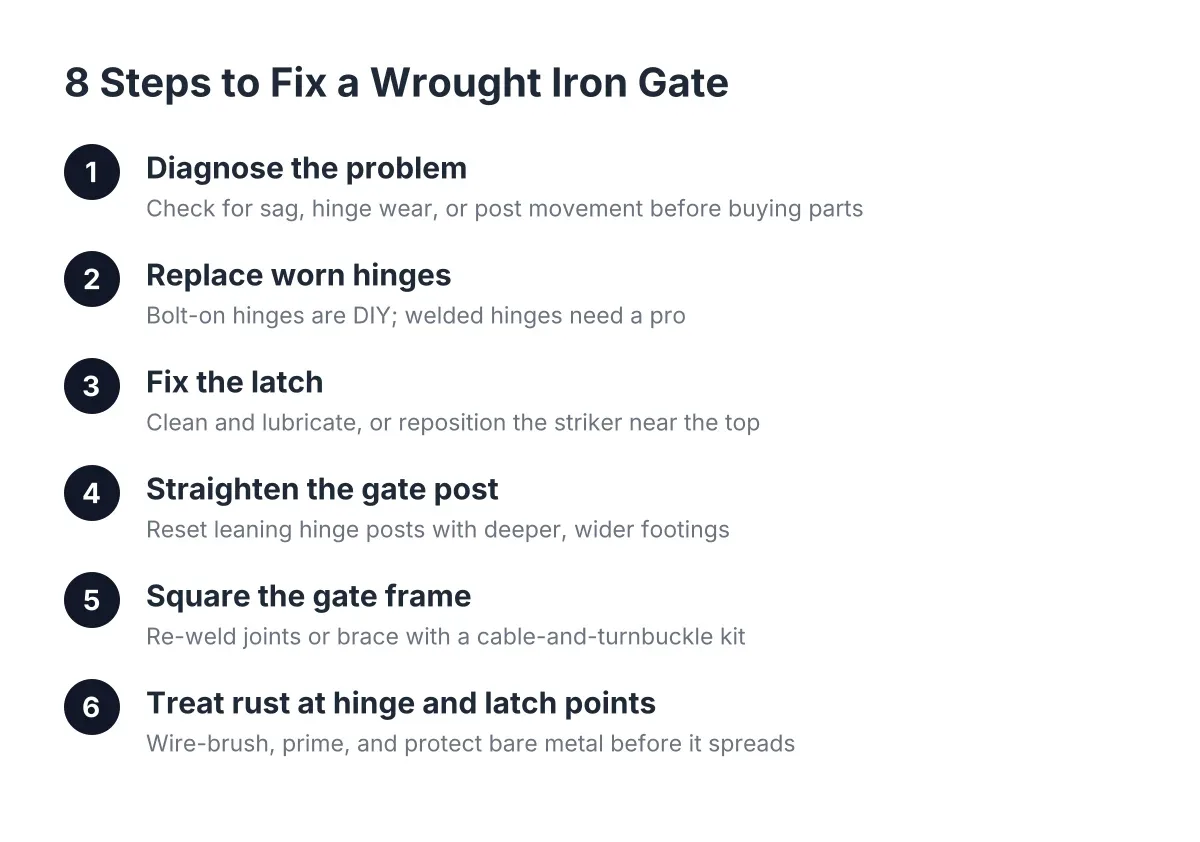
Hire a professional for any custom iron installation. Welded panels are heavy, custom sections must be cut and fitted at corners where full panels will not fit, and gates need plumb posts with properly cured footings to swing true. A homeowner can handle touch-up painting and hinge lubrication; post setting, panel fabrication, and gate hanging belong with an installer.
Call a pro now if you see leaning posts, a dragging fence gate, or rust bubbling under paint. Those problems compound, and fence repair is cheaper before the footing fails. One honest trade-off: iron demands more upkeep in Florida humidity than aluminum, so if zero maintenance is the priority, compare an aluminum fence before committing.
How do I choose a fence company for custom iron work in Ocala, FL?
Choose an installer who will walk your property line, put design specifics in writing, and help with your HOA packet. Ask these three questions before signing anything:
- Will you provide a drawing and spec sheet I can submit to my architectural review board?
- How deep do you set posts in sandy soil, and is concrete included in the estimate?
- Is the finish powder-coated or field-painted, and what does touch-up look like in year three?
A fair quote itemizes everything: panels, posts, gates, footings, demolition, and permit handling if your project needs one. Vague lump-sum pricing is where surprise charges hide.
If you are weighing a custom wrought iron fence for a home in a deed-restricted community or a commercial perimeter in Ocala, Ocala Fence Builders can walk the line, talk through design and cost factors, and put together an estimate with the drawings your HOA or ownership group will want to see.
If you need fence installation in Ocala, FL, Ocala Fence Builders can help.
Prefer to talk it through? Call (352) 670-3374 — a quick call is usually the fastest way to get a straight answer for your situation.