Wrought Iron Fence vs. Aluminum: 8 Durability and Maintenance Facts to Compare
If you want the look of a classic wrought iron fence, aluminum is the first alternative most Ocala homeowners should weigh before signing anything. When you're choosing between an iron vs aluminum fence, both give you that ornamental, open-picket style that upgrades a plain backyard and works well around a pool. However, they behave differently in Florida heat, humidity, and sandy soil. Here are eight points that separate the two, so you can pick the one you will not regret in a few years.
1. Rust Is the Deciding Factor in a Wrought Iron Fence Aluminum Comparison
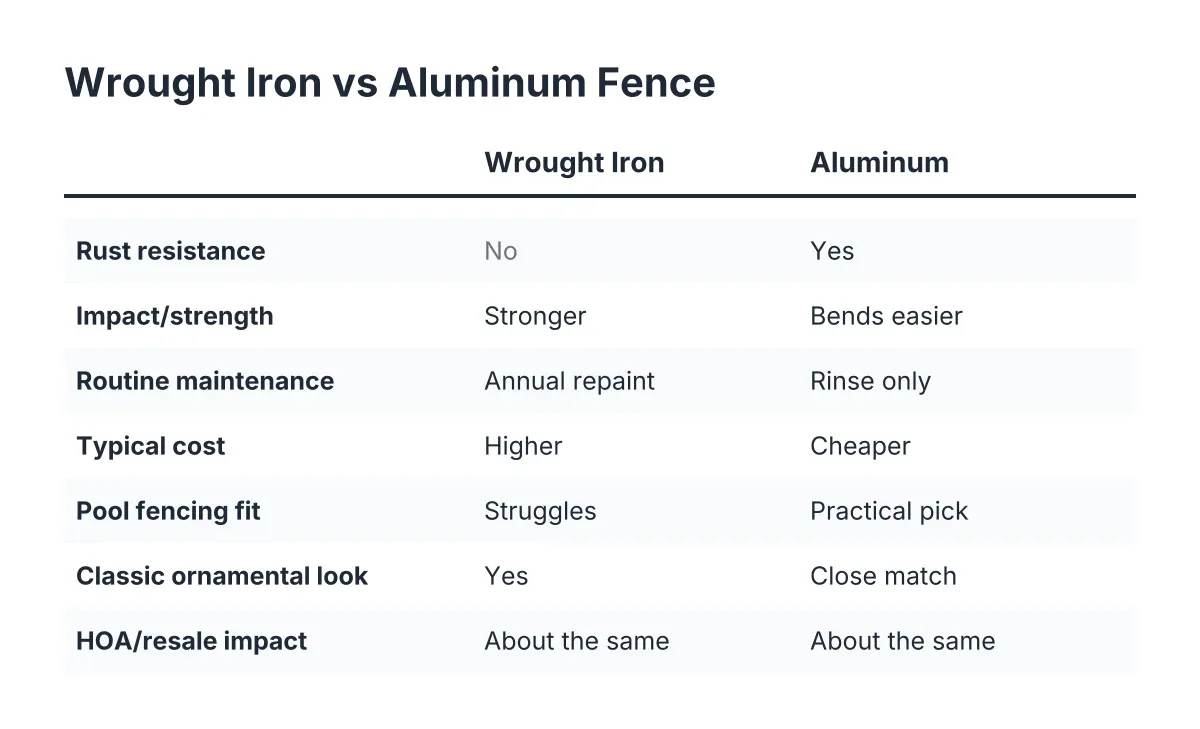
Start here, because rust decides most of this debate in Florida. Wrought iron is a ferrous metal, which means it oxidizes when the protective coating breaks. Ocala's humidity, heavy summer rain, and lawn sprinklers hitting the bottom rail all speed that up.
Aluminum does not rust. It can oxidize on the surface, but that layer actually protects the metal underneath instead of eating through it. For a homeowner who does not want to spend weekends sanding and repainting, that single difference matters more than anything else on this list.
In practice, an iron fence in a humid climate needs inspection every year and touch-up paint wherever the coating chips. Skip that for a few seasons and you get the flaking, orange-stained pickets that make a yard look worse than the chain link fence you were trying to replace.
2. Strength and Impact Resistance Favor Iron
Wrought iron is heavier and harder to bend than aluminum. If someone backs a riding mower into an iron picket, it usually shrugs it off. The same hit can bend an aluminum picket, and you would need to replace that section or panel.
Therefore, iron still makes sense in specific situations: a fence line along a busy road, a commercial fencing job where impact is likely, or a rural perimeter where livestock or equipment might lean on it. According to Mordor Intelligence, metal products including steel and aluminum held a 47.2% share of the fencing market in 2025, and high-security sites are a big reason why.
For a typical Ocala backyard on a flat residential lot, though, that extra strength rarely gets used. Most homeowners never test the difference, but they pay for it in weight, cost, and upkeep.
3. Maintenance Is Where Aluminum Wins Over Time
A powder-coated aluminum fence needs almost no routine work. Rinse off dirt and grass clippings a couple of times a year and check that gate hardware stays tight. That is the whole job.
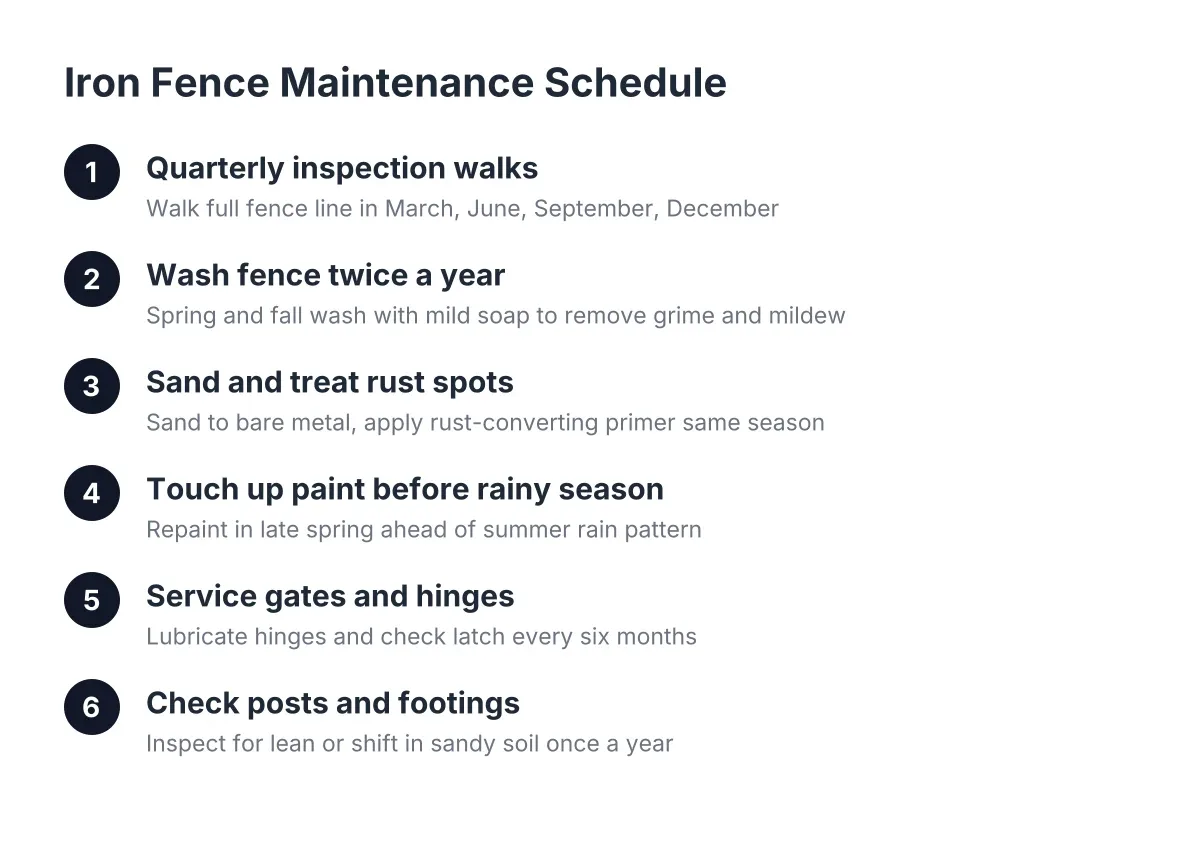
Iron asks for more. Expect to inspect welds and picket bases annually, scrape and repaint chipped spots, and keep sprinklers from soaking the bottom rail. In a dry climate that is manageable. In Ocala's wet season, the maintenance window between touch-ups shrinks.
In addition, paint failure on iron tends to start where you cannot see it: the bottom of pickets hidden by grass, and the inside corners of decorative scrollwork. By the time rust shows on the face of the fence, it has often been working underneath the coating for a while.
4. Cost Factors Run in Aluminum's Favor for Most Yards
Is aluminum fence cheaper than wrought iron? In most cases, yes, and usually by a wide margin. We will not quote figures here because every yard is different, but the cost factors are consistent. True wrought iron is heavier, often custom-fabricated, and slower to install, so both material and labor run higher. Aluminum ships as pre-made panels that a crew can set faster.
Several things drive the final estimate for either material:
- Linear footage and the number of corners along your property line
- Gate count and width, since a wide driveway fence gate costs more than a walk gate
- Fence height, which matters for pool code compliance
- Decorative options, since ornate wrought iron fence designs with scrollwork or finials take more fabrication time
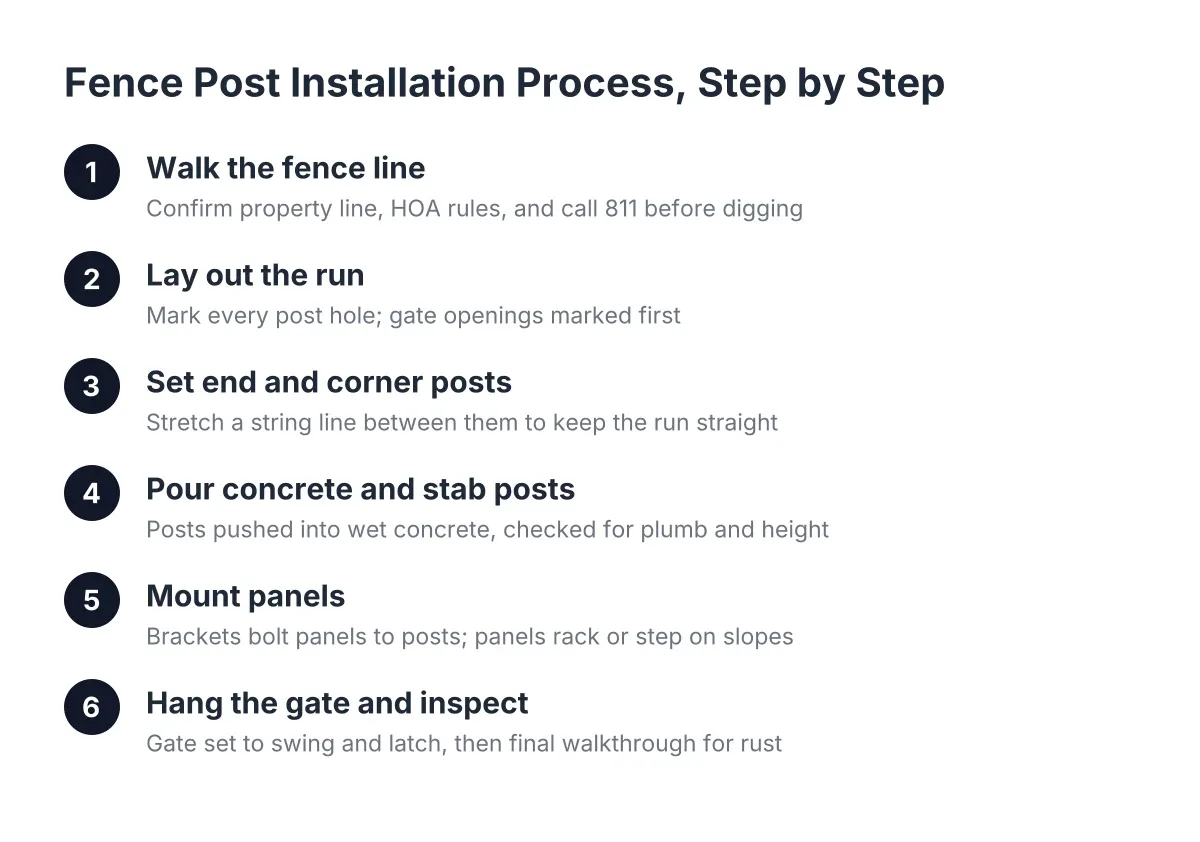
- Soil conditions, because Ocala's sandy soil affects post depth and how much concrete each post needs
That last point deserves emphasis. Sandy, shifting soil is hard on heavy fences. Iron's extra weight puts more stress on posts over time, which can show up later as leaning sections and a sagging fence gate. Proper post setting matters for both materials, but the penalty for cutting corners is bigger with iron.
5. Pool Fencing Tilts the Choice Toward Aluminum
If this fence is going around a pool, aluminum is the practical pick for most households. It meets Florida pool barrier requirements when installed at the right height with the right picket spacing and a self-closing, self-latching gate. It handles pool chemicals and constant splash without corroding, which is exactly where iron struggles.
The layout matters as much as the material. According to the Centers for Disease Control and Prevention, a four-sided isolation fence that separates the pool from the house and yard cuts a child's drowning risk by 83% compared to three-sided property-line fencing. Material choice does not change that math; fence placement does.
Height alone is not a magic number either. A National Institutes of Health study found children as young as four climbed a five-foot fence in a median of 17 seconds. That is why picket spacing, no horizontal footholds, and a reliable latching gate matter as much as the height on the permit drawing. If you are fencing a pool for an inspection or a closing deadline, have a fence company or your local building department confirm the current code requirements before you order panels.
6. Wrought Iron Style Aluminum Fence Panels Close the Looks Gap
Can an aluminum fence really pass for wrought iron? From the curb, yes. Modern wrought iron style aluminum fence panels copy the classic profiles: flat top, spear top, press-point pickets, and double-rail designs. Powder coating in matte black reads as iron from a few feet away, and most visitors will never know the difference.
Where iron still wins is custom work. Hand-forged scrollwork, curved sections, and one-off wrought iron aluminum gates with heavy ornamentation are iron's home turf. If your vision is a custom estate entrance with twisted pickets and a monogram, aluminum panels will not get you there.
For the homeowner replacing a rusted chain link fence to boost curb appeal before a sale, though, aluminum wrought iron fence panels deliver the upgrade buyers notice without the fabrication timeline. The market reflects that shift; The Business Research Company values the global aluminum metal fencing market at a projected $4.93 billion in 2026, growing at 6.9% a year.
7. Gates Behave Differently on Each Material
Gates are where fence problems show up first, and the two materials age differently here. An iron gate is heavy. On Ocala's sandy soil, that weight pulls on the hinge post year after year, and gate sag is the most common fence repair call on older iron installs. Fixing it usually means resetting the post, not just adjusting hinges.
By contrast, an aluminum fence gate weighs a fraction as much, so hinge posts hold their line longer. For a pool fence, that lighter weight also helps the self-closing hinge do its job consistently, which is the whole point of the code requirement.
Either way, spend your money on the gate hardware. A good latch and adjustable hinges cost little compared to the fence itself and prevent most of the problems people blame on the material.
8. HOA Rules and Resale Treat Both About the Same
Suppose a homeowner in a newer Ocala development wants to replace a sagging chain link fence with a black ornamental fence before listing the house. In that scenario, the HOA review board is unlikely to care whether the pickets are iron or aluminum; they care about height, color, style, and placement relative to the property line. Both materials typically satisfy an ornamental fence requirement.
Getting that approval right matters more than people think. A Forbes-reported survey found fencing is a factor in 23% of HOA violation notices, tied for second place behind landscaping. Submit the style drawing and get written approval before the fence installation starts, and confirm whether your project needs a permit.
For resale, both read as a premium over chain link. The difference buyers and inspectors will notice is condition. A ten-year-old aluminum fence that still looks new beats a ten-year-old iron fence with rust bleeding at the picket bases, even though the iron cost more on day one.
How to Make the Call for Your Yard
Here is the short version of the iron vs aluminum fence decision for an Ocala home. Choose aluminum if your priority is low maintenance, pool code compliance, a faster install, or a lower estimate for the same look. Choose iron if you need maximum impact strength, want true custom fabrication, and accept a repainting schedule in Florida humidity.
One honest caveat: no comparison article replaces eyes on your actual site. Soil conditions, grade changes, tree roots, and property line questions all change the right answer, so walk the fence line with a local fence company before you commit. Cheapest-bid installs tend to cost more over time when posts fail early and sections need rebuilding, so weigh the install quality as heavily as the material.
For most plain-backyard upgrades and nearly all pool fence projects around Ocala, aluminum gives you the wrought iron look with a maintenance load that fits real life. Iron remains the right tool for a narrower set of jobs, and knowing which camp your project falls into is the whole decision.
If you need fence installation, Ocala Fence Builders can help.
Prefer to talk it through? Call (352) 670-3374 — a quick call is usually the fastest way to get a straight answer for your situation.