How to Stop Wrought Iron Fence Rust in Ocala’s Humid Climate: 7 Steps
Ocala's heat, heavy summer rain, and year-round humidity are hard on metal fencing. If you own one, wrought iron fence rust is not a question of if, it is a question of when, unless you stay ahead of it. Understanding how to prevent wrought iron rust is key to keeping your fence intact. This guide walks you through a step-by-step process to find rust early, remove it correctly, and protect the fence so it holds up through Florida's wet season.
The steps below apply whether you have a short decorative run around a pool deck or long perimeter sections on acreage. The work is the same; the scale changes.
How to Prevent Wrought Iron Rust in Ocala's Climate
Iron rusts when bare metal meets water and oxygen. Ocala gives it both in abundance. Afternoon storms soak the fence, then humidity keeps it from drying fully overnight. Sprinkler overspray adds daily wetting that most owners never account for.
Add two local factors. First, sandy soil shifts, and shifting posts crack the paint at the base, which is where moisture sits longest. Second, pool chemistry matters. Chlorinated splash and salt-system pools speed up corrosion on nearby metal, so a wrought iron or aluminum fence around a pool needs more frequent checks than a fence along a back property line.
One honest note before you start: solid wrought iron is heavy and strong, but it needs this maintenance cycle for life. If you are still choosing a material, aluminum fencing does not rust the way iron does, which is one reason metal products, including steel and aluminum, held a 47.2% share of the fencing market in 2025, according to Mordor Intelligence. For a pool enclosure in particular, many Ocala homeowners pick aluminum to skip this chore entirely.
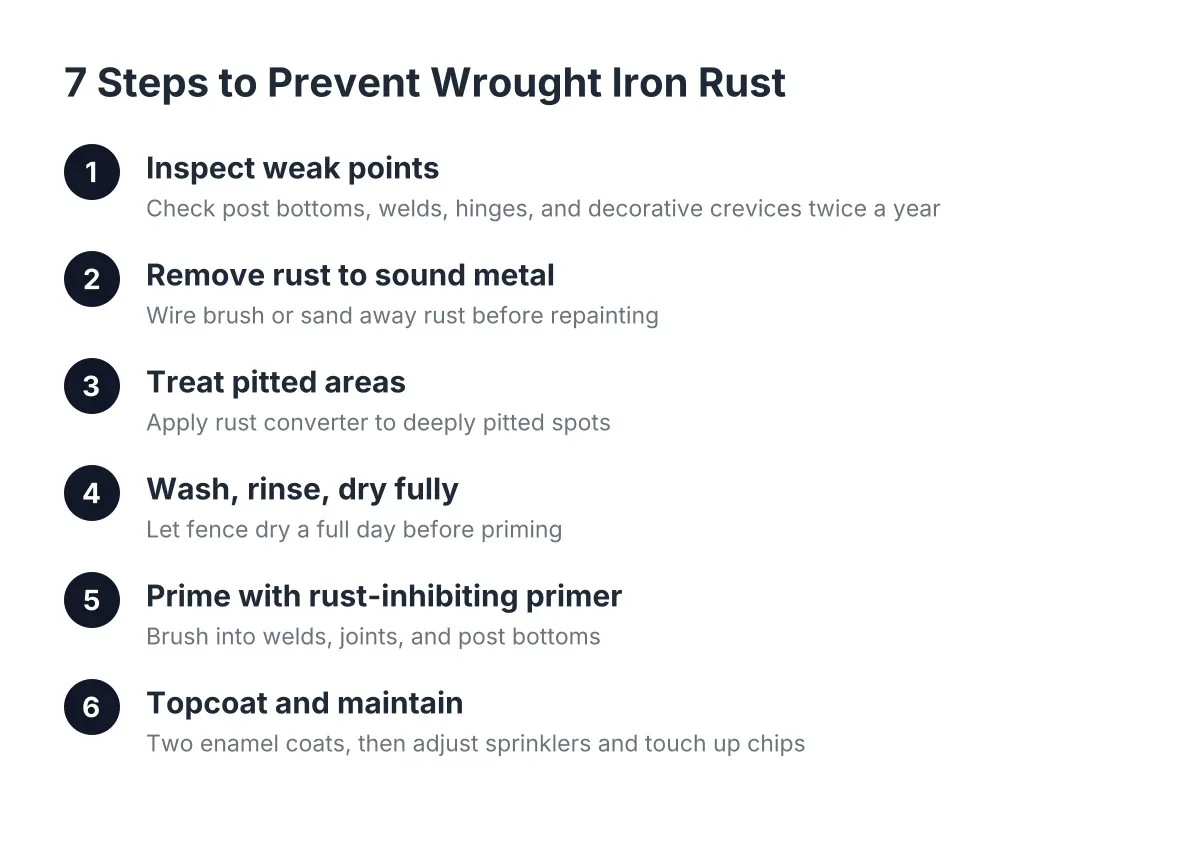
Step 1: Inspect the Fence at Its Weak Points
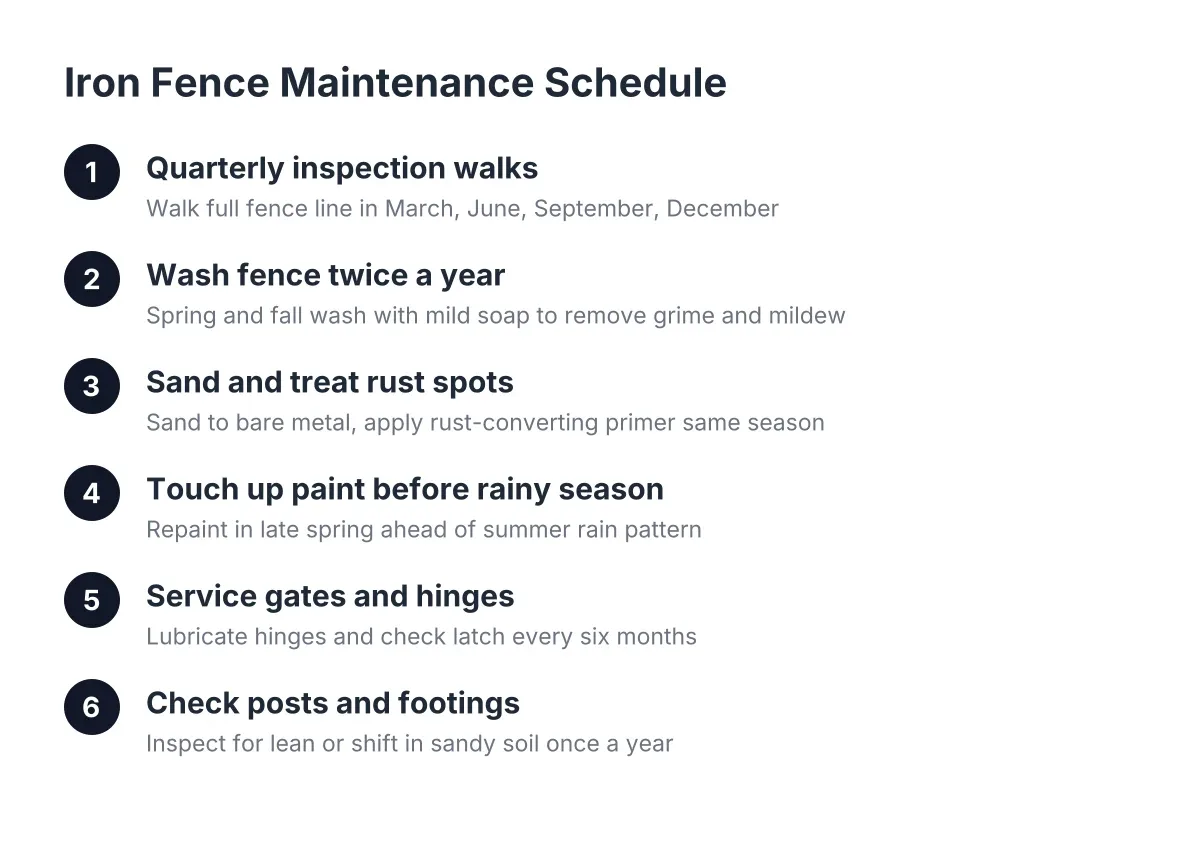
Do a slow walk of the full fence line twice a year, ideally before and after the summer rainy season. Rust starts where water sits and where paint fails, so check these spots first:
- The bottom few inches of every post, where soil moisture and sprinkler water collect
- Welds and joints where pickets meet rails, since paint cracks there first
- Fence gate hinges, latches, and the latch strike area, which get the most movement and wear
- Decorative wrought iron fence parts such as finials, scrolls, and caps, which trap water in crevices
- Any spot where chips, bubbling paint, or orange streaks appear
Press a screwdriver tip gently against any flaky area. Surface rust feels solid underneath. If the metal flexes, flakes deep, or punches through, that section has structural damage and belongs in Step 7, not Step 2.
Step 2: Remove Rust Down to Sound Metal
Painting over active rust wastes your weekend. The rust keeps spreading under the new coat and lifts it within a season. To prevent wrought iron rust from returning, you must remove it down to solid, stable metal first.
Start with a stiff wire brush on light surface rust. For heavier scale, use a drill with a wire wheel attachment or 80-grit sandpaper. Work the welds and tight corners by hand; those crevices are where rust restarts. When you prevent wrought iron rust early through consistent brushing and sanding, you avoid deeper pitting and structural damage.
Feather the edges of the surrounding paint so the surface is smooth. You do not need bare shiny metal across the whole fence, only firm, clean metal with no loose flakes or powder. The same approach handles wrought iron gate rust, though gates take longer because of the hardware and hinge-side joints.
Step 3: Treat Pitted Areas With a Rust Converter
Deeply pitted spots hold microscopic rust you cannot brush out. On those areas, apply a rust converter, a liquid that chemically changes remaining rust into a stable, paintable surface. Brush it on, let it cure per the label, and do not rinse unless the product says to.
Skip the converter on clean, sound metal. It is a treatment for pitting, not a substitute for the primer in Step 5. Using it everywhere adds cost without adding protection.
Step 4: Wash, Rinse, and Let the Fence Dry Fully
Sanding dust, converter residue, pollen, and sprinkler minerals all keep paint from bonding. Wash the fence with a mild detergent solution, scrub the tight spots, and rinse well with a hose.
Then wait. In Ocala's humidity, give the fence a full dry day with no rain in the forecast and no sprinklers scheduled. Painting damp iron seals moisture against the metal, which starts the rust cycle you just worked to stop. Morning dew counts, so plan to prime after mid-morning once surfaces are dry to the touch.
Step 5: Prime With a Rust-Inhibiting Metal Primer
Primer is the layer that actually fights rust on wrought iron; the topcoat mostly protects the primer. Use a rust-inhibiting primer made for ferrous metal, and brush it into every weld, joint, and decorative crevice rather than relying on spray alone.
Pay extra attention to the bottom of each post. That zone fails first in sandy, wet soil, so build the primer coverage there. Let the primer cure fully per the label before topcoating; rushing this step in humid weather is the most common cause of early peeling.
Step 6: Topcoat and Set a Maintenance Schedule
Apply two coats of an exterior enamel rated for metal. Gloss and semi-gloss finishes shed water better than flat finishes, which matters here. Keep the second coat within the recoat window on the can so the layers bond.
After the repaint, protect the work:
- Adjust sprinklers so heads do not hit the fence daily
- Trim grass and plantings back from the fence line, since vegetation holds moisture against the metal
- Rinse off pool splash near gates and panels every few weeks if the fence encloses a pool
- Touch up chips within a week or two instead of waiting for the next full repaint
- Walk the fence line each spring and fall and after any major storm
Suppose a homeowner in southeast Ocala re-fences around a new pool and keeps the original iron sections along the yard. A reasonable schedule looks like this: quick touch-ups twice a year, a hose-down of the poolside panels monthly, and a full scrape-and-repaint cycle every several years depending on exposure. The poolside sections will need attention sooner than the shaded back run. That is normal, not a sign the fence is failing.
Step 7: Repair or Replace Sections Rust Has Compromised
Rusty wrought iron fence repair goes beyond paint when the metal itself has thinned. Act on these signs:
- A picket or rail flexes under hand pressure or has rusted through
- Posts wobble at the base, which in Ocala often means soil movement plus corrosion working together
- A fence gate sags or the latch no longer catches cleanly
- Rust returns within months of a careful repaint, which points to failed metal under the coating
A competent fence company can cut out and replace individual pickets or rails, reset leaning posts in fresh concrete sized for sandy soil, and rehang a sagging gate. Partial fence repair usually costs far less than full replacement, and the cost factors are straightforward: how many sections are damaged, post condition, gate hardware, and access along the fence line. Get an estimate on repair versus section replacement before assuming you need a whole new fence.
When Rust and Pool Code Collide
If the fence encloses a pool, rust damage is a safety and inspection issue, not just a cosmetic one. Florida pool barrier rules require a self-closing, self-latching gate, and a rusted hinge or latch that sticks open can fail a pool fence inspection. If you are permitting a pool in 2026 with an existing iron fence as part of the barrier, have the gate hardware checked before the inspector does.
Barrier layout matters as much as hardware. According to the Centers for Disease Control and Prevention, a four-sided isolation fence separating the pool from the house cuts a child's drowning risk by 83% compared to three-sided property-line fencing. In addition, height alone is not enough; the National Institutes of Health reported that four-year-olds climbed a five-foot fence in a median of 17 seconds in one study. Horizontal rust-weakened rails that work loose can become footholds, which is one more reason to fix compromised sections quickly.
When to Call a Fence Company Instead
Do it yourself for surface rust, washing, priming, and painting. Call a professional when posts are loose, sections have rusted through, the gate no longer self-latches, or the fence has to pass a pool inspection. Structural repairs and barrier compliance are not areas to guess on, and a failed inspection means paying twice.
The Bottom Line on Preventing Wrought Iron Rust
Does a wrought iron fence rust in Ocala? Yes, and faster than in drier climates. But a fence that gets inspected twice a year, touched up quickly, and repainted on schedule can serve for decades. The pattern is simple: find rust early, remove it to sound metal, prime well, and keep water from sitting on the fence. Skip a season and the fence forgives you. Skip five, and you are pricing replacement sections instead of a can of primer.
If you need fence installation, Ocala Fence Builders can help.
Prefer to talk it through? Call (352) 670-3374 — a quick call is usually the fastest way to get a straight answer for your situation.