Best Pool Safety Fence Materials Compared: Vinyl, Chain Link, and Aluminum
If you are shopping for the best pool safety fence for your property, the material decides most of what matters: how well it keeps kids out, how long it survives Ocala's rain and humidity, and what you pay per foot. Vinyl, chain link, and aluminum all pass code when installed right. They differ in climb resistance, maintenance, and how they handle long runs on bigger lots.
This comparison walks through seven points that separate the three materials. It is written for pool owners in Ocala, including folks on rural acreage who need a pool enclosure that ties into a longer perimeter fence, and property managers who need a safe pool fence for a commercial site such as an apartment complex or hotel pad.
One number worth knowing before you compare anything. According to the Centers for Disease Control and Prevention, a four-sided isolation fence that separates the pool from the house and yard cuts a child's drowning risk by 83% compared to three-sided property-line fencing. Every material below can deliver that four-sided barrier. The question is which one fits your property, your budget, and Florida code.
1. Aluminum Is the Standard for Permanent Pool Fencing
Aluminum is the default permanent pool fence in Florida for a reason. It does not rust the way steel can, it handles Ocala's humidity and summer rain without rot or fading, and the vertical pickets give a child almost nothing to grab. Most aluminum pool panels come in code-friendly heights with picket spacing tight enough to meet barrier rules out of the box.
The metal category dominates for a reason beyond pools. According to Mordor Intelligence, metal products including steel and aluminum held a 47.2% share of the fencing market in 2025, largely because they remain the default for security applications. That same logic applies to a pool: you want a barrier that resists climbing and does not degrade.
The trade-off is sightline and privacy. Aluminum is open picket fencing, so it does nothing to block wind or views. For a commercial property that needs both a pool barrier and a visible, clean look, that openness is usually a plus; supervising adults can see the water from outside the fence.
2. Vinyl Wins on Privacy and Low Maintenance
Vinyl fence panels give you a solid or semi-private pool barrier that never needs paint or stain. In Ocala's humidity, that matters. A wood fence around a pool fights rot, mildew, and warping from splash and rain. Vinyl resists all three, though it is still PVC, so it is not fireproof in extreme conditions.
Structurally, vinyl posts are the foundation of the whole system. The panels only stay straight if the posts stay plumb, which is why heavy-duty end posts are made thicker than standard line posts at corners and gate openings. In sandy Ocala soil, post setting is the detail that decides whether a vinyl pool fence still looks right in ten years.
For climb resistance, choose a style with a smooth exterior face and no horizontal rails exposed on the outside. Pool code requires rails to face the pool side, because exposed rails on the outside act as a ladder for a small child. A solid vinyl privacy panel handles this well, since there is nothing to grip.
3. Chain Link Works, but Mesh Size Is Everything
A chain link fence can be a legal, safe pool fence, and for long runs it is the most budget-friendly of the three. The catch is the mesh. Standard two-inch diamond mesh gives a toddler's shoe a foothold. Pool barrier rules address this, which is why smaller mesh is the right spec around water. Vinyl-coated chain link also holds up better against humidity than bare galvanized fabric.
Climbability is not a theoretical concern. A study cited by the National Institutes of Health found that four-year-olds took a median of just 17 seconds to climb a five-foot fence. Height alone does not stop a determined kid; the surface they can grip does. That is the strongest argument for small-mesh fabric or a different material entirely on the pool enclosure itself.
For the rural acreage owner, there is a practical hybrid worth considering. Suppose you own five acres near Silver Springs Shores with a pool behind the house. Standard chain link makes sense for the long perimeter run, while a tighter aluminum or vinyl enclosure immediately around the pool handles the safety barrier. You do not need pool-spec fencing on all five acres; you need it on the four sides around the water.
4. How the Best Pool Safety Fence Handles Gates and Latches
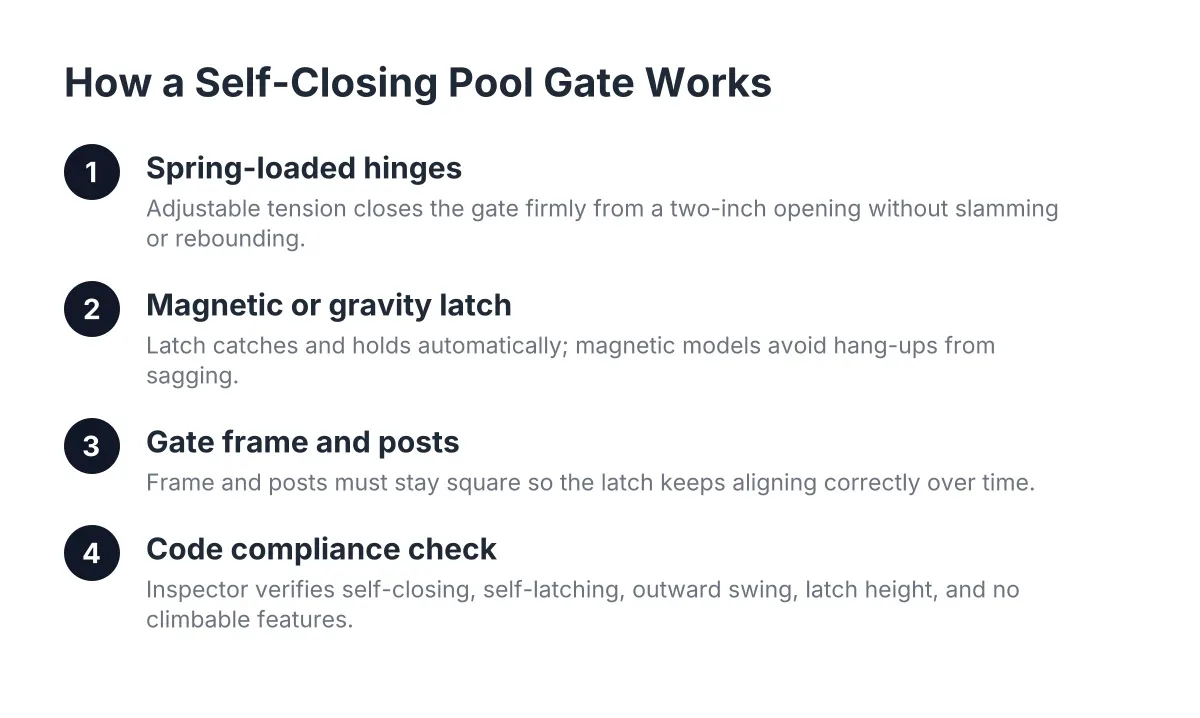
The best pool safety fence is only as good as its gate. Florida barrier rules require pool gates to be self-closing and self-latching, with the latch release mounted high enough that a small child cannot reach it, and the gate must swing outward, away from the pool. Every material can meet this, but the hardware differs.
Here is how the three compare at the gate:
- Aluminum: The widest selection of self-closing hinges and magnetic latches made for pool code. Custom pool gates in aluminum are common and adjust easily over time.
- Vinyl: Solid gates are heavier, so hinge quality and post strength matter more. In tight spots, a reinforced post with a metal pipe sleeved inside the vinyl keeps a heavy gate from sagging.
- Chain link: Gate frames are light and affordable, but standard fork latches do not meet pool code. Budget for a self-latching, child-resistant latch as an upgrade.
Ocala's sandy soil adds one more wrinkle. A fence gate sags when its post shifts, and shifting soil is the local norm. Deeper footings and properly sized concrete at gate posts are not optional on a pool enclosure; a sagging gate that no longer self-latches is a code failure and a hazard.
5. Removable Mesh Is the Flexible Option, With Limits
Removable mesh pool fencing is the lightweight, see-through product most parents find when they search for the best pool safety fence for kids. Tension-mounted mesh panels drop into sleeves drilled into the pool deck, so you can take sections down for a party and put them back up after. It is also the closest thing to a workable set of temporary pool fence ideas that still functions as a true barrier, unlike ropes or planters that only mark the edge.
The limits are real, however. Mesh depends on deck anchoring, so no-drill versions that rely on weighted bases trade away rigidity. Removable also means removable; a barrier that stays down after the party protects no one. And on acreage where the pool sits on a paver deck over sand, anchor holding power deserves a hard look before you commit.
Treat mesh as a strong supplemental or interim layer. For a permanent, four-sided pool safety fence that also survives weed trimmers, dogs, and Florida storms, aluminum, vinyl, or small-mesh chain link remains the sturdier long-term choice.
6. Match the Material to Ocala Soil and Weather
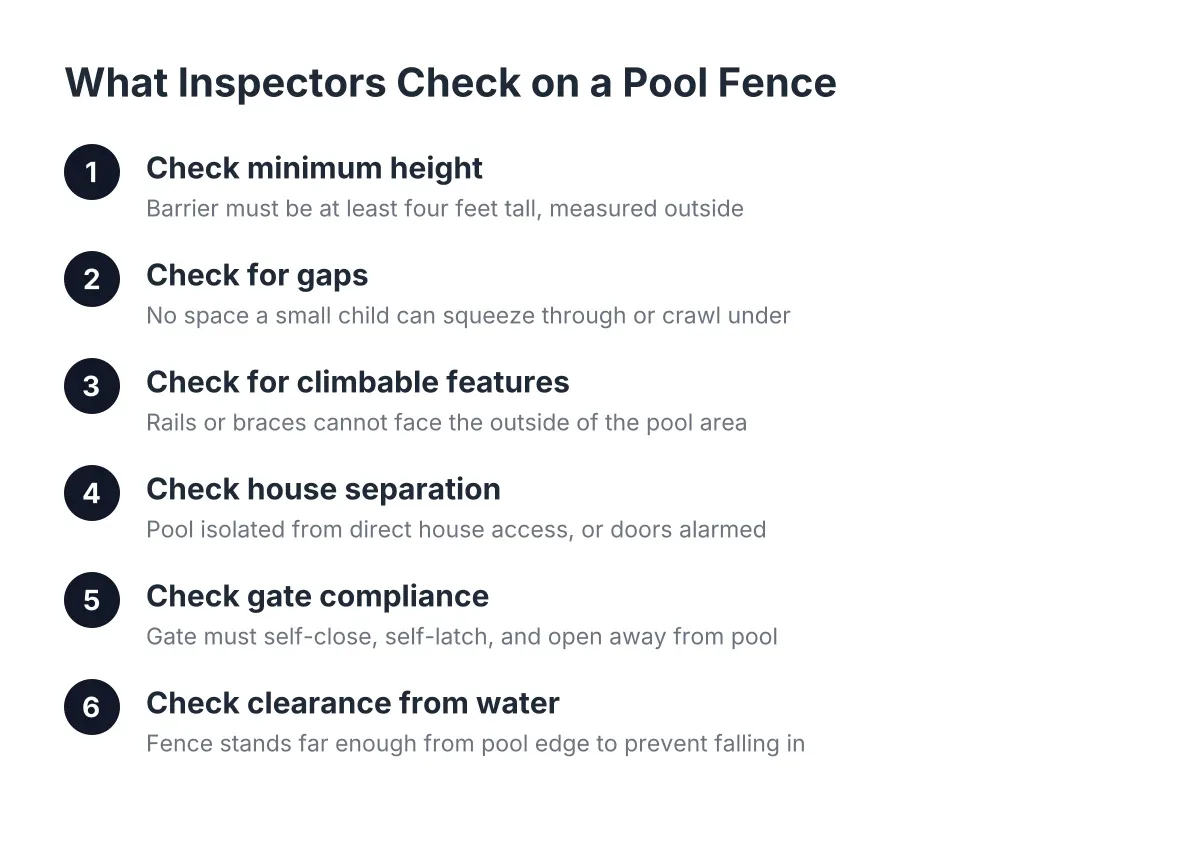
Whatever material you pick, the install conditions in Ocala decide how long it performs. Sandy and shifting soil affects post-setting on every fence type, and a pool barrier cannot tolerate leaning posts or widening gaps at the bottom. A gap under the fence that a child can slide through fails code just as surely as a low fence.
Each material responds differently to local conditions:
- Aluminum sheds rain and humidity without corrosion issues, but light panels catch wind, so post depth matters in sand.
- Vinyl ignores moisture entirely, though dark panels in full Florida sun expand and contract, which is why proper rail engagement at assembly matters.
- Chain link with vinyl coating resists the humidity that eats bare galvanized wire; the fabric also flexes with minor soil movement better than rigid panels.
Permits are part of this picture too. Pool barriers in Florida are regulated, and in 2026 you should expect a permit and an inspection on a new pool fence installation in Marion County. An HOA may add its own rules on height, color, and style, and your property line still governs where any of it can go. Confirm all three before you order material.
7. Compare Cost Factors Per Foot, Not Just Sticker Price
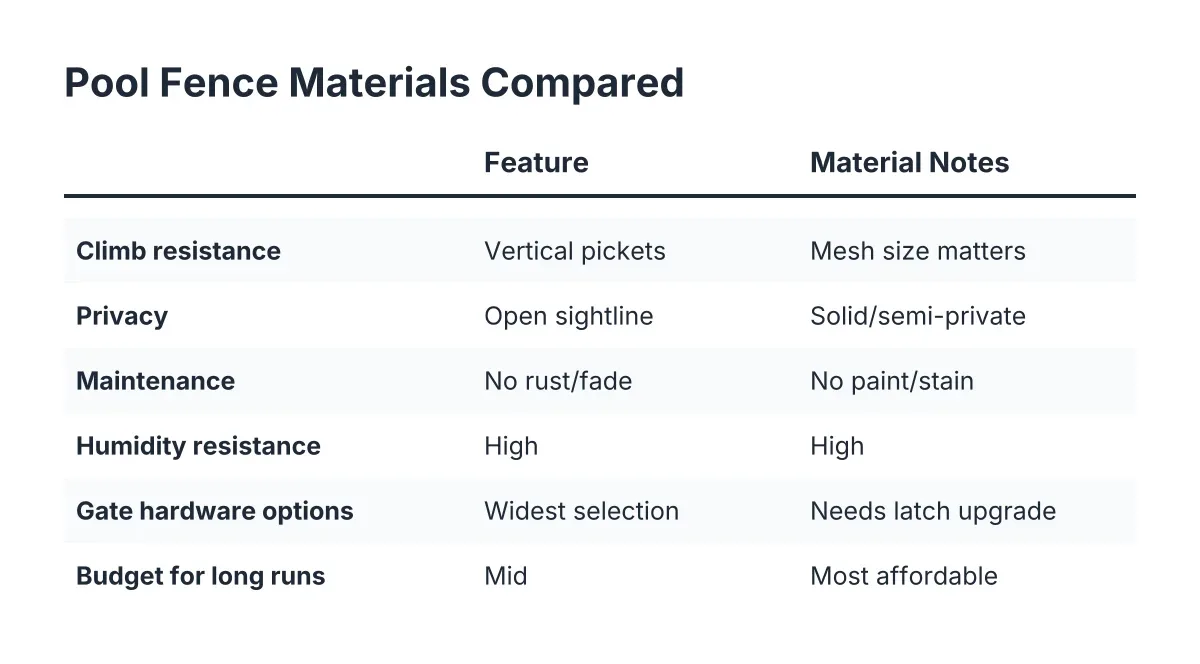
For a long run, per-foot cost separates the materials fast. Chain link is usually the lowest cost per foot, aluminum sits in the middle, and vinyl privacy runs higher because of material volume and post requirements. But the sticker comparison misses what actually drives a pool fence estimate:
- Linear footage and the number of corners, since corners need heavier posts
- Gate count and pool-rated latch hardware
- Soil conditions and footing depth, especially in sand
- Permit and inspection requirements for a pool barrier
- Site access; a backyard pool behind an existing fence takes more labor than open ground
Fence pricing also reflects construction quality, not just raw material. Two vinyl quotes that look identical on paper can differ in post wall thickness, footing depth, and rail construction, and those differences show up years later, not at install.
As an illustrative example, say a commercial property manager needs to fence a pool area at a small apartment complex in Ocala. Aluminum with magnetic latches likely wins that bid on durability, sightlines for supervision, and liability posture, even though chain link would cost less per foot. For a homeowner on acreage, the math may flip toward chain link on the perimeter with an aluminum pool enclosure inside it.
Which Material Makes the Best Pool Safety Fence for You
There is no single winner; there is a right fit for each property. Aluminum is the strongest all-around choice for a permanent, code-ready pool barrier with low upkeep. Vinyl wins when you want privacy and zero painting. Chain link wins on long runs and tight budgets, provided you spec small mesh and a code-compliant latch at the pool.
The payoff for getting this right is measurable. A 2025 study indexed on PubMed estimates that proper pool isolation fencing, combined with consistent life jacket use, could prevent 348 U.S. drowning deaths and $4.5 billion in economic costs each year. A fence is the one layer of protection that works when no one is watching.
One honest caveat: pool barrier code involves height, gaps, latch placement, and gate swing details that are easy to miss on a DIY install, and an inspector will catch what you did not. If your layout involves slopes, existing fencing, or a shared property line, have a fence company that handles pool safety fence installation walk the site before you buy material. A short site visit costs less than redoing a failed inspection.
If you need pool safety fence installation, Ocala Fence Builders can help.
Prefer to talk it through? Call (352) 670-3374 — a quick call is usually the fastest way to get a straight answer for your situation.