Wrought Iron Fence Terms Explained: A Plain-English Glossary
If you are researching an ornamental metal fence for your Ocala home or business, the quotes and spec sheets come loaded with jargon. This wrought iron fence glossary breaks the common terms into plain English so you can read an estimate line by line, ask a fence company sharper questions, and spot a thin spec before you sign. Each entry takes under thirty seconds to read. Use it before you call for an estimate, and keep it open while you compare quotes.
- Picket: the vertical bars you see
- Rail: the horizontal bars holding pickets
- Post: the upright that anchors everything
- Panel: a pre-built fence section
- Finial: the decorative tip on a picket
- Scroll Work: curled decorative metal
- Powder Coating: baked-on protective finish
- Galvanizing: zinc coating that fights rust
- Gauge: metal thickness
- Rackable Panel: a panel that follows slopes
- Footing: the concrete around a post
- Post Spacing: distance between posts
- Gate Hardware: hinges, latches, and locks
- Self-Closing Hinge: a hinge that shuts the gate itself
- Property Line Survey: the map of where your land ends
- Permit: the city's written OK to build
- HOA Approval: your neighborhood's sign-off
- Linear Foot: how fence length is measured and priced
Parts of a Wrought Iron Fence Glossary
These are the pieces named on almost every quote, and the section of this wrought iron fence glossary you will use most. If a line item confuses you, the answer is probably here.
Picket
A picket is one of the vertical bars that make up the visible face of a metal fence. Picket spacing matters for two reasons: looks and safety. Tighter spacing keeps small pets in and, on a pool fence, keeps kids from slipping through. When a quote lists picket spacing, check it against your pool safety rules or HOA requirements before you approve the design.
Rail
A rail is the horizontal bar that runs along the top, bottom, or middle of a fence and holds the pickets in place. More rails mean a stiffer, stronger panel, which matters on commercial fencing or anywhere the fence takes abuse. A two-rail panel is standard for most residential fencing; a three-rail panel adds strength and a different look. Rail count is a cost factor, so note it when you compare estimates.
Post
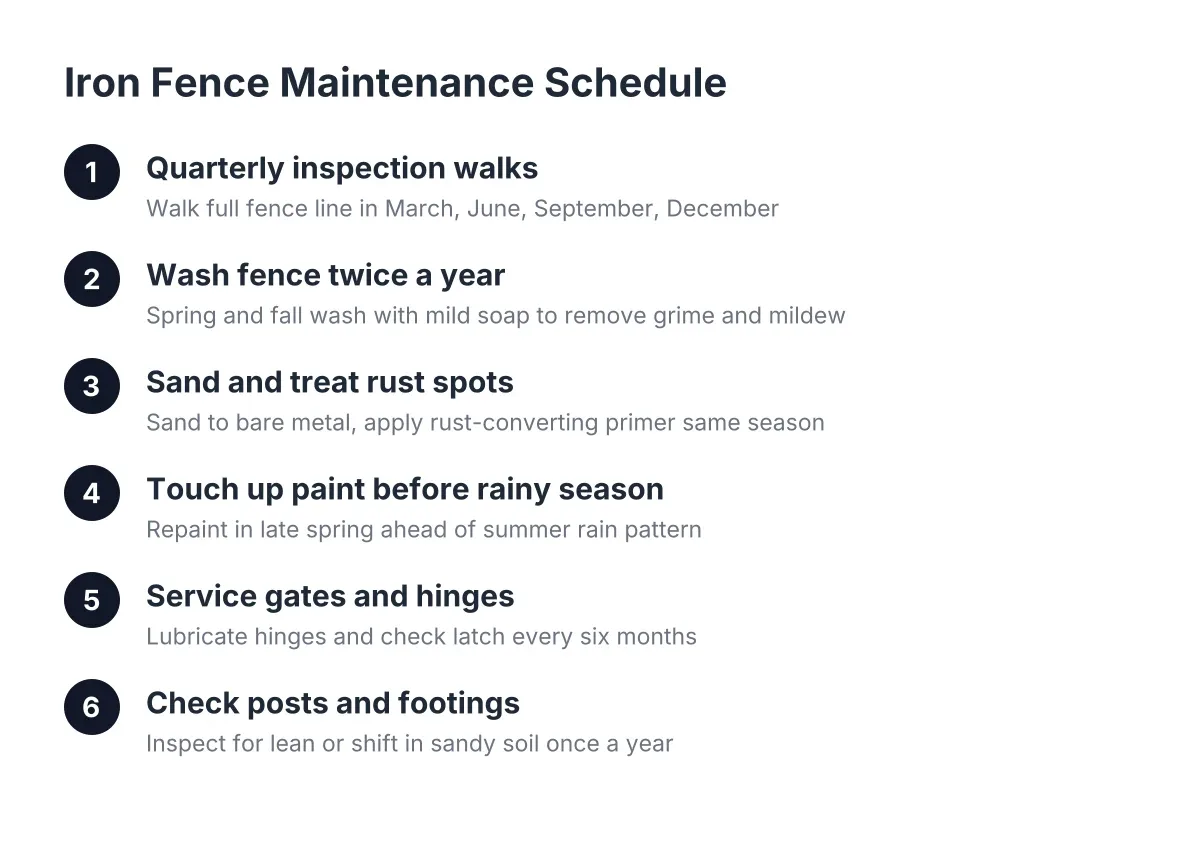
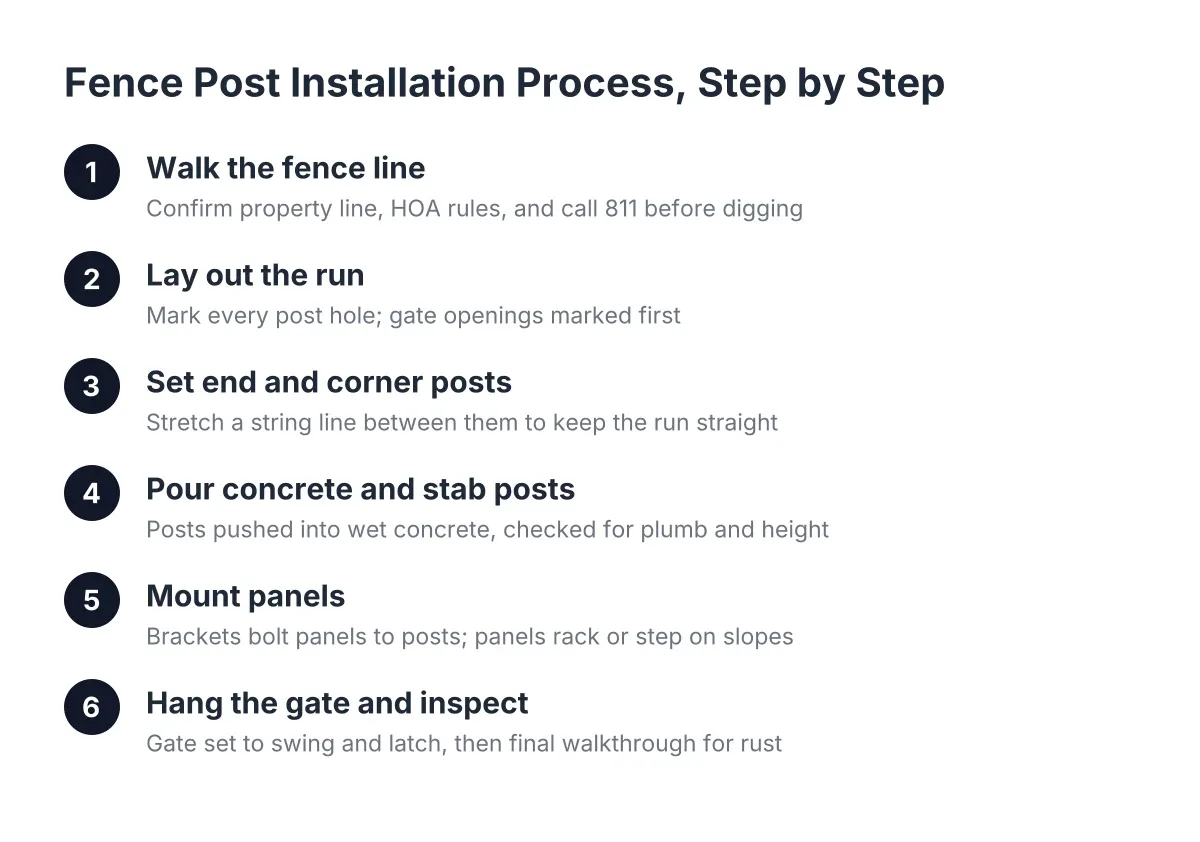
A post is the heavy upright that anchors the fence to the ground and carries the weight of the panels. Posts do the real structural work, so post size and how deep they are set matter more than almost anything else on the quote. In Ocala's sandy soil, a post set too shallow will lean or sag over time. Ask any fence company how deep they set posts and what they set them in.
Panel
A panel is a pre-built section of fence, pickets and rails already welded or assembled, that installs between two posts. Most modern ornamental metal fences arrive as panels, which speeds up fence installation and keeps the look consistent. Panel width affects how many posts your yard needs, and post count is a real cost factor.
Finial
A finial is the decorative tip on top of a picket, often shaped like a spear, ball, or fleur-de-lis. Finials are mostly about looks, but pointed ones also discourage climbing, which is why you see them on commercial fencing. On a quote, finials usually appear as a style option. They can add cost, so confirm whether the price includes them.
Scroll Work
Scroll work means the curled, decorative metal shapes added between pickets or on gates. True hand-forged scroll work is what gives a classic wrought iron fence its signature look, though most modern versions use pre-made steel or aluminum scrolls that cost less. If a quote includes scroll work, ask whether it is custom or pre-fabricated, because that choice drives both price and lead time.
Understanding Wrought Iron Fence Glossary Materials and Finishes
Powder Coating
Powder coating is a dry finish that gets sprayed onto metal and baked on, forming a shell tougher than regular paint. It is the standard protective finish on ornamental metal and aluminum fence installation today. In Ocala's humidity and summer rain, the finish is what stands between your fence and rust. Ask what finish the quoted material carries and whether damaged spots can be touched up.
Galvanizing
Galvanizing means coating steel with a layer of zinc so the zinc corrodes instead of the steel underneath. On a fence, galvanized steel under a powder coat is a strong rust defense, the same idea that keeps a chain link fence from rusting out. If a quote says "galvanized and powder coated," that is two layers of protection. If it says neither, ask what is protecting the metal.
Gauge
Gauge is a measure of metal thickness, and with gauge numbers, lower means thicker. Thicker metal costs more but resists dents and bends better, which matters for gates and commercial fencing that take daily contact. Two quotes that look identical can use different gauges, so it is one of the first specs to compare. Ask the fence company to state the gauge in writing on the estimate.
Rackable Panel
A rackable panel is a fence panel built so the pickets can tilt, letting the panel follow a slope without leaving gaps underneath. On a flat Ocala lot you may not need one, but even gentle grade changes near drainage swales can open gaps under a rigid panel. Gaps matter for pets and matter even more on a pool fence. If your yard is not dead flat, ask whether the quote uses rackable or stepped panels.
Installation Terms
Footing
A footing is the concrete poured around a fence post below ground to hold it upright and in place. Footing depth and width decide whether your fence stays straight for decades or starts leaning in a few years. Ocala's sandy, shifting soil puts extra demand on footings, especially at gate posts that carry swinging weight. A good estimate should tell you how posts are set, not just how many you are getting.
Post Spacing
Post spacing is the distance between fence posts, usually set by the panel width. Closer spacing means a stronger fence and more posts, which raises material and labor on the estimate. Wider spacing costs less but can flex in wind or sag over soft ground. When comparing quotes, make sure both use the same spacing, or the cheaper one may just be the weaker one.
Gate Hardware
Gate hardware means the hinges, latches, locks, and drop rods that make a fence gate open, close, and stay shut. Hardware is where most fence repair calls start, because gates move every day while the rest of the fence just stands there. Cheap hinges on a heavy metal gate lead to sag, especially where sandy soil lets gate posts shift. Ask what hardware is included and whether it is rated for the gate's weight.
Self-Closing Hinge
A self-closing hinge is a spring-loaded hinge that swings a gate shut on its own after someone walks through. Paired with a self-latching lock, it is a core requirement for pool safety fence installation, because an open gate defeats the whole point of a pool fence. If your fence encloses a pool, confirm the quote includes self-closing hinges and a latch mounted out of a child's reach. Check your local code for the exact pool barrier rules that apply to your property.
Pricing and Paperwork
Property Line Survey
A property line survey is a professional map showing exactly where your land begins and ends. Building a fence even a few inches onto a neighbor's lot can force a tear-out later, at your expense. In Ocala neighborhoods, both older ranch-style lots and newer developments can have easements or setbacks that limit where a fence can go. If you do not have a recent survey, ask about it before fence installation starts.
Permit
A permit is the written approval from your city or county to build the fence as designed. Many fence projects in and around Ocala need one, and height, location, and pool enclosure rules can all affect approval. Pulling the permit also creates a paper record that the work was done to code. Ask who handles the permit, you or the fence company, and whether that cost is in the estimate.
HOA Approval
HOA approval is written permission from your homeowners association to install a specific fence style, height, and color. Many Ocala developments regulate fencing closely, and an HOA can require you to remove a fence that was built without sign-off. Get the approval in writing before any posts go in the ground. A fence company that asks about your HOA early is protecting you from an expensive redo.
Linear Foot
A linear foot is a straight-line measurement of fence length, one foot at a time along the fence line, and it is how most fencing is quoted. Knowing your total linear footage lets you compare estimates fairly, because a lower per-foot price can hide missing items like gates or permits. The per-foot price moves with material, gauge, height, and site conditions. Always confirm what the linear foot price includes and what is billed separately.
Using These Terms
With this wrought iron fence glossary in hand, you can read an estimate line by line instead of skimming to the total. You now know which specs drive cost, which details protect a pool fence, and which questions separate a careful installer from a fast one. When you talk to a fence company in Ocala, ask about gauge, footings, gate hardware, and permits, and you will get real answers instead of a sales pitch.
If you need fence installation, Ocala Fence Builders can help.
Prefer to talk it through? Call (352) 670-3374 — a quick call is usually the fastest way to get a straight answer for your situation.