Residential Chain Link Fence HOA Rules in Ocala: Height, Spacing, and Approval Steps
Putting up a residential chain link fence in an Ocala neighborhood with an HOA takes more than digging holes and stretching mesh. Understanding HOA fence approval rules for height limits, setback rules, and approval paperwork can stop a project cold, or force you to tear out a finished fence and start over. According to Forbes, fencing shows up in 23% of HOA violation notices, tied with design changes as the second most common issue behind landscaping. This guide walks you through the process step by step so your fence goes in once, passes review, and stays put.
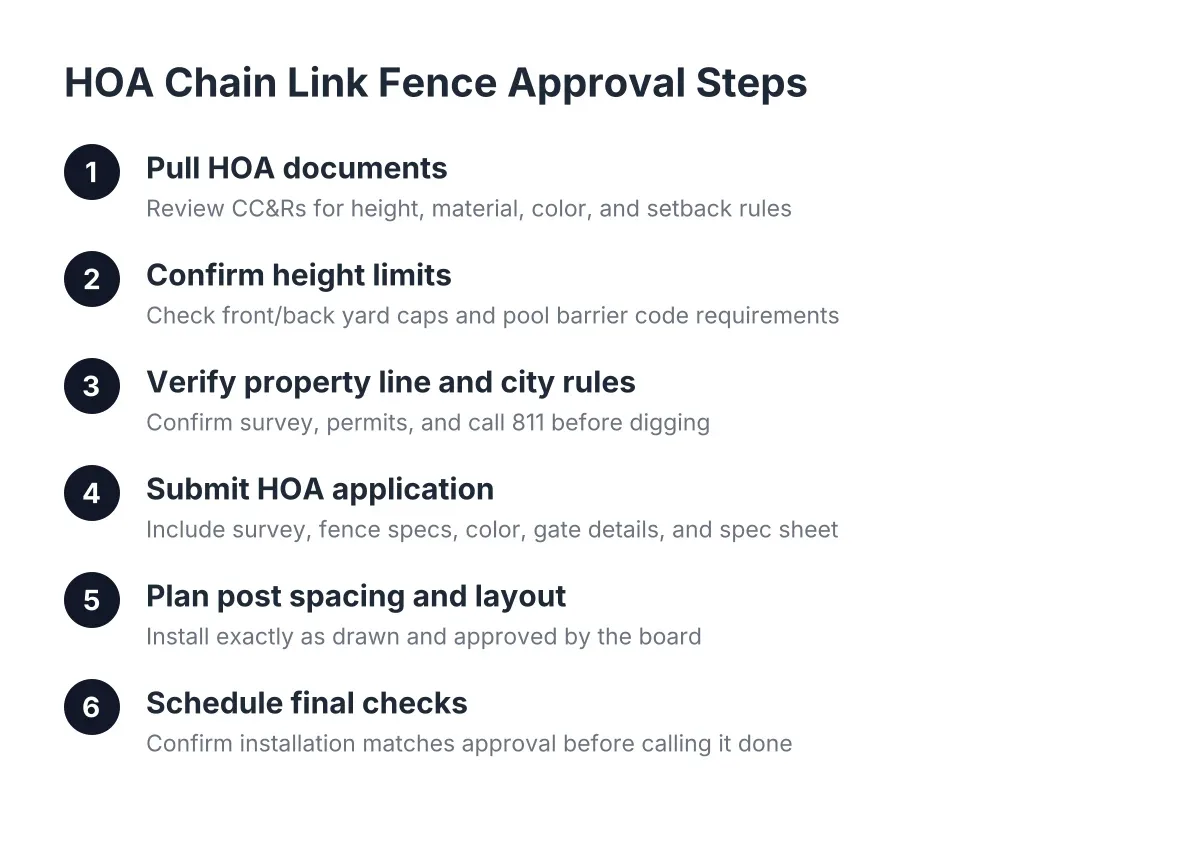
Step 1: Pull Your HOA Documents Before You Price Anything
Start with your HOA's covenants, conditions, and restrictions, usually called CC&Rs, plus any architectural review guidelines. These documents control what you can build, and they override whatever a neighbor did five years ago. Read the fencing section word for word.
Look for these specifics:
- Maximum fence height, which often differs between front yards and back yards
- Approved materials, since some Ocala HOAs restrict chain link to back yards or ban it in front of the house line
- Color requirements, because many boards that reject galvanized silver will approve black or green vinyl-coated chain link
- Setback rules, meaning how far the fence must sit from the property line, sidewalk, or street
- Gate placement and swing direction rules, if any
In addition, note the approval process itself. Most HOAs require a written application with a site plan, material description, and sometimes a photo or detail drawing of the fence style. Skipping this step is how homeowners end up on the wrong side of a violation notice.
Step 2: Confirm Height Limits for a Residential Chain Link Fence
A typical residential chain link fence height runs four to six feet, and most Ocala HOAs cap back yard fences somewhere in that range. Front yard limits are usually lower, and some communities prohibit any fence forward of the front building line. Check both numbers before you order material, because fabric height drives the whole order.
Height matters for a second reason if you own a pool. Florida's residential pool barrier rules set a minimum barrier height and limit climbable features. However, meeting the minimum is not the same as being safe. A National Institutes of Health study found that four-year-olds climbed a five-foot fence in a median of 17 seconds, so mesh size and the absence of footholds matter as much as the number on the tape measure.
If your HOA cap sits below what the pool barrier code requires, the code wins. In that situation, talk to the HOA board early and bring the code citation with you. Boards grant exceptions for safety requirements more readily than for preferences.
Where Pool Fencing Changes the Plan
Suppose a family in a newer Ocala development just finished an in-ground pool and needs a code-compliant barrier before the final inspection, with a closing date or insurance deadline pushing the schedule. In that scenario, a four-sided isolation fence that separates the pool from the house and yard is the stronger choice. According to the Centers for Disease Control and Prevention, a four-sided isolation fence reduces a child's drowning risk by 83% compared to three-sided property-line fencing. Chain link can serve as that barrier if the mesh openings are small enough to resist climbing, or the pool fence can be a separate aluminum or mesh barrier inside a chain link perimeter.
Step 3: Verify the Property Line and City Requirements
Next, find your property line before anyone digs. In Ocala, lots in newer developments usually have recorded surveys, and older ranch-style properties may not. A fence set even a foot over the line invites a dispute, and HOAs will side with the plat, not with memory. If you cannot locate survey pins, a new survey costs far less than moving a fence.
Also check whether the City of Ocala or Marion County requires a fence permit for your address. Permit rules differ inside and outside city limits, and pool barriers carry their own inspection requirements as of 2026. A local fence company handles this step routinely; if you are managing it yourself, call the building department with your parcel number before scheduling any work.
Finally, have utilities located. Florida law requires calling 811 before digging, and post holes go deep enough to hit buried lines.
Step 4: HOA Fence Approval Rules and Your Application
Now put the application together. A complete packet gets approved faster and gives the board fewer reasons to ask questions. Include:
- A copy of your survey or site plan with the fence line marked
- Fence height, mesh gauge, and framework post sizes
- Color and coating, for example black vinyl-coated fabric on black posts
- Gate locations, widths, and swing direction
- A chain link fence detail drawing or manufacturer spec sheet showing the finished look
For specifications, residential chain link fence gauge typically runs lighter than commercial fabric, and post sizes scale with fence height and gate width. Your installer can supply a spec sheet that lists these numbers, which reads better to a review board than a hand sketch. Understanding how HOA fence approval rules guide the review process means waiting for written approval before setting a single post. Verbal okays from a board member do not protect you later.
Step 5: Plan Post Spacing and Layout to Match the Approval
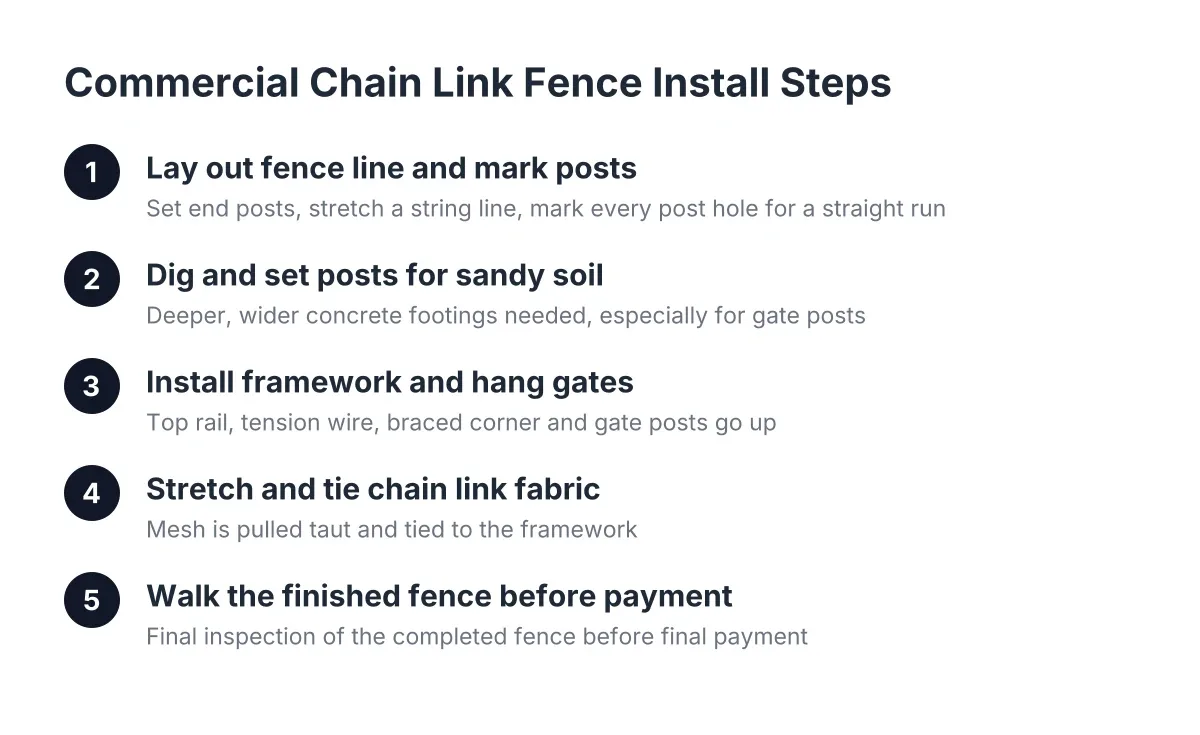
Once approved, lay out the fence exactly as drawn. Post spacing on a residential chain link fence is measured center to center, not edge to edge, which keeps sections consistent and makes the fabric stretch evenly. Set the end and corner posts first, then stretch a string line between them so every line post lands straight and the fence tops follow a clean grade.
Ocala's sandy soil changes the post-setting math. Sand shifts, and shallow or dry-set posts lead to leaning lines and sagging gates within a few seasons. Posts need adequate depth and concrete sized for the soil, and gate posts need heavier framework than line posts because they carry constant load. On sloped sections, spacing may need to tighten so rails seat properly into the fittings.
This is also where a professional chain link fence installation earns its cost over DIY. A homeowner can handle layout and even set posts on a short, flat run. However, stretching fabric to the right tension, hanging a gate that will not sag, and matching the approved drawing precisely are where DIY projects drift from the paperwork. If the finished fence does not match what the board approved, you are back in violation territory even with a permit in hand.
Installation Scope That Meets HOA Fence Approval Rules
A fair estimate from an Ocala fence company should cover layout and string lines, post holes and concrete, all framework and fittings, fabric stretching and tying, gates with hardware, and haul-away of old fencing. Tear-out of an existing fence, extra gates, vinyl-coated upgrades, and rock or root obstructions are the usual add-ons. Most residential jobs take one to a few days on site once materials arrive, though permit and HOA timelines often take longer than the install itself.
Step 6: Schedule the Final Checks Before You Call It Done
After installation, walk the line before the crew leaves. Check that gate latches close cleanly, fabric tension is even with no ripples, and post caps and tension bands are all in place. Then close out the official steps:
- Request the final inspection if a city or county permit was pulled
- Schedule the pool barrier inspection if the fence serves as your pool enclosure
- Send completion photos to the HOA if your approval requires them
- Keep the approval letter, permit, and estimate paperwork in one folder for resale
That last point matters for resale appeal. When you sell, buyers and inspectors ask whether the fence was permitted and HOA-approved. A documented, compliant fence is an asset; an undocumented one is a negotiation problem.
When to Bring in a Local Fence Company
Cost factors for this kind of project include fence height, total footage, number of gates, coated versus galvanized material, tear-out of old fencing, and soil conditions at the post holes. Rather than guessing, ask any installer three questions: Will you handle the permit and HOA paperwork, or do I? How deep do you set posts in sandy soil, and in how much concrete? Does the quote itemize gates, tear-out, and haul-away? Clear answers to those three tell you most of what you need to know.
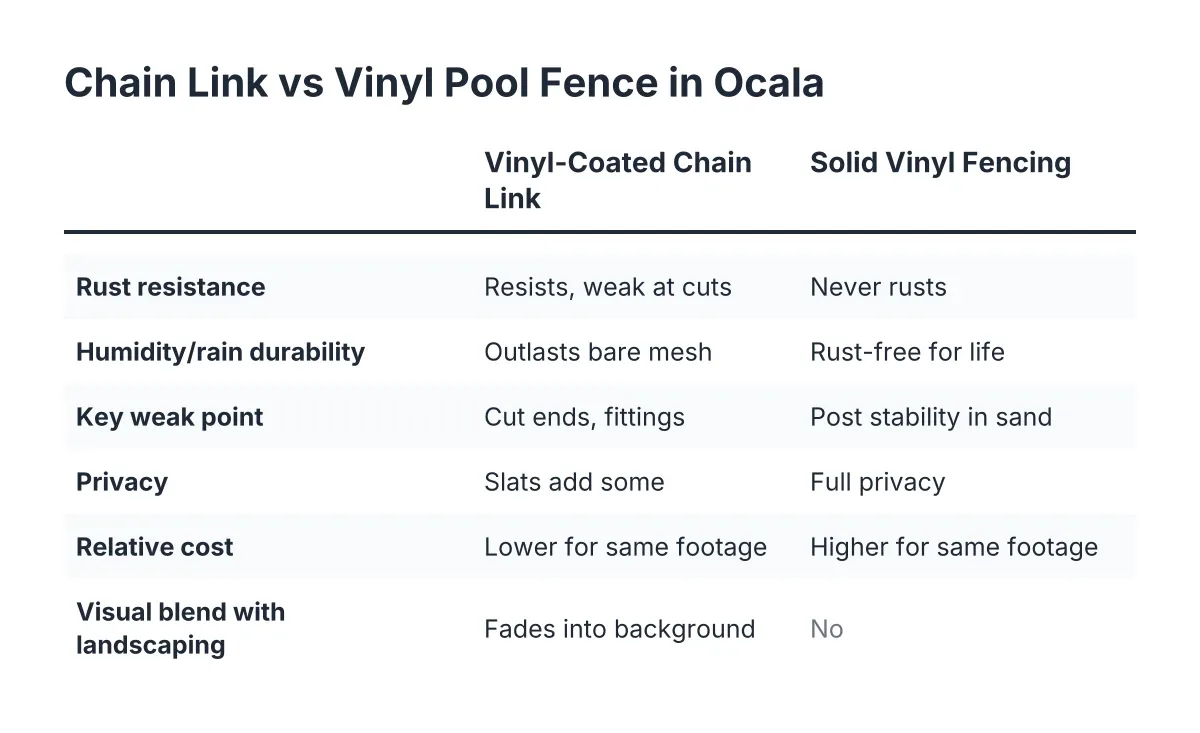
One honest trade-off: chain link will not give you privacy the way a wood fence or vinyl fence will, and some HOAs limit it for exactly that reason. If privacy or front-yard curb appeal is the goal, compare materials before committing. If a durable, low-maintenance, budget-friendly perimeter or pool barrier is the goal, chain link done to spec is hard to beat in Ocala's heat and rain.
If you are ready to move, Ocala Fence Builders installs and repairs chain link, wood, vinyl, and pool fencing across Ocala and the immediately surrounding areas. Reach out for an estimate, bring your HOA documents to the first conversation, and the project can go from application to final inspection without a wasted step.
If you need chain link fence installation, Ocala Fence Builders can help.
Prefer to talk it through? Call (352) 670-3374 — a quick call is usually the fastest way to get a straight answer for your situation.