Aluminum Fence Post Installation in Ocala’s Sandy Soil: Best Practices
Ocala's sandy soil is the reason so many fences lean after one wet summer. If you are putting up an aluminum fence, or replacing one a storm knocked over, the posts decide whether it lasts. This guide walks through aluminum fence post installation step by step, with the adjustments that matter in Central Florida's loose, shifting ground. We'll focus on how to properly set fence posts in sandy soil for maximum durability. Panels are the easy part. Posts set wrong in sand are the part that fails.
This applies whether you are fencing a backyard in town or running long stretches around a paddock on acreage outside Ocala. The soil problem is the same; the scale is just bigger.
Why Sandy Soil Changes How You Set Aluminum Fence Posts
Sand does not grip a post the way clay does. It drains fast, shifts when saturated, and gives up its hold during heavy rain or wind. A post that would stand fine in dense soil up north can work itself loose here in a season or two.
That is why tamping dirt back into the hole around a post, with no concrete footing, is not an acceptable practice in this soil. It might feel solid the day you set it. After a few summer storms, the sand around it rearranges and the post starts to rock. Every post in an aluminum fence line in Ocala should sit in a proper concrete footing.
Aluminum has one advantage worth noting before you start. It will not rot or rust out at the ground line the way wood and some steel can, which is part of why metal products hold a 47.2% share of the fencing market as of 2025, according to Mordor Intelligence. However, the material only performs if the footing holds it still.
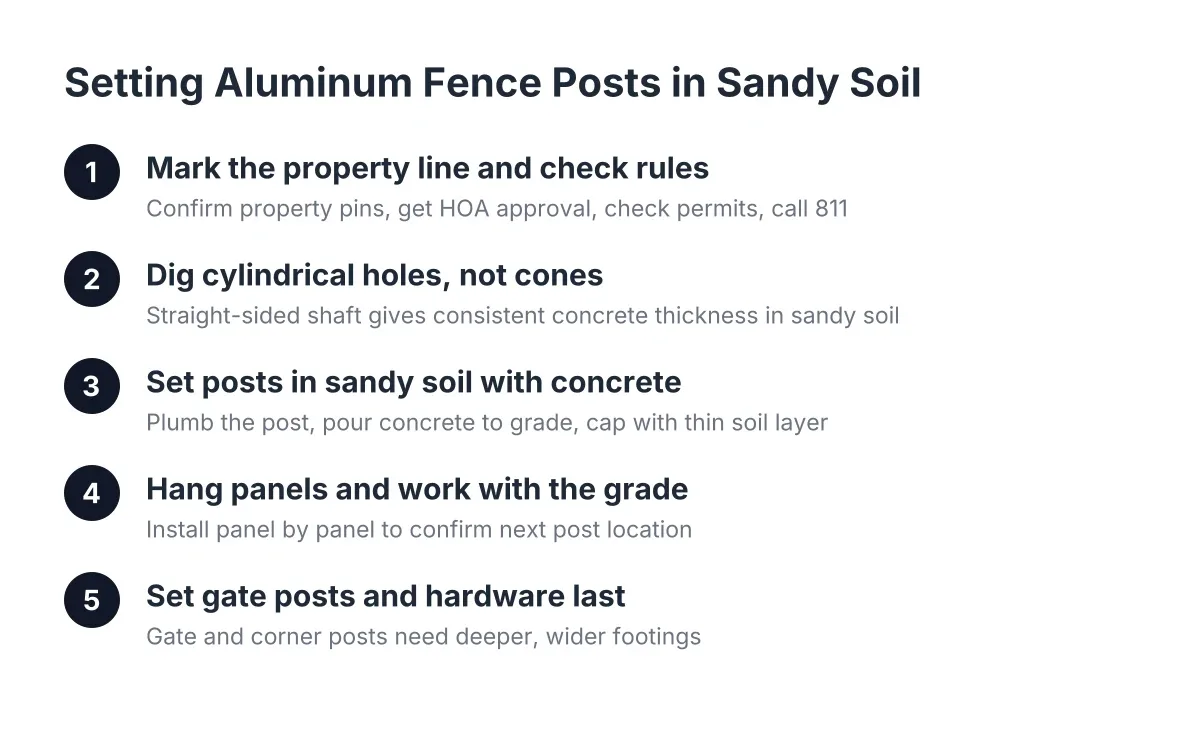
Step 1: Mark the Property Line and Check Your Rules
First, confirm where the fence can legally go. Find your property pins or survey before you dig. A fence set over the property line is an expensive do-over, and in Ocala's newer developments the HOA will notice. Fencing shows up in 23% of HOA violation notices, according to Forbes, so get written approval on height, style, and color before you order material. White aluminum fencing and black are common HOA-approved choices.
Next, check whether your project needs a permit. Fence installation in Marion County often does, especially for pool fence lines where safety code applies. Call 811 to have utilities located before any digging. On acreage, also walk the line and flag irrigation runs and buried electric to barns or wells, since those rarely show up on utility locates.
Then mark the fence line with string pulled tight between stakes. Measure and mark each post location based on your panel width. Aluminum fence panels do not stretch or trim like a chain link fence does, so post spacing has to match the panels within a small tolerance.
Step 2: Dig Cylindrical Holes, Not Cones
Dig each hole as a straight-sided cylinder, not a cone that is wide at the top and narrow at the bottom. A cone shape leaves thin concrete at the base, exactly where sandy soil needs the most mass. A consistent shaft gives the post the same concrete thickness all the way down.
Depth matters more here than in firm soil. A common question is how deep aluminum fence posts should go; the working rule is deep enough that the footing sits well below the loose, disturbed surface sand and carries enough concrete to resist wind load on the panels. Gate posts and corner posts take more stress, so give them deeper, wider footings than line posts.
In Ocala sand, an auger or post hole digger cuts fast, but the walls can slough and widen the hole unevenly. Clean loose sand out of the bottom before setting the post. A footing poured on loose fill settles, and the post settles with it.
Step 3: Setting Fence Posts in Sandy Soil With Concrete
This step is where most aluminum fence post installation jobs go wrong, and where sandy soil punishes shortcuts. Follow this sequence for each post:
- Place the post in the hole and check the height against your string line.
- Pour concrete around the post so it is surrounded generously on all sides, with no voids.
- Plumb the post with a level on two faces, then brace or hold it until the concrete grabs.
- Bring the concrete up close to grade, then cap it with a thin layer of soil so grass can grow flush against the post.
That last detail trips people up. A common mistake is stopping the concrete several inches below grade and backfilling the rest with dirt or sod. That traps moisture right where the post meets the ground, and that contact point becomes the most common failure spot on a fence post. Bring the footing up, then add only a thin soil cover for the grass line.
One more correction to a popular assumption: dumping extra concrete in the hole does not automatically make the post stronger. What matters is a clean cylindrical hole, consistent concrete thickness around the post, proper depth, and a plumb set. More mud in a sloppy cone-shaped hole buys you nothing.
For difficult spots, say where the new fence butts against an existing fence or has to work around a live oak's roots, a reinforced approach helps. A metal pipe set in the footing with the fence post sleeved over it gives extra rigidity where a standard set will not fit.
Step 4: Hang the Panels and Work With the Grade
Aluminum fence panels attach to the posts with brackets or slide into punched routing, depending on the system. Install panels as you go, post by post, rather than setting every post first. Panel-by-panel installation lets each panel confirm the next post location, which prevents spacing errors that are painful to fix once concrete cures.
On sloped ground, which is common on Ocala acreage, aluminum gives you two options. Rackable panels follow the grade so the bottom rail stays an even distance off the ground; stepped panels stay level and drop in increments. If you step the fence, you may need to backfill slightly higher on one side of a post so the top rail runs level while the grade rises and falls.
For example, suppose a horse property owner outside Ocala is replacing a storm-flattened wood perimeter run with aluminum along the road frontage. On that kind of job, a typical crew racks the panels through the gentle grade changes and steps only at the driveway entry, where level gate posts matter most. The gate posts get the deepest footings on the whole line, because a sagging fence gate in soft sand is the first complaint on rural installs.
Step 5: Set Gate Posts and Hardware Last
Hang gates only after the gate post footings have fully cured. A gate is a lever working on its post all day, and sandy soil amplifies any early movement. Rushing this step is the main reason gates drag within the first year.
Check that hinges are set so the gate swings clear of the grade through its full arc. Self-closing, self-latching hardware is required on pool fence gates, and it earns its keep. A four-sided pool fence that separates the pool from the house and yard reduces a child's drowning risk by 83% compared to three-sided fencing, according to the Centers for Disease Control and Prevention. The gate hardware is what keeps that barrier closed.
Repairing Storm-Damaged Posts vs. Replacing the Run
If a storm leaned or snapped part of your fence, you may not need a full tear-out. Aluminum handles partial fence repair well because panels unbolt from posts. Here is a practical way to sort it:
- Panel bent, post still plumb and solid: replace the panel only.
- Post leaning but footing intact: the footing may be reusable, and preserving good concrete footings during an interim repair keeps that money working toward the eventual full fix.
- Post snapped or footing heaved out of the sand: dig out the old footing and do a full aluminum fence post installation at that spot, cylinder hole, full-depth concrete, thin soil cap.
- Several posts loose along one run: the original footings were likely shallow or dirt-set, and resetting the whole run beats chasing failures one storm at a time.
Be honest about what you can do yourself. Removing a cured concrete footing from sand, plumbing a long gate post, or matching discontinued aluminum fence panels are jobs where a local fence company earns its fee. Insurance questions after storm damage are another reason to get a written estimate documenting the damage before any work starts.
What This Means for Your Project
Aluminum fencing suits Florida conditions, and demand reflects that; The Business Research Company values the global aluminum fencing market at a projected $4.93 billion for 2026. The material will outlast the install only if the posts are set for the soil under them. In Ocala, that means cylindrical holes, full-depth concrete footings brought near grade with a thin soil cap, cured gate posts, and panel-by-panel spacing. Get the posts right and the aluminum takes care of itself.
If you need fence installation in Ocala, FL, Ocala Fence Builders can help.
Prefer to talk it through? Call (352) 670-3374 — a quick call is usually the fastest way to get a straight answer for your situation.