Why an Aluminum Fence Holds Up in Ocala’s Humidity, Rain, and Sandy Soil
If you are tired of staring at a rusted chain link fence, an aluminum fence is one of the few options that handles Ocala's humidity, heavy summer rain, and sandy soil without constant upkeep. Wood warps and rots here. Chain link rusts. Aluminum does neither, which is why homeowners replacing an old fence and property managers securing a commercial lot both keep landing on it.
This article walks through seven specific reasons aluminum fencing holds up in local conditions, plus what a proper install includes, where aluminum falls short, and how to compare quotes. Think of it as the conversation you would have with a contractor before signing anything.
1. Aluminum Does Not Rust in Florida Humidity
Rust is the main reason old chain link and steel fences in Ocala look rough after a decade. Aluminum does not rust the way steel does, because it forms its own protective oxide layer instead of flaking apart. Add the powder coating that most aluminum fencing panels ship with, and you get a finish that shrugs off daily humidity and afternoon storms.
For a homeowner replacing a corroded chain link fence, that is the single biggest upgrade. The fence stops being a maintenance item and becomes something you only look at, not something you work on. The same logic applies to commercial fencing; a property manager with a storage facility or auto lot does not want to budget for repainting a perimeter every few years.
2. Sandy Soil Punishes Posts, and Aluminum Posts Fight Back
Ocala sits on sandy, shifting soil. That soil drains fast, which is good for puddles but bad for fence posts, because posts can loosen and lean as the ground moves. An aluminum post set in a generous concrete footing resists that movement far better than a wood post, which can rot below grade even when the panels above look fine.
This is a known failure pattern with wood fences: the pickets get repainted and maintained, but the posts quietly rot at the soil line until a gate sags or a section leans. Aluminum posts do not rot, so the concrete footing, not the post itself, becomes the thing that determines how long the fence stands straight. A fence company that works in Ocala's soil will size and set those footings accordingly, and that detail matters more here than in clay-heavy regions.
3. Aluminum Styles Range from Open Picket to Full Privacy
Most people picture aluminum as the open, wrought-iron-look fence around a pool or front yard. That classic picket style is still the most common, but it is not the only option. As of 2026, the styles available include:
- Flat-top and spear-top picket panels, the traditional ornamental look
- Puppy-picket panels with tighter spacing at the bottom for pets
- Horizontal slat designs that suit newer Ocala developments
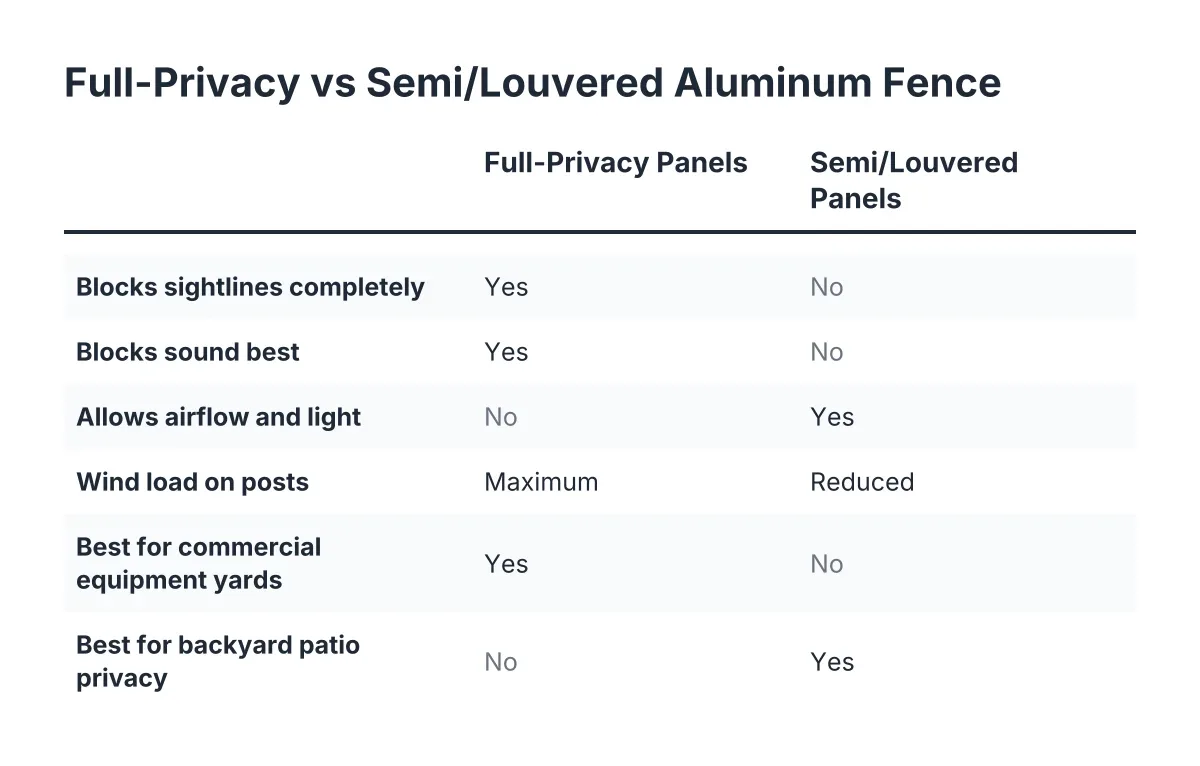
- Full aluminum privacy fence panels with no gaps between pickets
- Commercial-grade panels with heavier rails and posts for perimeter security
An aluminum privacy fence costs more than the open picket version because it uses far more material, the same way a board-on-board wood fence costs more than a basic flat privacy fence. However, it gives you the privacy of wood with none of the rot, warp, or staining schedule.
4. Low Maintenance Is the Real Cost Story, Not the Install Price
A wood fence in Florida needs staining or sealing on a regular cycle to survive the humidity, and staining both sides is what actually extends its life. Skip that work and the lifespan drops fast. Vinyl fencing avoids the rot problem, but aluminum goes a step further by handling impact, heat, and sun without the brittleness some PVC products show over time.
So when you compare the cost of aluminum fencing vs wood, look past the install price. The wood fence comes with a recurring labor and materials bill. Aluminum mostly asks for an occasional rinse. Over fifteen or twenty years, that gap narrows or reverses, which is the honest answer to whether the upfront premium is worth it. Demand backs this up; the global aluminum metal fencing market is projected to reach $4.93 billion in 2026, according to The Business Research Company.
5. Aluminum Is One of the Most HOA-Friendly Fence Materials
Fencing shows up in 23% of HOA violation notices, tied as the second most common issue behind landscaping, according to a Forbes-reported survey. That number should get your attention if you live in one of Ocala's newer developments. A faded wood fence or a leaning chain link fence is exactly the kind of thing that draws a letter.
Aluminum rarely does. The panels keep their color, the lines stay straight, and the ornamental picket look matches what most HOA design guidelines already approve. Before you order anything, confirm height, color, and style with your HOA and verify the property line; a survey beats a guess every time, and Marion County may require a permit depending on the project.
6. It Works for Pool Fencing Where Safety Codes Apply
Pool fences are where aluminum earns its keep in Florida. The open picket design meets visibility needs while the material ignores splash, chlorine, and humidity. Safety is the bigger point, though. A four-sided isolation fence separating the pool from the house and yard reduces a child's drowning risk by 83% compared to three-sided property-line fencing, according to the Centers for Disease Control and Prevention.
Height alone is not enough, either. In one study, four-year-olds took a median of just 17 seconds to climb a five-foot fence, according to the National Institutes of Health. That is why picket spacing, self-closing gate hardware, and latch placement matter as much as the panels. Pool fence installation is one job where cutting corners has real consequences, so this is a call-a-pro situation, not a weekend project.
7. Commercial Properties Get Security Without the Rust Cycle
Metal products, including steel and aluminum, held a 47.2% share of the fencing market in 2025, since they remain the default for high-security and industrial sites, according to Mordor Intelligence. For a self-storage facility, warehouse, or retail pad site in Ocala, aluminum offers a middle path: more presence and curb appeal than chain link, less corrosion worry than untreated steel.
Suppose a property manager takes over a storage facility off Highway 200 with a rusted chain link perimeter and a dragging fence gate. In that scenario, commercial-grade aluminum panels on the street-facing sides improve appearance for tenants, while heavier chain link can stay on the back lines where nobody sees it. Mixing materials like that is common and keeps the budget focused where it counts.
What a Proper Installation Includes
A fair quote for aluminum fence installation should spell out the full scope, not just a per-foot number. Expect it to cover:
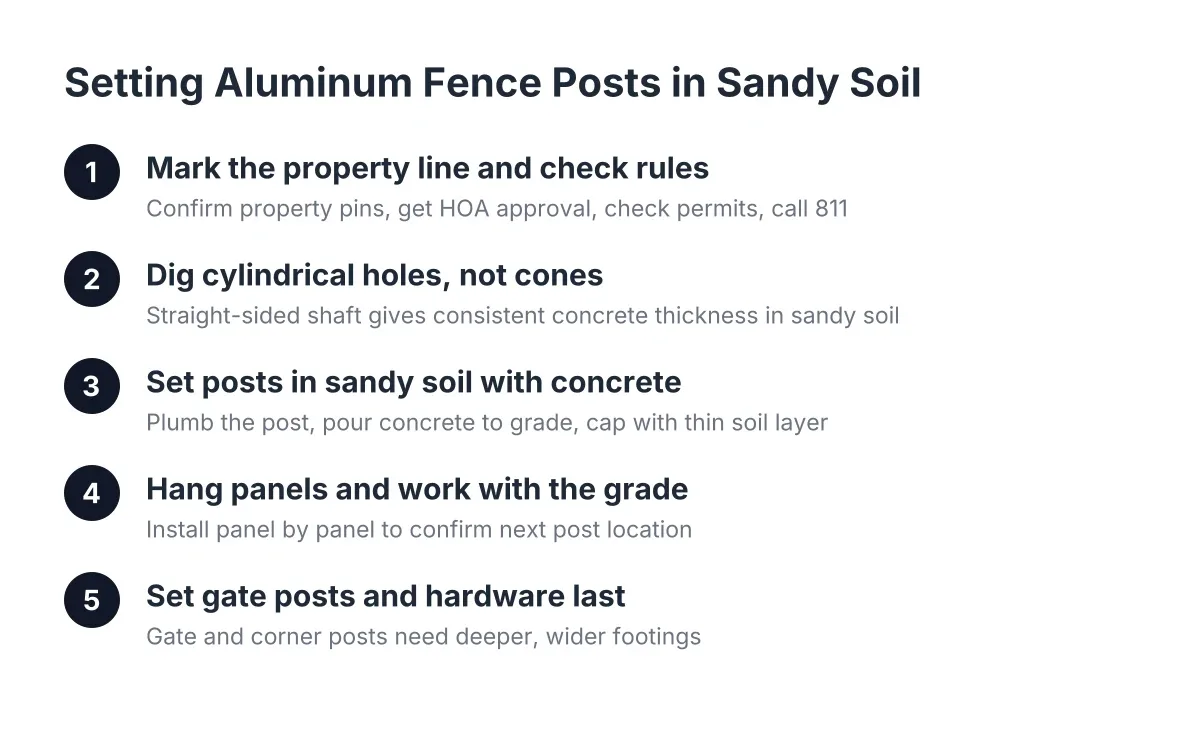
- Marking the property line and calling in utility locates before digging
- Post holes sized for Ocala's sandy soil, with concrete footings around every post
- Panels racked or stepped to follow grade so there are no gaps underneath
- Gates hung with hardware rated for daily use, since gate sag is the most common repair call
- Permit handling and HOA documentation where required
- Cleanup and haul-away of the old fence, which is sometimes a separate line item
Timeline depends on yard size, gate count, and permit turnaround, so ask each fence company for their current schedule rather than assuming. Cost factors include linear footage, panel style and grade, number of gates, old fence removal, and site access. If you want detailed numbers, get a written estimate based on your actual lot; any figure quoted before someone sees the property is a guess.
When to Repair, When to DIY, and When to Call a Fence Company
A homeowner can safely handle small tasks: tightening loose fasteners, rinsing panels, or adjusting a gate latch. Replacing a single damaged panel is possible if you can match the style and color.
However, call a professional when posts lean, when footings have failed, or when the fence sits on or near a disputed property line. Post setting in sandy soil is where DIY installs go wrong most often, and a leaning run of aluminum usually traces back to a shallow or undersized footing, not the fence itself. For pool enclosures, always use a pro, since code compliance is a liability issue, not just a quality issue.
One honest limitation: open-picket aluminum does not block noise and does not offer privacy unless you pay for full privacy panels. If maximum privacy at the lowest upfront price is the only goal, a wood fence or vinyl fence may still be the better fit, with the maintenance trade-offs described above.
How to Compare Quotes Before You Hire
Three questions separate a solid fence installation quote from a vague one:
- How deep and wide are the post footings, and how is that adjusted for sandy soil?
- What grade of aluminum is being quoted, residential or commercial, and what does the finish warranty from the manufacturer cover?
- Does the price include permits, old fence removal, and gate hardware, or are those extras?
A fair estimate itemizes materials, labor, gates, and removal separately so you can compare apples to apples. Be cautious of any quote that skips the footing question; in Ocala's soil, that detail decides whether the fence is straight in year ten.
If you are weighing aluminum against wood or vinyl for a backyard in Ocala, or you manage a commercial property that needs a perimeter upgrade, Ocala Fence Builders can walk your site, explain the cost factors for your specific lot, and give you a written estimate. Reach out to schedule a visit.
If you need aluminum fence installation, Ocala Fence Builders can help.
Prefer to talk it through? Call (352) 670-3374 — a quick call is usually the fastest way to get a straight answer for your situation.