Chain Link Fence Installation Terms Explained: A Plain-English Glossary
If you are getting quotes for a chain link fence in Ocala, the paperwork can read like another language. This chain link fence installation glossary breaks down the terms a fence company will use so you can read an estimate line by line, ask sharper questions, and spot a thin bid before you sign. Every entry starts with a plain definition you can understand in one read. Use it while you compare quotes or walk your property line with an installer.
- Terminal Post: the heavy posts at ends and corners
- Line Post: the lighter posts between terminals
- Top Rail: the horizontal pipe along the top
- Fabric (Mesh): the woven chain link itself
- Gauge: wire thickness, lower number means thicker
- Tension Bar: the flat bar that locks fabric to a post
- Tension Band: the clamp that holds the tension bar
- Fence Stretcher: the tool that pulls fabric tight
- Post Hole Digger / Auger: tools that dig post holes
- Concrete Footing: the concrete that anchors each post
- Galvanized vs. Vinyl-Coated: two rust-protection finishes
- Gate Hardware: hinges, latches, and drop rods
- Linear Foot: how fence length is measured and priced
- Property Line Survey: proof of where your land ends
- Permit: the city's written OK to build
- HOA Approval: your neighborhood's sign-off
- Setback: required distance from the property line
- Estimate: the written scope and price breakdown
Chain Link Fence Installation Glossary: Key Parts
These are the pieces an installer will name when walking your yard. Knowing them helps you check that a quote covers the whole job, not just the mesh.
Terminal Post
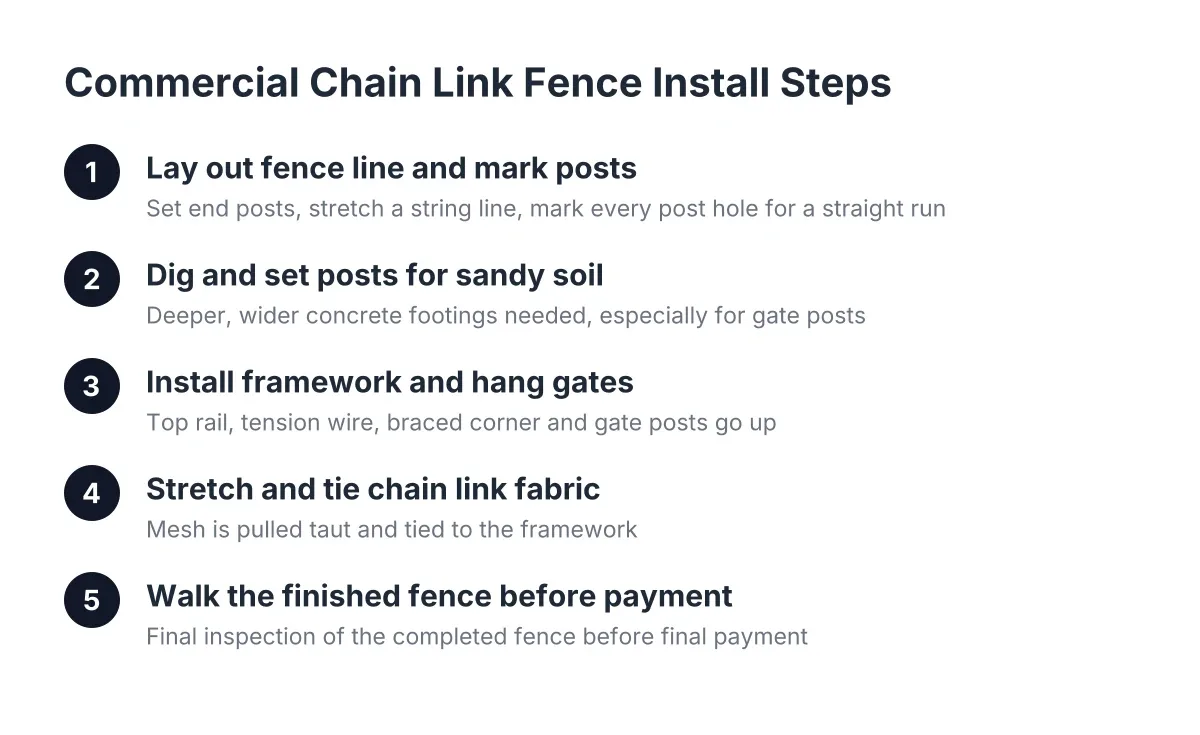
A terminal post is a heavier, larger-diameter post set at the ends, corners, and gate openings of a chain link fence. These posts carry the pulling force of the stretched fabric, so they take more stress than any other part of the fence. In Ocala's sandy soil, terminal posts need deep, solid concrete footings or the whole fence can lean over time. If a quote lists only one post type, ask how the installer handles corners and gates.
Line Post
A line post is one of the lighter posts spaced evenly between terminal posts to hold the fence upright along its run. Line posts do less work than terminals, so they are smaller and cheaper. Post spacing matters: posts set too far apart save the installer money but leave the fabric saggy. Ask your fence company what spacing they use and why.
Top Rail
A top rail is the horizontal pipe that runs along the top of a chain link fence and keeps the fabric from sagging between posts. It also gives the fence a clean, finished line. Some budget installs swap the top rail for a tension wire, which costs less but holds shape less firmly. If two estimates differ in price, check whether both include a top rail.
Fabric (Mesh)
Fabric means the woven wire mesh that makes up the visible body of a chain link fence. People call it mesh, chain link, or fencing, but installers say fabric. Fabric comes in different heights, wire thicknesses, and coatings, and each choice changes durability and price. The fabric is what you see, but the posts and footings decide how long it stands straight.
Gauge
Gauge is the measure of wire thickness in chain link fabric, and a lower gauge number means thicker, stronger wire. This is one of the quietest ways quotes differ. Two fences can look identical on day one, but thinner wire dents and stretches sooner, especially around dogs, kids, or commercial traffic. Always ask what gauge a quote includes before you compare prices.
Tension Bar
A tension bar is a flat metal bar woven vertically through the end of the chain link fabric so the fabric can be anchored to a terminal post. Without it, the mesh would pull loose at the ends. It is a small part with a big job: a fence stretched without proper tension bars loosens fast. You will see tension bars listed as line items on a detailed estimate.
Tension Band
A tension band is a metal clamp that wraps around a terminal post and bolts to the tension bar, locking the stretched fabric in place. Installers use several bands per post, spaced down its height. Missing or sparse bands let the fabric peel away from the post over time. It is a cheap part, so there is no good reason for a quote to skimp here.
Chain Link Fence Installation Glossary: Labor and Tools
This section covers what happens on install day, because the labor steps drive more of your cost than the materials do.
Fence Stretcher
A fence stretcher is a tool, often a come-along winch with a stretcher bar, that pulls chain link fabric tight before it is fastened to the posts. Proper stretching is what separates a crisp fence from a wavy one. Fabric hung by hand without a stretcher sags within months. If you want one question that reveals a crew's skill, ask how they stretch the fabric.
Post Hole Digger / Auger
A post hole digger is a manual clamshell tool, and an auger is a powered drill, both used to dig the holes that fence posts sit in. Hole depth and width decide how well the fence resists wind and leaning. Ocala's sandy, shifting soil makes this step matter more than it does in firmer ground, since shallow holes let posts work loose. Ask how deep the crew digs and whether depth changes at gates and corners.
Concrete Footing
A concrete footing is the poured concrete that surrounds the base of a fence post underground and anchors it in place. In sandy Florida soil, dry-setting posts in dirt alone is a gamble; concrete footings are the standard fix. Footings also fight gate sag, since gate posts take constant swinging weight. A quote that is vague about concrete is a quote worth questioning.
Galvanized vs. Vinyl-Coated
Galvanized means the steel is coated in zinc to resist rust, while vinyl-coated means a colored plastic layer, usually black or green, covers the galvanized wire. Ocala's humidity and heavy seasonal rain make rust protection a real concern, not a sales pitch. Vinyl-coated fabric costs more but hides better in landscaping and adds a second barrier against moisture. Either way, confirm the posts and rails are coated too, not just the fabric.
Gate Hardware
Gate hardware means the hinges, latches, and drop rods that let a fence gate swing, close, and lock. Gates are the moving part of a fence, so they fail first when hardware is cheap or posts are set poorly. Sandy soil makes gate sag a common repair call in this area. If your estimate includes a gate, ask what hardware comes with it and how the gate posts are set.
Pricing, Paperwork, and Property Rules
These terms show up on estimates and in city or HOA paperwork. They decide what you can build and what it will cost.
Linear Foot
A linear foot is a straight-line measure of fence length, and it is the unit most fence installation pricing is built on. An installer measures your perimeter, subtracts gate openings, and quotes by the foot. Yard size, number of corners, and gate count all change the total. For a full breakdown of what moves the number, see our guide to chain link fence installation cost.
Property Line Survey
A property line survey is a professional map showing exactly where your land begins and ends. Fences built even a foot over the line can trigger neighbor disputes or forced removal. On Ocala's flat residential lots, lines are not always obvious from fences or landscaping that came before. If you do not have a recent survey, mention it early so the installer can plan around it.
Permit
A permit is written approval from your local building department to install or replace a fence. Requirements vary by location and fence height, so check with the city before work starts. A fence company that handles permitting for you is taking real work off your plate, and a company that never mentions permits is a yellow flag. Ask who pulls the permit and whether that cost is in the estimate.
HOA Approval
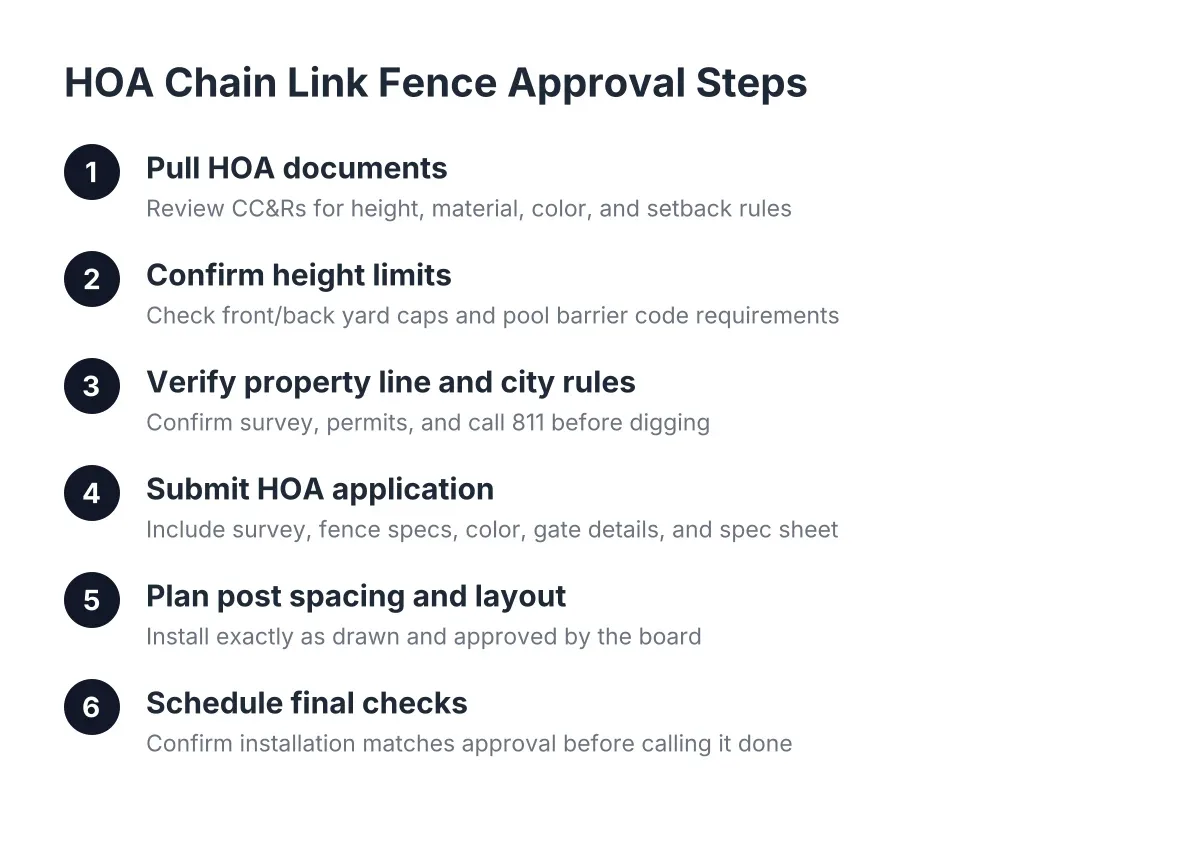
HOA approval is written permission from your homeowners association to build a fence that meets its rules on height, material, and placement. Many newer developments around Ocala have HOAs with specific fence standards, and some restrict chain link in front yards or entirely. Getting approval before install day prevents a forced tear-out later. Bring your HOA's fence rules to the estimate appointment.
Setback
A setback is the minimum distance local rules require between your fence and the property line, street, or easement. Setbacks exist so fences do not block utilities, drainage, or sight lines. They can shrink your usable fenced area, which changes the linear footage and the price. A good installer asks about setbacks before measuring, not after.
Estimate
An estimate is the written document that spells out the scope, materials, and price of your fence project before work begins. A solid estimate names the fabric gauge, coating, post sizes, concrete, gates, and hardware, not just a total. Vague estimates make fair comparison impossible and leave room for surprise charges. Our page on chain link fence installation in Ocala explains what a detailed local quote should cover.
Using These Terms
What this chain link fence installation glossary gives you is the ability to read a quote the way an installer writes it. You can now check gauge, coating, post types, footings, and gates line by line instead of comparing totals blind. When something is missing from an estimate, you know the exact word to ask about.
Related guide: chain link fence installation — Complete Guide
Prefer to talk it through? Call (352) 670-3374 — a quick call is usually the fastest way to get a straight answer for your situation.