Aluminum Fence vs. Chain Link: Which Withstands Ocala Weather Better?
If you are comparing an aluminum fence and chain link for an Ocala yard, weather should drive the decision more than looks. Our sand shifts under posts, summer storms dump rain for months, and humidity works on metal coatings year-round. Both materials survive here, but they fail in different ways and on different timelines. This guide walks you through the comparison step by step so you pick the right one, set it correctly, and get decades out of it instead of years.
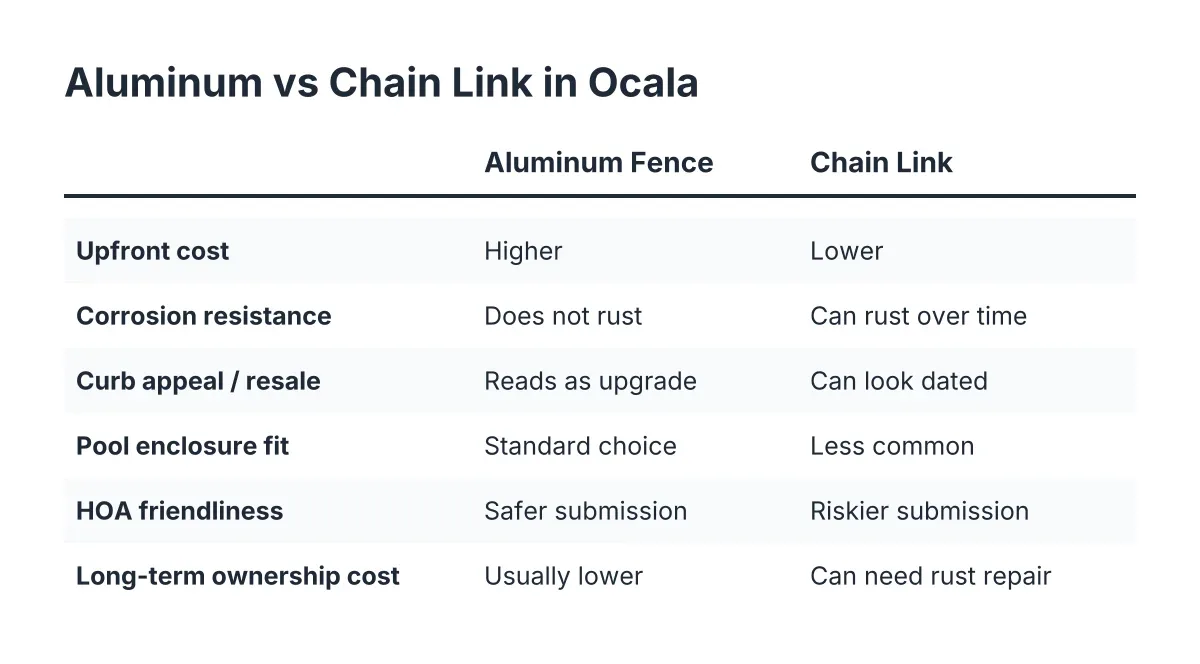
Here is the short version up front. When comparing aluminum vs chain link, each has distinct advantages. Chain link wins on upfront cost and raw utility. Aluminum wins on corrosion resistance, curb appeal, and resale impression. The steps below show you how to work through the choice for your specific property, whether that is a quarter-acre backyard in a newer Ocala development or a long paddock run outside Marion Oaks.
Step 1: Match Each Material Against Ocala's Actual Conditions
Start by understanding what Ocala weather does to each fence, because this is where the two materials separate.
Chain link fabric is usually galvanized steel. The zinc coating protects it for years, but Ocala humidity and rain eventually find scratched spots, cut ends, and the points where ties and fittings rub the coating off. That is where rust starts. If you are the homeowner who moved into a house with a rusted chain link fence and hates looking at it, you already know how this story ends.
Aluminum does not rust. It can oxidize, but the powder-coated finish on modern aluminum fence panels holds color and resists corrosion without the staining or sealing a wood fence demands. In a climate with heavy seasonal rain and humidity, that is the single biggest practical difference between the two.
Both materials handle our flat lots and sandy soil the same way at the post level: the posts are only as good as the concrete footing behind them. Sandy, shifting soil is why gates sag here, and that affects a chain link fence gate and an aluminum gate equally if the posts are set shallow.
One more point on durability. Metal fencing is not a niche choice; according to Mordor Intelligence, metal products including steel and aluminum captured a 47.2% share of the fencing market in 2025. Both options are proven. The question is which failure mode and maintenance schedule you want to live with.
Step 2: Decide What the Fence Needs to Do
Next, write down the job before you compare prices. The right answer changes with the use case.
- Containing dogs or marking a backyard line on a budget: chain link does this well and costs less per foot.
- Curb appeal and resale: aluminum looks like wrought iron from the street and reads as an upgrade. A rusted chain link fence reads as deferred maintenance.
- Pool enclosure: aluminum is the standard choice for a pool fence because it meets barrier rules cleanly and looks finished. Fence design matters here; the Centers for Disease Control and Prevention reports that a four-sided isolation fence separating the pool from the house and yard cuts a child's drowning risk by 83% compared to three-sided property-line fencing.
- Acreage and horse property: neither is a complete answer by itself. Many equestrian owners run wood or no-climb fencing on pasture lines and use aluminum fencing panels around the house, pool, or entry for a cleaner look where it counts.
- HOA neighborhoods: aluminum is the safer submission. A Forbes-reported survey found fencing is a factor in 23% of HOA violation notices, so check your covenants before you order anything.
Suppose a homeowner in a newer Ocala subdivision has a sagging, rusted chain link fence around the backyard and plans to sell within three years. In that scenario, replacing it with black aluminum changes the first impression of the whole yard, while replacing chain link with new chain link keeps the same look the owner was tired of.
Step 3: Aluminum vs Chain Link — Cost Comparison
The honest answer on aluminum fence vs chain link cost: chain link is cheaper upfront, and aluminum usually costs less to own over time. We do not quote prices in an article because every yard is different, but the cost factors are consistent.
What drives the estimate for either material:
- Linear footage. Long runs on acreage multiply every per-foot difference.
- Height. Taller fabric or taller aluminum fence pickets mean more material and heavier posts.
- Gates. Each fence gate adds hardware, a heavier post, and labor. Wide drive gates for trailers or mowers add more.
- Grade and soil. Sloped or sandy sections take more layout work and deeper footings.
- Finish and style. Black vinyl-coated chain link costs more than bare galvanized. Decorative aluminum fence styles with finials or spear tops cost more than flat-top panels.
- Tear-out. Removing an old wood fence or rusted chain link before fence installation adds labor and disposal.
Then weigh ownership cost. Chain link may need rust treatment, fitting replacement, or full fabric replacement years sooner in our humidity. Aluminum's powder coat asks for an occasional rinse. The market reflects that durability; The Business Research Company valued the global aluminum metal fencing market at $4.61 billion in 2025, projected to reach $4.93 billion in 2026.
One warning that applies to both materials: the cheapest bid often costs the most. Fence pricing reflects construction practices, post depth, material grade, and expected lifespan, not just raw material. A fence rebuilt in seven years is more expensive than one done right once.
Step 4: Pick Your Style, Panels, and Privacy Approach
Once the material is settled, choose the configuration. This step is where aluminum offers far more range.
Aluminum Fence vs Chain Link: Styles and Panel Options
Aluminum comes as pre-assembled aluminum fencing panels in set widths, with picket spacing, rail counts, and top treatments that change the look. Flat-top three-rail panels suit most residential fencing and read clean against newer Ocala homes. Spear-top or finial styles lean traditional and pair well with older ranch-style properties. Black is the most common color because it visually disappears against landscaping, which is why it dominates pool fence and front-yard installs.
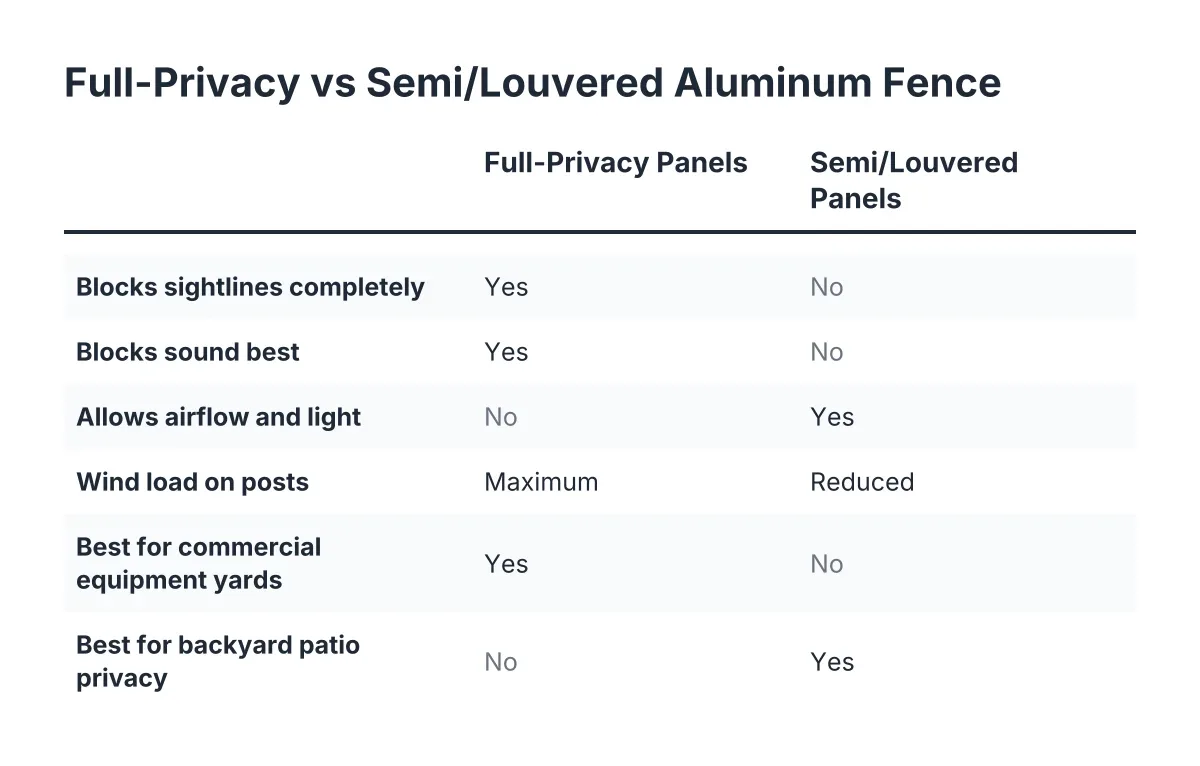
Know the limits, though. Standard aluminum fence pickets are spaced open, so a true aluminum privacy fence requires special wide-blade panels that cost more. If full privacy is the main goal, a vinyl fence or wood fence often serves that job better for the money. That is a real trade-off, not a footnote.
Skip big-box aluminum fence kits for anything beyond a short decorative run. Kits assume flat, stable ground. Ocala's sandy soil punishes shallow post settings, and a kit fence with sagging gates two summers in erases whatever it saved.
Upgrading chain link instead of replacing it
If the budget only covers chain link, you still have options. Black vinyl-coated fabric and framework resist corrosion better than bare galvanized and look dramatically better. Aluminum fence slats for chain link weave into the mesh to add privacy and stiffen the fabric. Small aluminum chain link fence parts matter too; fence ties come in different lengths to match the post diameter, and matching them correctly keeps the fabric tight to the framework for the long haul.
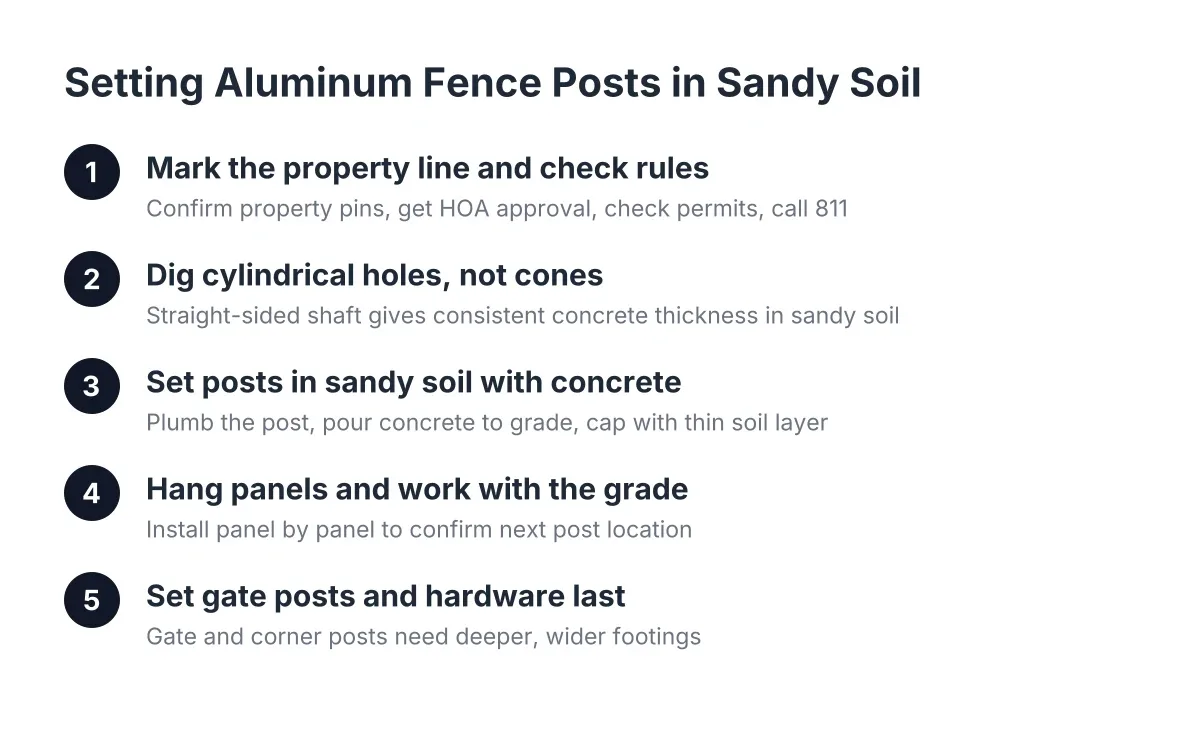
Step 5: Get the Posts and Footings Right for Sandy Soil
Whatever you choose, this step decides how long it lasts. In Ocala's sandy and shifting soil, post failure beats material failure as the reason fences lean and gates drag.
Insist on these fundamentals during fence installation:
- Depth and concrete. Posts set shallow in sand will move. Gate posts and corner posts carry the most load and need the deepest, widest footings.
- Correct post sizing. Heavier gates need heavier posts. An aluminum chain link fence post that is undersized for a wide gate will sag no matter how well it is hung.
- Proper fittings. On chain link, line post caps, tension bands, and ties sized to the pipe diameter keep the fabric from loosening in storms.
- Property line confirmation. Verify the line before anyone digs. Moving a fence after a survey dispute costs more than the survey.
- Permit and HOA sign-off. Confirm whether your Ocala project needs a permit, and get written HOA approval of the style and height in 2026 before ordering panels.
For a pool fence specifically, height alone is not enough. A National Institutes of Health study found children as young as four climbed a five-foot fence in a median of 17 seconds. Layout, latch placement, and self-closing gate hardware matter as much as the panel spec, which is a good reason to have a professional handle pool barrier installs rather than treating them as a weekend project.
Step 6: Plan the Maintenance Schedule You Just Bought
Finally, protect the investment. Aluminum asks for a rinse a few times a year and a hinge check on gates. Chain link asks for more: watch cut ends and fittings for rust, touch up damaged coating early, and re-tension fabric that loosens after storm season. Either way, walk the line each spring, test every fence gate latch, and call for fence repair when a post starts to move. A post reset early is cheap; a fence rebuilt late is not.
The Bottom Line for Ocala Yards
For most Ocala homeowners upgrading a tired backyard, an aluminum fence outlasts chain link in our rain and humidity and looks better doing it. Chain link still earns its place on long utility runs, dog yards, and commercial fencing where budget per foot rules. Match the material to the job in Step 2, refuse shortcuts on posts in Step 5, and either fence will still be standing straight when the next owner walks the property line.
If you need aluminum fence installation, Ocala Fence Builders can help.
Prefer to talk it through? Call (352) 670-3374 — a quick call is usually the fastest way to get a straight answer for your situation.