Fence Company Terms Explained: A Plain-English Glossary
If you are getting quotes for a new fence in Ocala and keep running into words you half understand, this page is for you. This fence company glossary explains the terms that show up in estimates, contracts, and job-site conversations in plain English. Use it to read a quote line by line, ask better questions, and spot a vague bid before you sign it. Every entry takes less than thirty seconds to read.
- Post: the vertical support set in the ground
- Post Hole and Footing: the dug hole and the concrete around the post
- Rail: the horizontal piece between posts
- Picket: the vertical board or slat you see
- Gauge: the thickness of chain link wire
- Mesh: the woven wire fabric of a chain link fence
- Terminal Post: the heavier post at ends, corners, and gates
- Gate Hardware: hinges, latches, and locks on a fence gate
- Gate Sag: when a gate drops and drags over time
- Linear Foot: how fence length is measured and priced
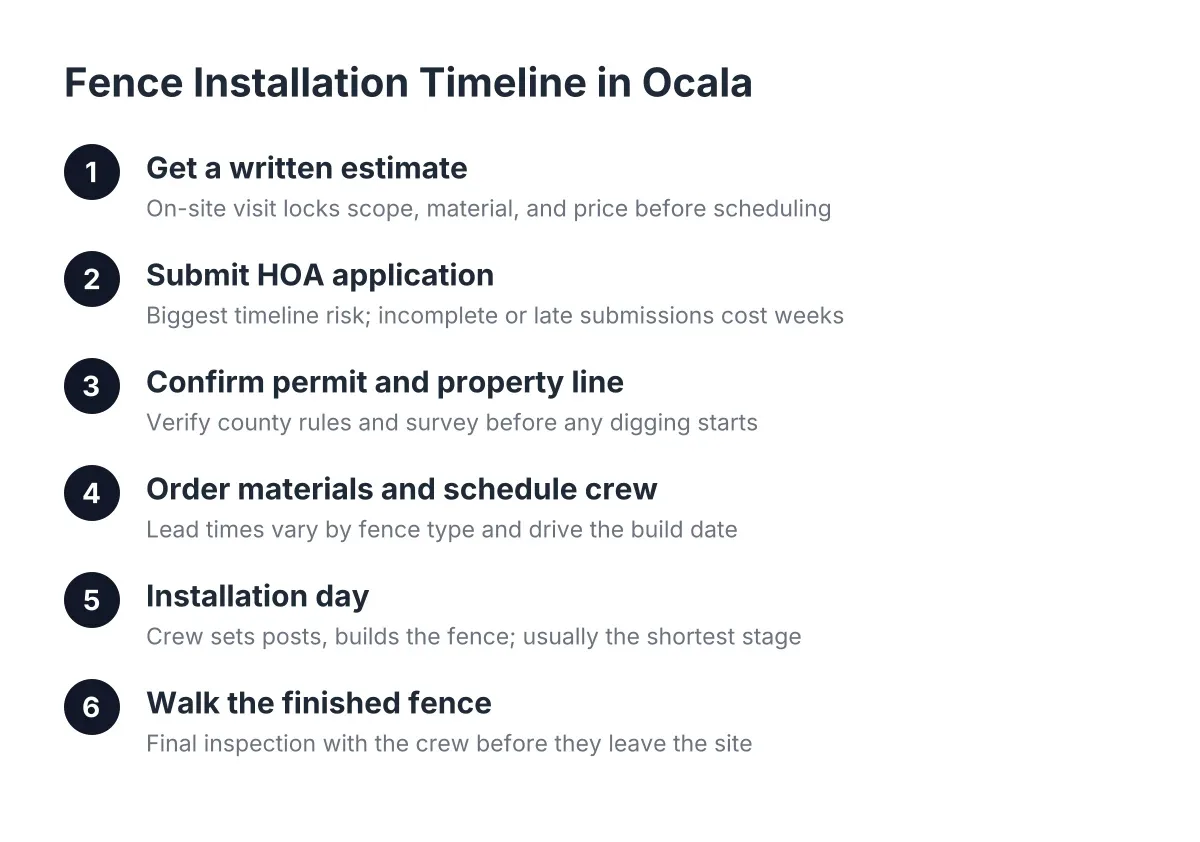
- Estimate: the written price and scope before work starts
- Permit: city or county approval to build the fence
- Property Line: the legal boundary where your lot ends
- Easement: a strip of your land others have a right to use
- Setback: the required distance between fence and boundary
- HOA Approval: your homeowners association's sign-off on the fence
- Pool Barrier: a fence built to keep kids away from a pool
- Grade: the slope of the ground along the fence line
Fence Parts and Materials
These are the pieces a crew talks about when they describe your fence. Knowing them helps you compare two quotes for the same job.
Post
A post is the vertical support that holds a fence up, set into the ground at regular intervals along the fence line. Posts carry the whole load, so how deep they go and how they are set matters more than almost anything else. In Ocala's sandy soil, posts that are set too shallow can shift after heavy rain. Ask any installer how deep they set posts and how they anchor them.
Post Hole and Footing
A footing is the base that holds a fence post in place, usually a hole filled with concrete poured around the post. The footing keeps the post from leaning or pulling out when wind or a gate puts pressure on it. Sandy and shifting soil like Ocala's often calls for deeper holes or more concrete than firm clay would. If a quote says "set in concrete," ask how deep the holes go.
Rail
A rail is the horizontal piece that runs between posts and supports the boards or mesh of a fence. Wood fences usually have two or three rails; chain link uses a top rail of metal pipe. More rails mean a stiffer fence that resists sagging and warping. A quote that skips a bottom or middle rail on a tall wood fence is cutting a corner worth asking about.
Picket
A picket is the vertical board or slat attached to the rails, the part of the fence you actually see. Pickets come in different widths, heights, and spacings, which change both privacy and price. Tightly butted pickets give full privacy; spaced pickets cost less in material but let neighbors see through. In a humid climate, wood pickets need sealing or staining to last.
Gauge
Gauge is the measure of wire thickness in a chain link fence, and a lower gauge number means thicker, stronger wire. Residential chain link often uses a lighter gauge than commercial fencing, which takes more abuse. If two chain link quotes differ in price, the gauge is one of the first things to compare. Thicker wire costs more up front but resists bending and damage longer.
Mesh
Mesh is the woven wire fabric that makes up the body of a chain link fence. Mesh size describes how big the diamond-shaped openings are; smaller openings make a stronger, harder-to-climb fence. Coated mesh, such as vinyl-coated chain link, resists rust better in wet, humid conditions. For dog owners, a smaller mesh also keeps small animals from slipping through.
Terminal Post
A terminal post is the heavier-duty post used at the ends, corners, and gate openings of a fence. These posts take more stress than line posts, so they are thicker and set in larger footings. On chain link, terminal posts anchor the stretched mesh; on any fence, they carry the gate. A quote that uses the same light post everywhere is a red flag for future leaning.
Gates and Common Problems
Gates are where most fence company glossary terms appear in repair calls. These terms help you understand why a fence company keeps asking about your gates during an estimate.
Gate Hardware
Gate hardware means the hinges, latches, and locks that let a fence gate open, close, and stay shut. Cheap hardware rusts and fails long before the fence around it does, especially in a rainy, humid climate. Self-closing hinges and self-latching locks matter most on pool fences, where a gate left open defeats the fence. Ask what hardware is included; it is often a separate line on the estimate.
Gate Sag
Gate sag is when a gate drops out of level over time, so it drags on the ground or will not latch. Sag usually comes from a leaning gate post, loose hinges, or a frame without enough bracing. Ocala's sandy soil makes gate posts shift more than they would in firmer ground, which is why gate posts need deep, solid footings. A sagging gate is often a repair job, not a full replacement.
Grade
Grade is the slope of the ground along the fence line. Even on flat Ocala lots, small dips and rises decide whether the fence follows the ground or steps down in sections. Chain link can flow with grade; vinyl and wood panels often need stepping, which can leave gaps at the bottom. A good installer walks the line and tells you how they will handle grade before quoting.
Pricing, Paperwork, and Property Rules
Most quote confusion lives here. These terms cover how the price is built and what approvals the job may need.
Linear Foot
A linear foot is a straight-line foot of fence length, and it is the standard unit fence installation is priced by. Total footage, fence height, material, and the number of gates are the main cost factors in any quote. Two bids for the "same yard" can differ because one measured the line differently, so compare footage first. For a fuller breakdown of what drives price, see our guide on fence installation cost.
Estimate
An estimate is a written statement of the expected price and scope of work before the job starts. A useful estimate lists footage, fence height, material, post depth or setting method, gates, hardware, and cleanup. Vague one-line estimates leave room for surprise charges later. If a line item is unclear, ask what it covers before you sign anything.
Permit
A permit is official approval from your city or county to build a fence on your property. Many areas require one, and rules vary by fence height, location on the lot, and whether the fence encloses a pool. A contractor should tell you whether your project needs a permit and who pulls it. Check your local code or ask the installer; do not assume a backyard fence is exempt.
Property Line
A property line is the legal boundary between your lot and your neighbor's. Building even a few inches over it can force you to move the fence later at your own cost. A survey is the only sure way to know where the line sits; old fences and hedges are not proof. Installers in newer Ocala developments see line disputes often enough that many ask for a survey up front.
Easement
An easement is a strip of your property that someone else, usually a utility company, has a legal right to use. You may be allowed to fence across an easement, but the utility can remove that section to access their lines. Knowing where easements run tells you where a fence is risky to place. Your property survey or county records show easements on your lot.
Setback
A setback is the minimum distance local rules require between your fence and a boundary, street, or sidewalk. Setbacks keep fences from blocking sight lines at corners and driveways. Corner lots usually have stricter setback rules than interior lots. Your installer or local building office can tell you what applies to your address.
HOA Approval
HOA approval is written permission from your homeowners association to build a fence that meets their rules. HOAs often restrict fence height, material, color, and which direction the finished side faces. Getting approval before installation protects you from being forced to tear the fence out later. In Ocala's newer developments, HOA rules often shape the choice between a wood fence, a vinyl fence, and aluminum, so bring the rules to your estimate appointment.
Pool Barrier
A pool barrier is a fence built specifically to keep children from reaching a pool unsupervised. Pool fences must meet safety rules that typically cover height, climbability, gaps, and self-closing, self-latching gates. These requirements make a pool fence different from a standard yard fence, even when the materials look the same. If you are fencing a pool, say so up front; it changes the design and the approval process.
Fence Company Glossary Reference
With this fence company glossary, you can read an estimate line by line and know what each item means, from gauge and terminal posts to setbacks and HOA approval. You can also ask sharper questions: how deep the posts go, what hardware the gate gets, and who handles the permit. That is usually enough to tell a careful bid from a vague one.
If you need fence installation, Ocala Fence Builders can help.
Prefer to talk it through? Call (352) 670-3374 — a quick call is usually the fastest way to get a straight answer for your situation.