Fence Installation Timeline in Ocala: From Quote to Finished Fence, Step by Step
You picked a fence company. Now you want to know how long the job takes. If you searched "fence installation near me" because you have a pool inspection date, a home closing, or an HOA review meeting on the calendar, the real question is not whether the fence gets built. It is when. This guide walks through each stage of a fence installation in Ocala, what happens at each step, and where projects gain or lose days.
Most residential fence projects in Ocala follow the same sequence: estimate, HOA approval if you have one, permit, material ordering, utility locates, and then the actual build. The build itself is usually the shortest part. The approvals and lead times before it are where the timeline actually lives. Here is how to move through each step without losing weeks.
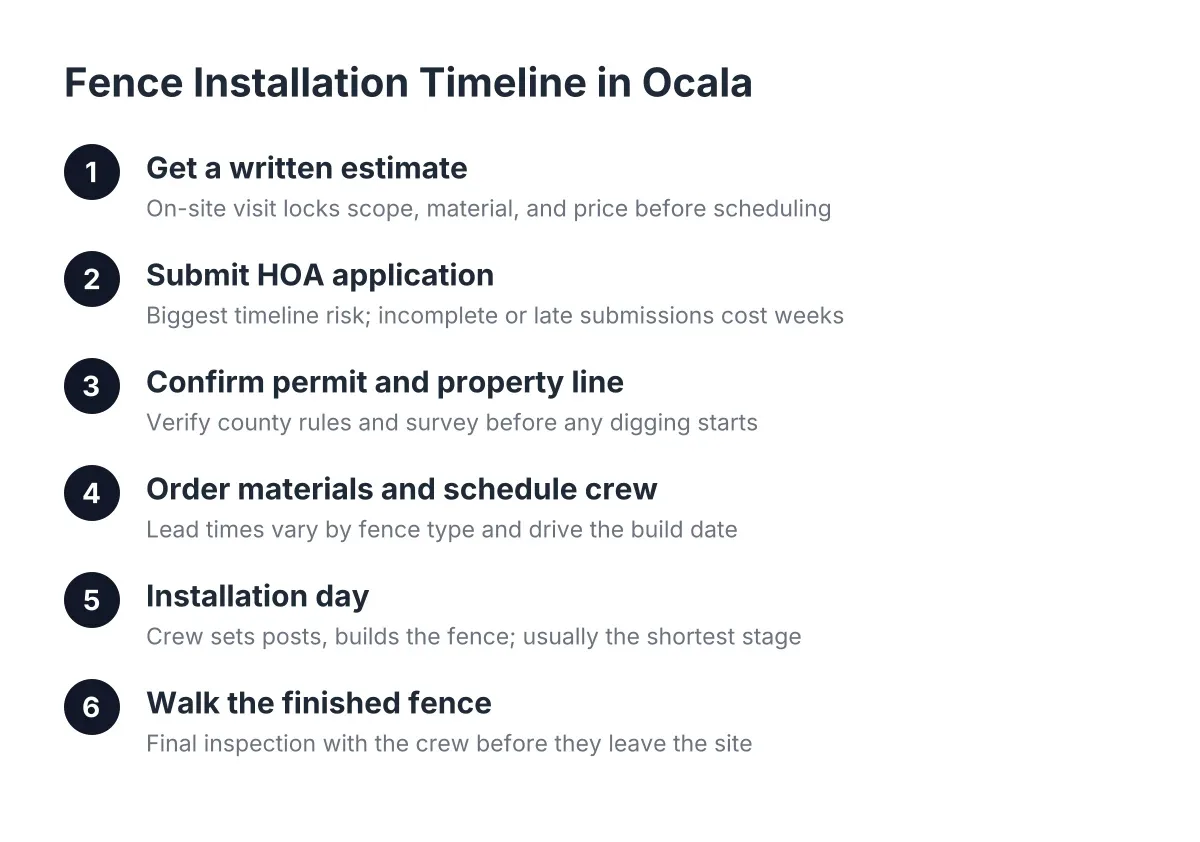
Step 1: Get a Written Estimate and Lock the Scope
Start with an on-site estimate, not a phone guess. A fence company needs to walk your property line, check gate locations, note slopes or obstructions, and look at the soil before committing to a price or a schedule. In Ocala, sandy soil changes how posts get set, and that affects both the method and the timeline, so a site visit matters.
A complete estimate should spell out the scope of work. Before you sign anything, confirm it covers:
- Fence type and material (chain link fence, vinyl fence, wood fence, aluminum, or pool fence)
- Total footage, fence height, and the number and width of gates
- Post setting method and whether concrete is included
- Tear-out and haul-away of any old fence
- Who calls in utility locates and who pulls the permit
- What counts as an extra, such as root removal or regrading
Vague estimates cause mid-project delays. If the quote just says "install fence, 150 feet," ask for the detail. A fair quote lists the material, the layout, and the exclusions, so nothing gets renegotiated after the posts are in the ground.
Pricing varies for reasons beyond raw material. Construction practices, build style, appearance, and expected lifespan all shape the number. The lowest bid often reflects a fence that needs rebuilding sooner, which costs more over time than paying for sound work once. Cost factors are worth asking about directly during the estimate.
Step 2: Submit Your HOA Application Before Anything Else
If you live in a deed-restricted community, handle HOA approval first. This is the step most likely to stall your timeline, and it is the one you control least. According to Forbes, fencing is a factor in 23% of HOA violation notices, tied for second behind landscaping. Boards take fences seriously, and an unapproved install can mean fines or forced removal.
Pull your community's architectural review guidelines and read the fence section before you pick a material. Many Ocala-area HOAs restrict chain link to backyards or ban it outright, require specific vinyl colors, or cap fence height. Knowing the allowed list upfront saves you from paying for a design the board will reject.
Your architectural review request usually needs:
- A site plan or survey showing the fence line relative to the property line
- Material, color, style, and height specifications
- A photo or drawing of the fence style, often a manufacturer spec sheet
- Gate locations and swing direction
Ask your installer for the spec sheet and a simple layout drawing; a local fence company that works in HOA neighborhoods regularly can hand you both. Then ask your HOA how often the board meets. Some review requests monthly, which means missing a meeting by two days can cost you four weeks. Submit early, and submit complete; incomplete applications get tabled, not reviewed.
For example, suppose a homeowner in a gated Ocala community wants a wood fence but the guidelines only allow tan or white vinyl at a set height in that section. Catching that during the estimate means one submission and one approval. Catching it after a rejection means a resubmission, another board cycle, and a project that slips a month or more.
Step 3: Confirm the Permit and Property Line
Once the HOA signs off, sort out the permit and the boundary. Marion County and the City of Ocala have their own rules on when a fence permit is required, and requirements can change, so confirm the current 2026 rules for your address rather than relying on what a neighbor did years ago. Clarify in writing whether you or the installer files the paperwork.
Next, verify the property line. Do not guess from the old fence or a hedge. If you have a recent survey from your closing, pull it out. If the line is uncertain, a new survey adds days to the schedule but protects you from building on a neighbor's land and tearing the fence out later. This is one place where paying a professional surveyor beats any shortcut.
Pool fences carry an extra layer. A pool barrier must meet Florida's residential pool safety requirements, which govern height, gate latching, and climbability, and it may need its own inspection. Plan that inspection into your timeline if a home sale or insurance deadline depends on it. The safety payoff is real: according to the Centers for Disease Control and Prevention, a four-sided isolation fence separating the pool from the house and yard reduces a child's drowning risk by 83% compared to three-sided property-line fencing. Design matters too, not just height; a National Institutes of Health study found children as young as four climbed a five-foot fence in a median of 17 seconds, which is why code focuses on climb-resistant design and self-latching gates.
Step 4: Order Materials and Schedule the Crew
With approvals in hand, materials get ordered. Lead times differ by fence type. Standard chain link fence components and common wood fence pickets are usually stocked locally. Specific vinyl fence colors, decorative aluminum styles, and certain pool fence systems may need to be ordered, which adds time before the crew can start. Ask your installer for the expected lead time on your exact material at the estimate stage, not after you sign.
Weather in Ocala also plays a role in scheduling. Summer afternoon storms can push dig days, and saturated ground after heavy rain makes post setting harder in sandy soil. Crews plan around it, but build a little slack into any hard deadline, especially June through September.
Before any digging, underground utilities must be located and marked. In Florida, that locate request comes with a required waiting period of a few business days before digging can start legally. Confirm who is calling it in. Skipping this step risks a cut line, a safety hazard, and a stopped job.
Step 5: Installation Day: What the Crew Actually Does
The build is the fast part. For a typical residential fence on a flat Ocala lot, suppose a crew handles layout and post setting on day one, then hangs panels, rails, and gates once the concrete has cured. Fast-setting concrete mixes shorten that wait, which is why many installs wrap in a day or two. Longer runs, commercial fencing, tear-outs, tree roots, or multiple gates stretch the schedule.
Here is roughly what good work looks like while it happens. The crew sets end and corner posts first, then stretches a string line between them to keep the run straight. Posts on the finished side stay hidden behind the panels. Where a full panel will not fit at a corner, a cut section goes in the least visible spot, with a picket added to hide the cut edge. Each new panel gets checked level against the last one before fastening. In tight spots, such as butting against an existing fence, a reinforced post can keep the line solid.
Gates deserve special attention in Ocala's shifting sandy soil, since gate posts carry constant swinging load and are the first thing to sag when set poorly. Ask how gate posts are being set. For a pool fence, test every gate yourself: it should self-close and self-latch from any open position.
What to DIY and What to Leave to Professional Fence Installation Near Me
Homeowners can safely handle the prep work: clearing the fence line, moving planters and stored items, trimming vegetation, and gathering HOA documents. That genuinely shortens the job. Leave the layout, post setting, and gate hanging to a professional crew, especially for a pool fence where a failed inspection resets your whole timeline. If an existing fence is leaning, has loose posts, or a dragging gate, that is a fence repair call, not a weekend project; a bad patch often costs more to undo than a proper fix.
Step 6: Walk the Finished Fence Before the Crew Leaves
Do a final walkthrough with the installer on the last day. Check that the line is straight, panel tops align, posts are plumb, and every fence gate swings, closes, and latches correctly. Confirm the fence sits on your side of the property line per the survey. For a pool fence, verify latch height and self-closing action on every gate before you consider the job done.
Then close the paperwork loop. Keep the final invoice, the permit sign-off if one was required, and your HOA approval letter together. If the HOA or a future buyer ever questions the fence, that file answers it in minutes.
What Actually Controls Your Timeline When You Search for Fence Installation Near Me
The honest answer on total timeline: the physical install is often measured in days, while the full quote-to-finished process is measured in weeks, and the spread depends on approvals and lead times, not the crew. HOA board cycles, permit processing, material orders, utility locates, and summer rain are the variables. A search for fence installation near me will surface plenty of installers; the ones worth hiring are the ones who talk about those variables upfront instead of promising a date they cannot control.
When you compare installers, ask these three questions:
- Have you worked in HOA communities here, and will you provide the spec sheet and drawing my architectural review needs?
- Who handles the permit and the utility locate, you or me?
- What is the current lead time on my exact material and color, and when could the crew realistically start?
Clear answers to those three tell you more than any ad.
If you are in Ocala or the immediate surrounding areas and need a fence installed, replaced, or repaired, Ocala Fence Builders can walk your property, explain the cost factors for your fence type, and give you a written estimate with a realistic timeline for your HOA, permit, and build. Reach out to set up an estimate and get your project on the calendar.
If you need fence installation in Ocala, FL, Ocala Fence Builders can help.
Prefer to talk it through? Call (352) 670-3374 — a quick call is usually the fastest way to get a straight answer for your situation.